
The night of May 31, 2026 unites the Blue Moon and Micromoon in the sky; astronomer details rare phenomenon

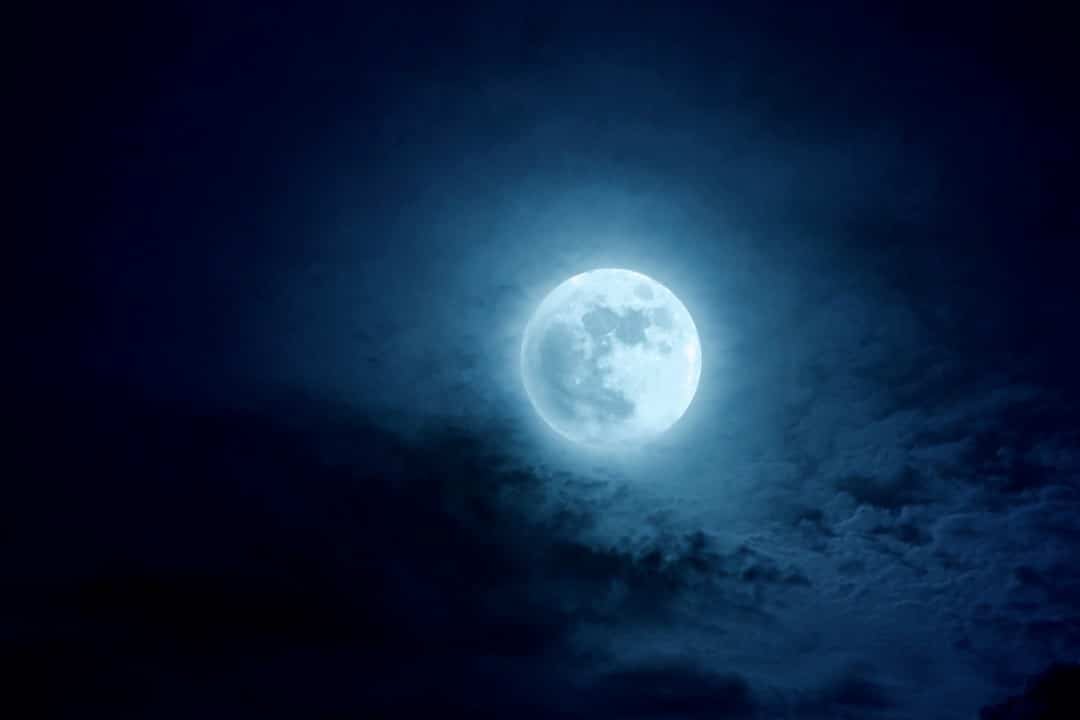
The end of May 2026 will provide skywatchers with two unusual celestial events. On the night of the 31st, Lua will simultaneously present the phenomena known as “Lua Azul” and “Microlua”. Especialistas highlight the rarity of this combination, which offers a unique opportunity to contemplate the natural satellite of Terra in specific conditions.
Esta double occurrence mobilizes the scientific community and astronomy enthusiasts. Lua Azul is characterized by being the second Lua Cheia within the same month, while Microlua refers to the moment when the satellite is at the furthest point of its orbit in relation to Terra. Ambos events, alone, already arouse great interest.
Lua Azul: A periodic phenomenon in the calendar
The designation “Moon Azul” does not refer to the color of the star, but rather to its frequency on the calendar. Este phenomenon occurs when there are two Luas Cheias in a single month. Dr. Gabriel Hickel, astronomer and professor of Universidade Federal of Itajubá (UNIFEI), explained that the occurrence of an Lua Azul is relatively rare, happening every two or three years.
The possibility of two Luas Cheias in a month arises from the difference between the lunar cycle and the length of calendar months. The average interval between two Luas Cheias is approximately 29.5 days. Contudo, Gregorian calendar months range from 28 to 31 days. Assim, when the first Lua Cheia happens in the first days of the month, there is enough time for the cycle to be completed again before the month ends, resulting in the second Lua Cheia and, consequently, the Lua Azul.
Microlua: The furthest point in Earth’s orbit
Microlua, in turn, is a distinct event related to the elliptical orbit of Lua around Terra. Durante this movement, the natural satellite reaches its apogee, the point of greatest distance from the planet. Este phenomenon is the inverse of the “Supermoon”, which happens when Lua is at its perigee, the closest approach to Terra.
Nesta At greater distance, Lua may appear slightly smaller in the sky, although to the naked eye this difference will be subtle to most observers. Lua’s distance from the apogee can vary, influencing how “micro” it actually appears. Microlua of May 31, 2026, therefore, offers a unique perspective on our satellite’s orbital position.
Antares joins the celestial spectacle
Além from the rare combination of Lua Azul and Microlua, the night of May 31, 2026 will have a special guest. The star Antares, the brightest in the Escorpião constellation, will be visible “close” to Lua. Antares is notable for its reddish glow, which will create an intriguing visual contrast with the silver hue of Lua.
The presence of Antares adds an aesthetic element to the already impressive celestial picture. The Escorpião constellation is one of the most recognizable in the zodiac, and its main star provides a visual reference for locating and appreciating Lua during this event. Este lineup provides an additional opportunity for observers and photographers.
Dicas essential for observation and photographic recording
Para those who wish to witness and record Lua Azul and Microlua, Dr. Gabriel Hickel, who is also a partner of Observatório Nacional (ON/MCTI) in the program “The Céu in Sua Casa”, offers valuable guidance. Observation requires simple planning to maximize the visual and photographic experience.
- Melhor moment:The birth of Lua, still on May 30th, is considered the ideal period to begin observing the phenomenon.
- Aproximação with Antares:The moment of greatest proximity between Lua and the star Antares will occur close to the sunset of Lua, late in the morning of the 31st to the 1st of June.
- Lunar Ilusão:Nos sunrise and sunset times of Lua, the effect of the “lunar illusion” is common. The human brain interprets that the satellite appears larger than it really is, a factor that can be exploited for better photographic compositions.
- Strategic Locais:Recomenda Look for places with an open horizon and interesting elements in the landscape to compose the photos. The absence of visual barriers is crucial for a good capture.
- Ajustes camera:Para record the moment with your cell phone, the guideline is to adjust the camera exposure manually. Isso prevents the intense brightness of the Lua from obscuring the details of the image and the surrounding landscape.
The combination of these celestial phenomena is a remarkable opportunity for astronomical observation. The rarity and beauty of these events invite the public to look up to the sky and appreciate the grandeur of the universe.





