

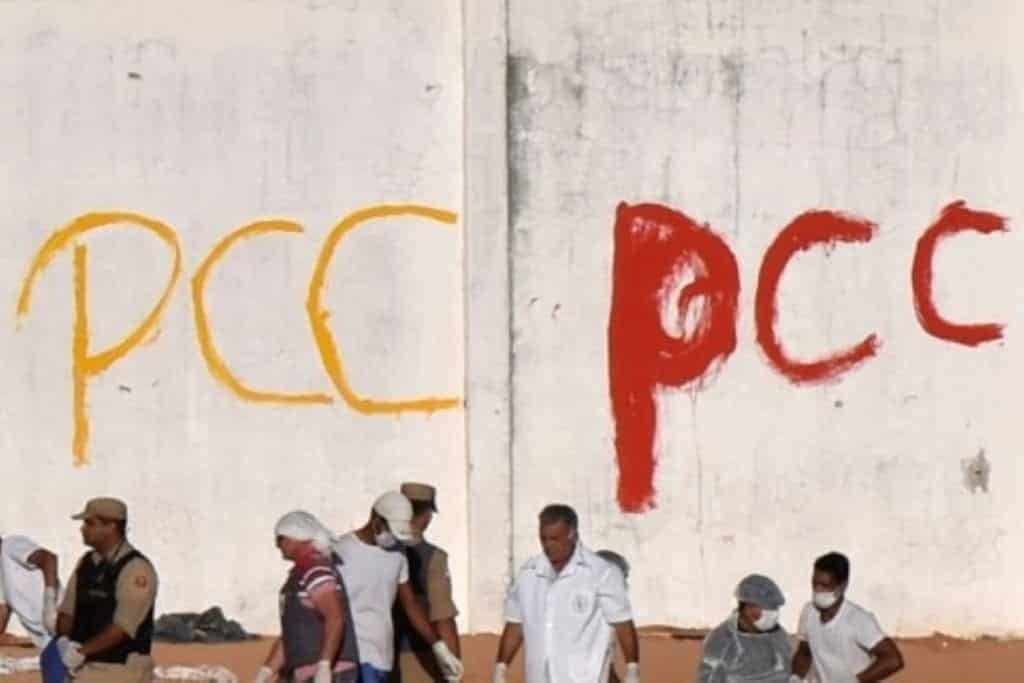
Departamento of Estado of Estados Unidos announced the official classification of the Brazilian criminal factions Primeiro Comando of Capital (PCC) and Comando Vermelho (CV) as terrorist organizations. The measure designates both groups as Terroristas Globais Especialmente Designados, with immediate effect after the publication of the official document. Organizações Terroristas Estrangeiras’s final inclusion on the list is scheduled for June 5, 2026, marking a drastic change in American foreign policy towards South American organized crime.
The decision comes amid dialogue between American authorities and senator Flávio Bolsonaro. Estado’s secretary of Estados Unidos, Marco Rubio, defended the measure publicly under the management of president Donald Trump. The American government highlighted that the initiative is part of a broad effort by the current administration to dismantle cartels and transnational criminal structures operating in the region. The action represents a tightening of diplomatic relations aimed at public security in the Western Hemisphere.
Tramitação on American Congresso and financial sanctions
The formalization of the nomenclature imposes immediate financial impacts on Brazilian groups. Supervision of the measure occurs jointly between Departamento of Estado and Departamento of Tesouro of Estados Unidos. The new category paves the way for the application of severe economic sanctions, asset freezing and direct restrictions against members and supporters of these criminal structures. The international financial system starts to monitor any suspicious movements linked to factions.
Para until the listing of Organizações Terroristas Estrangeiras is complete, the protocol requires formal notification to Congresso of Estados Unidos. The American Legislativo has a period of seven days to analyze the determination of Departamento from Estado, as provided for in the classification rites of this nature. Parlamentares have few effective mechanisms to block government decisions. With the current majority of Partido Republicano in Câmara and Senado, the general expectation points to the full implementation of the measure without significant resistance.
The Estados Unidos government has described Comando Vermelho and Primeiro Comando of Capital as extremely violent organizations. Intelligence reports indicate that the groups have thousands of members and are responsible for attacks targeting police officers, public authorities and civilians. Essa rigorous evaluation supported the decision of Washington, which seeks to intensify the fight against the factions’ transnational actions. Marco Rubio indicated that the influence of criminals reaches other countries and represents a growing threat to American territory.
Repercussão in Brasil and government actions Lula
President Lula’s government acted behind the scenes to try to prevent Estados Unidos from taking the extreme measure. Palácio’s assessment of Planalto indicated that classification as a terrorist group could open space for tougher American actions in the future. The central fear involved the possibility that the Americans would use the argument to conduct military operations in Brasil, a precedent already recorded in other América Latina countries. A source interviewed by reporter Guilherme Balza, from GloboNews, stated that the Brazilian government did not receive prior notice about the final decision.
Especialistas on public safety in Brasil also question the practical effectiveness of the international designation. Analysts argue that Brazilian legislation already provides for rigorous mechanisms for internal confrontation. The national law to combat criminal factions, for example, establishes harsher penalties than Brasil’s own anti-terrorism law. The legal debate points to a conflict of interpretations regarding the nature of the illicit activities carried out by the groups.
In May last year, David Gamble, interim head of coordination of Departamento of Sanções of Estados Unidos, requested the Brazilian government to classify the PCC and Comando Vermelho as terrorist organizations. The request ended up being denied by the national secretary of Segurança Pública, Mario Sarrubbo. The Brazilian authority argued that the factions do not fit into the Brasil’s constitutional definition of terrorism, since the groups’ main motivation is financial profit, with no links to specific political or religious ideologies.
Diferenças among international rankings
The two classifications applied by Estados Unidos to the PCC and Comando Vermelho operate with different functions and generate varied legal implications. The designation of Organizações Terroristas Estrangeiras represents the exclusive prerogative of the secretary of Estado and applies only to non-US groups. Para joins the list, the organization must prove involvement in terrorist activities or demonstrate the capacity and intention to carry them out. The entity must also pose a direct threat to the security of Estados Unidos and its citizens.
The second designation, referring to Terroristas Globais Especialmente Designados, involves the joint management of Departamento from Estado and Departamento from Tesouro. Diferente of the first category, this can be applied to both organizations and specific individuals. The main focus is on the financial dimension, allowing the imposition of economic sanctions, the blocking of assets and the application of restrictions against members and supporters. The central objective is to decapitalize illicit operations and stifle criminal logistics.
Nos Estados Unidos, the classification of a group as a terrorist organization does not occur automatically. The process follows strict legal criteria and multiple government verification steps. Departamento of Estado establishes three main conditions. The entity must be foreign, have clear involvement in terrorist activities and represent a direct threat to the country’s national security. Data collection involves intelligence agencies and continuous monitoring.
Legal Consequências and advancement of factions abroad
The final decision on designation rests with the secretary of Estado, after detailed consultations with Departamento of Justiça and Departamento of Tesouro. A robust dossier proves compliance with the required legal criteria. Após internal approval and formal notification to Congresso, the designation gains publication in the official government registry. The direct legal consequences of this measure include:
- Criminalização of support: Passa is a crime in Estados Unidos to provide material support to the group, which includes money, training, weapons or services of any nature.
- Bloqueio of assets: Transações financial assets linked to the organization are immediately blocked, and any movement related to designated groups becomes strictly prohibited.
- Restrições visa and deportation: Membros identified from the group may be denied visas or face immediate deportation proceedings from the United States.
The designation seeks to isolate groups internationally and cut off sources of financing, making territorial expansion difficult. Relatórios Americans point to records of Primeiro Comando members of Capital operating in states such as Flórida, Nova York, Nova Jersey, Connecticut and Tennessee. Em Massachusetts, the federal prosecutor’s office announced charges against eighteen Brazilians with alleged links to the criminal faction. The physical presence of members on American soil accelerated the processing of the process in Washington.
The fact that the PCC is considered the largest criminal group in the Américas significantly influenced the North American assessment during the preparation of the dossier. The faction currently operates in around thirty countries and has more than forty thousand registered members. The Donald Trump administration intends to mobilize all available tools to protect national security interests. The central objective is to asphyxiate the logistics network and cut off resources for narco-terrorists, establishing a crucial point in the American strategy to combat transnational organized crime.