
Double phenomenon of Blue Moon and Micromoon occurs in May 2026 with visibility of the star Antares

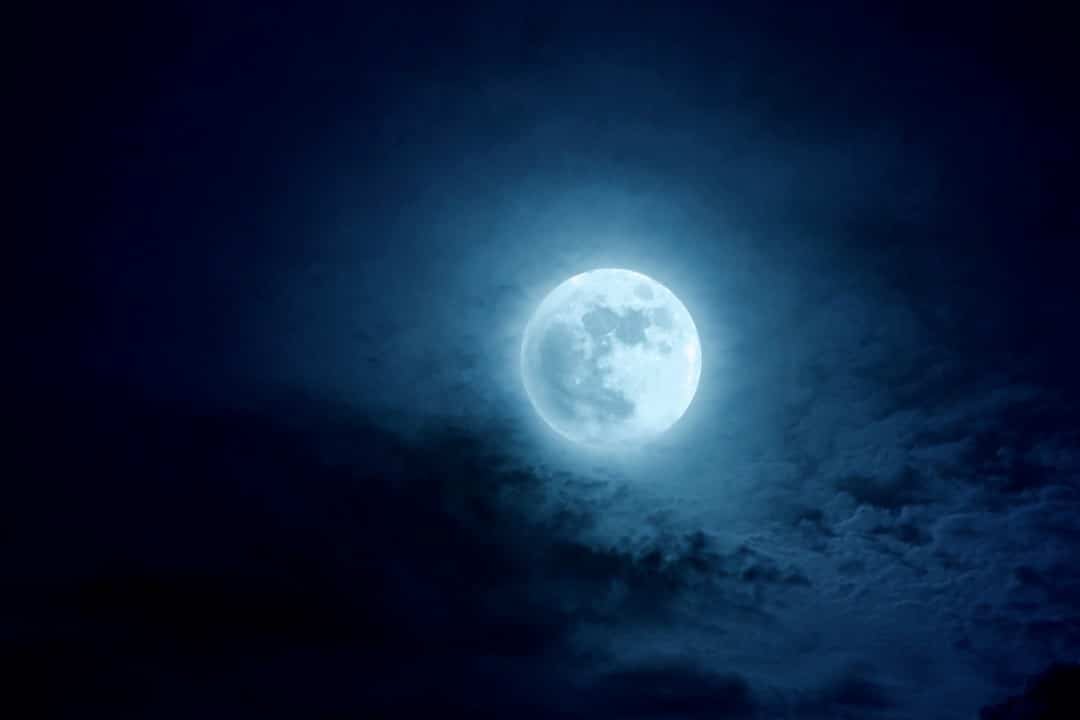
The night sky on May 31, 2026 will record the simultaneous occurrence of two specific astronomical events, classified by scientists as Lua Azul and Microlua. The combination of orbital and calendar factors allows the Terra natural satellite to be observed in its full phase for the second time in the same month, while it reaches the point of greatest distance from the planet. The event mobilizes researchers and astronomy institutes to monitor visibility conditions.
The overlap of these two orbital and temporal characteristics generates an atypical configuration in the celestial mapping of the year. Professor Gabriel Hickel, researcher at Universidade Federal of Itajubá and partner of Observatório Nacional, follows the mathematical projections that confirm the date. The dynamics involves the synchrony between the lunar translation and the division of calendar months, resulting in an observation window that requires favorable meteorological conditions to capture clear images from the Earth’s surface.
Entendimento of the double phenomenon in the astronomical calendar
The nomenclature adopted by astronomers for the second full phase within a period of 30 or 31 days has no relation to the physical coloring of the satellite. The term merely establishes a temporal marker to organize the counting of lunar cycles in relation to the Gregorian calendar used globally. The natural lag between the days of the month and the exact time of the lunar orbit creates the mathematical scenario necessary for this repetition.
The complete cycle of lunar phases requires approximately 29.5 days to complete, a period known as the synodic month. Quando the first full phase aligns with the first or second day of a long month, counting the days allows the cycle to close again before the turn to the following month. Essa temporal mechanics guarantees the occurrence of the event every two or three years, depending on the distribution of leap years and the orbital position.
Continuous monitoring of these orbital variations maintains the accuracy of astronomical ephemerides published annually by research centers. The compilation of data on the frequency of these events feeds the databases of scientific institutes. Statistical analysis of past and future occurrences allows the creation of high-precision predictive models for planning observation missions.
Distanciamento orbital defines occurrence of lunar apogee
The second factor that characterizes the night of May 31, 2026 involves the elliptical trajectory that Lua describes around Terra. Diferente of a perfect circle, the orbit presents points of greatest approximation and greatest distance in relation to the planet’s center of gravity. The moment of maximum distance is technically called apogee, a condition that underlies the classification of the satellite on this specific date.
Durante the apogee, the physical distance between the two celestial bodies reaches its maximum limit within that specific orbital cycle. The direct visual consequence of this geometric position is a slight reduction in the apparent diameter of the lunar disk when observed from the Earth’s surface. Astronomical measuring instruments record the variation in kilometers, confirming the extreme position on the ellipse traced in space.
Human perception of this change in size with the naked eye has limitations, requiring the use of calibrated optical equipment for accurate measurement of the angular diameter. The event is positioned as the exact opposite of the perigee configuration, a moment in which maximum proximity generates the opposite visual effect. Comparative photographic documentation between the two extreme positions helps researchers in practical demonstration of celestial mechanics to the general public.
Alinhamento visual with the star Antares in the constellation Escorpião
Mapping of the sky for the date indicates the presence of a third prominent feature in the same observation region. The star Antares, classified as the brightest red supergiant in the Escorpião constellation, will be positioned in apparent angular proximity to the lunar disk. The geometric configuration between the stars creates an important visual reference point for the exact location of the phenomenon.
Antares’s characteristic reddish light emission establishes a direct contrast with the reflection of sunlight from Lua’s silvery surface. Astronomical catalogs classify the star as one of the brightest in the night sky, which makes it easy to identify even in areas with moderate light pollution. The relative positioning between the two celestial bodies varies over the hours due to the Earth’s rotation.
Tracking the apparent trajectory of the Escorpião constellation provides observers with a natural guide for monitoring the event from early evening. The dynamics of movement in the firmament allows different regions of the planet to register alignment at varying angles, depending on the observer’s latitude. Research institutes use these conjunctions to calibrate automatic tracking instruments installed on ground-based telescopes.
Parâmetros technicians for observation and photographic recording
Preparation for collecting images and visual data requires compliance with basic astronomical observation protocols. The technical guidelines provided by Observatório Nacional experts aim to optimize the capture of reflected light and minimize atmospheric distortions common in urban areas. Prior planning of the observation location and time determines the quality of the final record obtained by the equipment.
- Initial monitoring should begin at the moment Lua rises, on the night of May 30, to take advantage of atmospheric refraction on the horizon.
- The maximum angular approach to the star Antares will be recorded during the dawn, close to the time of Lua’s sunset in the transition to June 1st.
- The search for observation sites requires choosing elevated terrain with an unobstructed horizon, avoiding interference from buildings and direct artificial lighting.
- Photographic recording with mobile devices requires activating manual exposure mode to control light input and avoid overexposure of the lunar disk.
- The composition of images can use physical elements of the Earth’s landscape to create proportion scales and highlight the optical effect of magnification on the horizon.
The application of these capture techniques allows obtaining digital files with sufficient resolution for subsequent analysis. Manual control of exposure time and camera sensor sensitivity prevents concentrated glare from washing out details in lunar craters and plains. Stabilizing the equipment with tripods reduces the loss of sharpness caused by the natural movement of the hands during the click.
Impacto of the lunar cycle when counting the Gregorian months
The structuring of the current civil calendar is based on the translational movement of Terra around Sol, disregarding lunar phases for dividing the months. Essa mathematical independence between the solar and lunar systems generates the numerical discrepancies that enable the occurrence of two full phases in the same monthly interval. The Gregorian model, adopted internationally, sets the months in blocks of 28 to 31 days, creating the necessary gap for the event.
The historical study of time measurement demonstrates that ancient civilizations used strictly lunar calendars, where each month corresponded exactly to a complete synodic cycle. The transition to the solar system required mathematical adaptations that resulted in the current configuration of days. Systematic observation of the night sky continues to provide essential information for understanding the mechanics of the solar system and maintaining accurate timekeeping.



