
Paris Saint-Germain and Arsenal draw in the final and decide the Champions League title on penalties
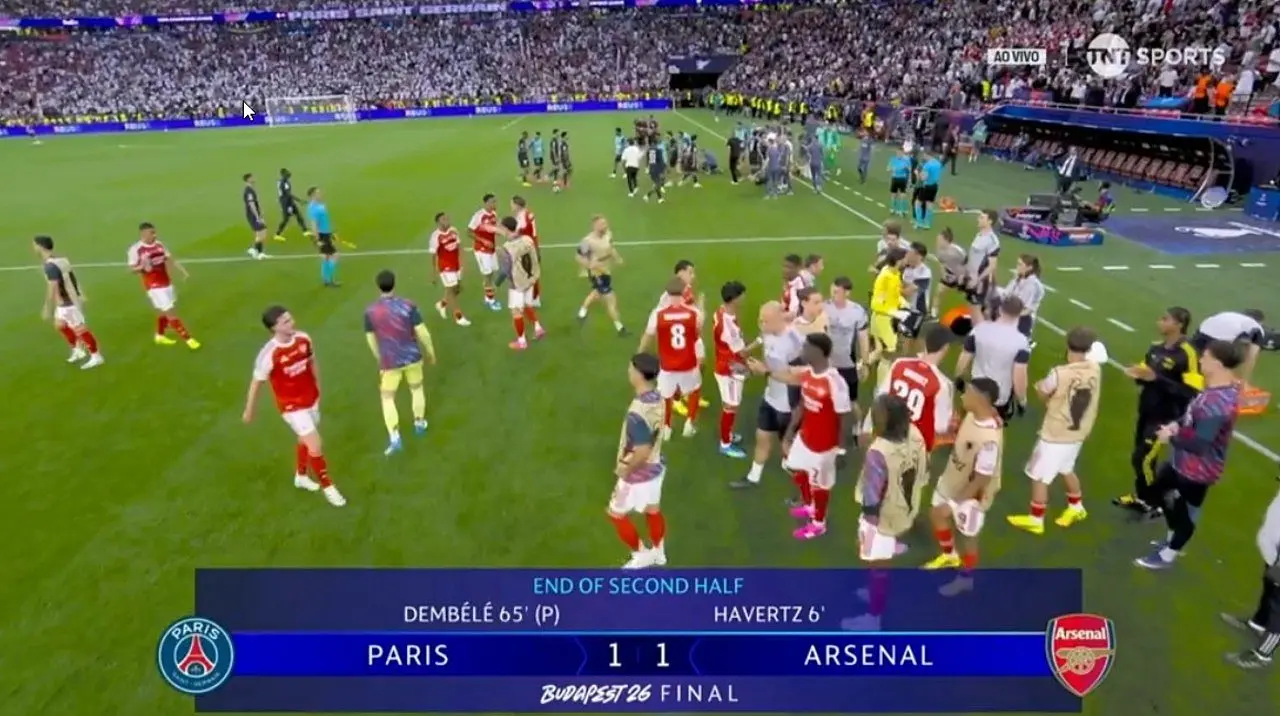
The decision for the 2025/26 Champions League season heads towards a penalty shootout after a 1-1 draw between Paris Saint-Germain and Arsenal. The decisive clash took place at Puskás Aréna, where the teams fought an intense tactical battle during the regular 90 minutes and extra time. The result reflects the balance of forces in the current European football scenario. The teams will seek the continent’s top trophy at the lime mark. Expectation grips the fans present at the stadium.
The clash presented distinct moments of superiority for each side throughout the more than two hours of the ball rolling. The English team opted for a solid defensive posture after opening the scoring early. The French team needed to demonstrate resilience to seek equality on the scoreboard. Physical fatigue was evident in the final minutes of extra time. Defining the champion will require precision and emotional control from the athletes.
Puskás Aréna received maximum capacity for the most anticipated sporting event of the year. Torcedores from different parts of Europa traveled to follow the tactical duel between two world football powers. The security scheme around the stadium worked without recording any serious incidents before the opening whistle. The match organizers prepared a closing ceremony before the players entered the pitch. The atmosphere in the stands reflected the magnitude of a continental final.
Learn more: World football stars await clubs: see who is free after the end of the transfer window
English Vantagem at the beginning and the French reaction in the second stage
The score was opened just 5 minutes into the first half by striker Havertz. The Arsenal player took advantage of a mistake in the ball leaving the Paris Saint-Germain defense to finish with a cross. The low shot beat the goalkeeper and completely changed the dynamics of the match. Esse early goal forced the French team to advance their lines and seek the attack incessantly. Ball possession began to be largely dominated by the Paris team.
Apesar of the game volume, the defensive system set up by the English made infiltrations through the middle difficult. Paris Saint-Germain equalized just 19 minutes into the second half. Equality came through a penalty kick converted by Dembélé. The maximum penalty was awarded by the referee after Kvaratskhelia was brought down inside the box by Mosquera. The move generated a lot of complaints from the London team’s defenders.
The equalizing goal ignited the match and changed the momentum of the teams on the field. Paris Saint-Germain intensified the offensive pressure in an attempt to turn the score around in regulation time. Arsenal retreated its lines and began to explore counterattacks at speed. The equality scenario persisted until the final whistle of the 90 minutes. The European title decision had to go into extra time.
Prorrogação marked by territorial dominance and wasted chances
The complementary stage of the match was divided into two very tense 15-minute halves. The physical exhaustion of the players resulted in harsher plays and passing errors in midfield. The nervousness was evident in the first half of extra time. Nuno Mendes, from Paris Saint-Germain, received a yellow card after pulling Madueke’s shirt to stop a dangerous advance. The atmosphere also heated up on the benches.
Arsenal’s coach, Mikel Arteta, was warned with a yellow card for a blatant complaint against the refereeing. Midfielder Rice also received a similar punishment shortly afterwards. The second half of extra time saw Paris Saint-Germain absolutely dominate possession of the ball. The French team achieved 74% control of offensive actions. The volume of submissions also highlighted the territorial superiority of the French.
Paris Saint-Germain registered 12 goal attempts against just one from Arsenal in the final stretch of extra time. Kvaratskhelia almost secured the title in the 31st minute of the second half when he hit the post with a cross shot. Barcola came on during the match and had two clear opportunities to score in the final minutes. The attacker was unable to finish with precision. The score remained unchanged until the end of extra time.
On the same topic: Tottenham demands R$180 million to negotiate Richarlison with Turkish club
Alterações tactics and physical exhaustion before penalties
The coaches needed to use the bench to oxygenate the teams during extra time. The substitutions sought to maintain intensity in marking and renew the offensive sector. The intense pace of the European final demanded maximum physical condition from the athletes on the field. The changes altered the tactical structure of both teams in decisive moments.
- Zabarnyi took Marquinhos’s place in Paris Saint-Germain’s defensive system.
- Lucas Beraldo replaced Vitinha to reinforce the French team’s marking.
- Zaire-Emery took Fabián Ruiz’s place in Paris Saint-Germain’s midfield.
- Zubimendi was triggered on Arsenal to replace Lewis-Skelly.
- Eze replaced Havertz in command of the English team’s attack.
The changes promoted by Paris Saint-Germain tried to convert ball possession into real scoring chances. The departure of experienced players like Marquinhos indicated the need for fresh legs in defense. Arsenal focused on closing spaces in the middle and ensuring defensive solidity until the end. The entry of Eze sought to offer a speed option for London’s counterattacks. Nenhuma of the strategies avoided the penalty shootout.
The path of the teams and the weight of the European season
Arsenal reached the Champions League final on the back of a historic achievement on the national stage. The London club won the Premier League title in the 2025/26 season. The feat ended a 22-year drought without winning English football’s main competition. The cup was guaranteed one round in advance on May 19, 2026. Vice-leader Manchester City drew 1-1 against Bournemouth and confirmed their rival’s victory.
The victorious campaign at Inglaterra raised the confidence of Mikel Arteta’s men for the continental challenge. Arsenal averaged 6.1 shots and 4.7 corners per game throughout the European competition. The team accumulated an average of 1.8 yellow cards and no expulsions before the grand final. The numbers reflect a disciplined playing style focused on the efficiency of the defensive system.
Paris Saint-Germain built his career in Champions League based on offensive power. The French team recorded an average of 8.5 shots and 5.1 corners per match in the tournament. The team suffered from disciplinary problems throughout the campaign. The squad accumulated an average of 0.9 yellow cards per game and two expulsions in total. The confrontation at Puskás Aréna pitted French offensive intensity and English tactical balance face to face.
The season’s statistics highlight the different philosophies adopted by the two technical committees. Paris Saint-Germain prioritized maintaining ball possession in the attacking field to suffocate their opponents. Arsenal built its results off of quick transitions and low-block defensive compression. The direct clash in the final required strategic adaptations from both sides. The definition of the champion in the penalty shootout crowns a season of high technical level in European football.
Read also: Enzo Fernández opens up about ‘anger and crying’ at Chelsea in emotional farewell to City
More news in Latest News (EN)
See more → Sony clarifies launch timing and hardware price plans for PS6
 Sony PlayStation 6 cost nears $950 as memory prices climbAfD state election triumph prompts urgent review of Germany’s democratic foundationsAaron Judge returns to Yankees lineup, igniting playoff push after three-month rib injury absenceHigh-altitude tragedy: Climber perishes after fall on Aspen-area 14er summitEgyptian TV personality and 11 co-defendants condemned to death for large-scale synthetic drug traffickingPlayStation 6 component bills surge to $960 amid memory crunch
More news on Mix Vale
- 1Kyiv faces renewed ballistic missile assault after U.S. envoys’ peace mission concludes
- 2Families turn to online networks for flood victim data amidst official silence near Tibet border
- 3Indian civil servant gains widespread social media fame leading aggressive food safety crackdown
- 4LSU coach Lane Kiffin reveals strategic delay in Clemson game to gain competitive edge
- 5Rockstar North adds canine waste throwing to GTA 6 world
- 6Rockstar North details dog mechanics and street combat in GTA 6
- 7Corporate ChatGPT users gain custom text style replication
- 8Workplace ChatGPT starts copying individual writing styles
- 9Top Ukrainian prosecutor resigns following probe into vast illegal call center network scheme
- 10Calls intensify for Australia to assert foreign policy independence over extensive US military presence