
Rare Blue Moon lights up the sky on May 31st with 13 full moons in the year: understand the phenomenon

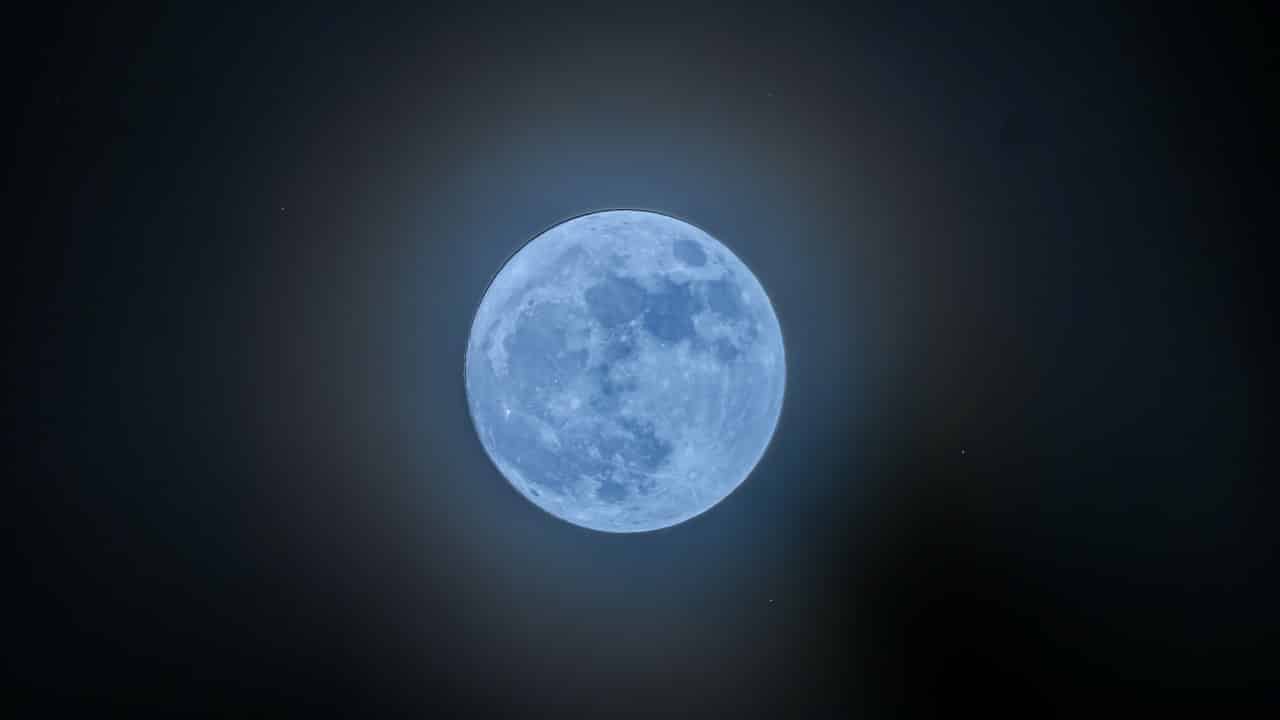
A rare “Moon Azul” will light up the night sky on May 31 this year, marking an astronomical event of global interest. The occurrence, which occurs on average every two or three years, represents an unusual spectacle as it allows for 13 full moons in a single year. Astrônomos and celestial observation enthusiasts eagerly await the opportunity to witness this phenomenon.
Lua will officially reach its “full” phase at 9:45am BST (British Summer Time) on Sunday. No Reino Unido, the natural satellite will be below the horizon at this time, offering chances of observation both on the night of Saturday, the 30th, and on the night of Sunday, May 31st. Contudo, it is essential to monitor the weather forecast as weather conditions are expected to change drastically over the weekend, with cloudy skies arriving from the west.
Fenômeno from Lua Azul May 31
The May 31 event will be notable for its rarity, with 13 full moons appearing over the course of a single year. Esta atypical frequency of full moons is what defines the phenomenon of Lua Azul, although the term has different interpretations. The visualization will directly depend on atmospheric conditions, which are variable in the region of Reino Unido, where Lua will be below the horizon at the exact moment of fullness.
The lunar cycle lasts approximately 29.5 days, while most calendar months have 30 or 31 days. Over time, these cycles align so that occasionally two full moons can occur within the same month, usually with one in the early days and one at the end. Este periodic misalignment provides the opportunity for an “Azul Moon” to be observed.
Definições Lua Azul histories
The best-known definition of Lua Azul, widely popularized, is the second full moon that appears in a calendar month. Essa interpretation, also called “Moon monthly Azul”, is relatively modern, dating back about 80 years. Ela was first published in 1946 in the magazine *Sky & Telescope* and had its diffusion amplified by the game *Trivial Pursuit* in the 1980s.
However, astronomers at Observatório Real and Greenwich consider this definition astronomically incorrect. Eles point to a more precise definition, the “seasonal Moon Azul”. Este concept occurs when an astronomical station, which normally records three full moons, presents four. Nesse scenario, the third full moon of the season is designated as “Moon Azul”, following a different logic than the monthly count.
Raridade of bluish color
It is important to highlight that the term “Lua Azul” has no relationship with the real color of the natural satellite. The Moon, in fact, does not acquire a bluish hue during these events. The name refers solely to the rarity of the occurrence.
Houve, however, historical records in which Lua presented a slightly bluish color. The most notable cases occurred after large volcanic eruptions, such as Krakatoa in 1883, in Indonésia. The massive volume of ash and aerosols released into the atmosphere cooled Terra by approximately 0.6°C and, at the same time, had the effect of making Lua appear slightly blue. Isso occurred because the ash particles absorbed the longer wavelength red light while allowing the shorter wavelength blue light to reach Terra with greater intensity. Devido due to its extreme rarity, this specific phenomenon is believed to have been the origin of the English expression “Once in a Blue Moon”, which describes something that happens very rarely.
Previsão time for observation
Lua Azul’s appearance coincides with a phase of change in Reino Unido’s weather patterns. Meteorological conditions are crucial for the visibility of the phenomenon, and the passage of clouds coming from Atlântico may compromise the experience for some observers. The meteorology indicates a mixed scenario for the next few days, with significant variation from east to west.
- Sábado:Inglaterra and País of Gales should have a sunny, warmer day. Sporadic Chuva and clouds in Escócia and Irlanda of Norte will move to other regions of Reino Unido during the night.
- Saturday’s Noite:Espera clear skies are expected to persist for longer in East Anglia, in the southeast of Inglaterra and in the eastern region of Midlands.
- Domingo:The air will be colder, with a lot of cloudiness and some rain showers in several areas.
- Sunday’s Noite:Clouds are expected to dissipate in the east of Reino Unido, while rain showers will continue in western areas.
- Melhor option:Generally speaking, the east of Reino Unido offers the best chances for a clear observation.
Eventos astronomical futures
Além from Lua Azul May 31st, the year 2026 is set to feature other notable skywatching events. The astronomical community is already preparing the calendar so that enthusiasts and researchers can monitor future celestial phenomena. Acompanhar lunar and planetary movements and appearances continues to be a field of great fascination and study.



