SBT digital platforms record instability in the Champions League final between PSG and Arsenal

The SBT news portal and the +SBT streaming application experienced technical instability during the broadcast of the Champions League final between PSG and Arsenal this Saturday. Milhares fans reported access difficulties, slow page loading and connection errors when watching the decisive match. The confrontation took place at Puskás Arena, located at Budapeste, at Hungria. The São Paulo broadcaster holds the exclusive rights to show the tournament on open television in Brazilian territory. The company’s technology team had to act quickly to try to stabilize the servers in the face of the high volume of simultaneous traffic.
Falhas technicals begin during pre-game coverage
The first records of failures in the digital system began shortly after the start of pre-game coverage, which was scheduled for 11 am Brasília time. Espectadores who attempted to access online content encountered pages that took excessively long to load or displayed error messages in the browser. Algumas people were able to establish a connection with the video player for a brief moment before the internet signal was interrupted again. The peak of simultaneous accesses exceeded the initial estimates of the broadcaster’s engineering team.
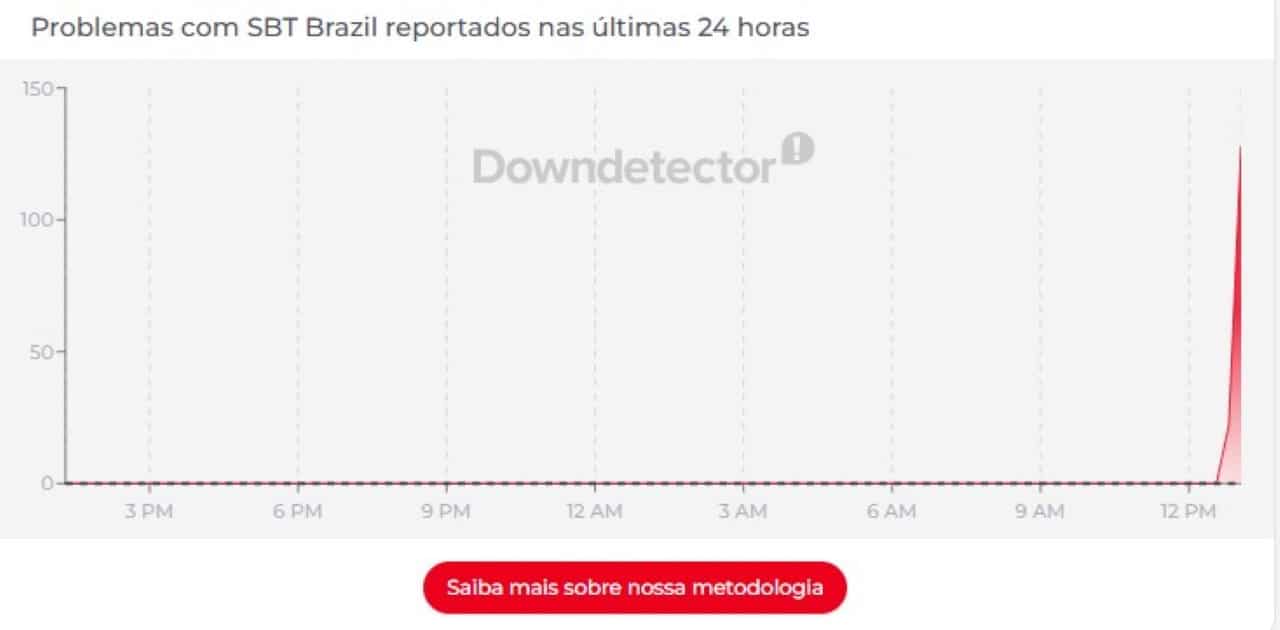
Usuários from different parts of the country used social media to document access difficulties throughout the morning and early afternoon. The overload on servers directly affected the experience of those who depended exclusively on mobile devices or computers to watch the European clash. Profissionais from the broadcaster’s information technology department initiated contingency protocols to redistribute the data load. The main objective was to prioritize the delivery of the video package to users who were already connected to the platform.
Monitoring of complaints indicated specific patterns of technical failures on different platforms of the communication company.
- Torcedores located in São Paulo, Rio of Janeiro and Minas Gerais concentrated the largest volume of notifications about signal drops.
- The most frequent errors reported by Internet users involved the image freezing and the appearance of a white screen in the player.
- The official +SBT app also demonstrated severe slowness in authenticating new users on smartphones and tablets.
Instability persisted during the opening minutes of the official match. Técnicos worked on redirecting internet routes to alleviate the most congested connection nodes. The company’s communications avoided issuing detailed statements during the game’s progress, focusing efforts on practical resolution of the network problem.
Sinal from open television remains unchanged in the decision
Apesar Despite the setbacks recorded in the digital environment, the transmission of the game via the open television signal operated with stability throughout the entire sports schedule. Most of the network’s affiliates across the country did not report any drops or interruptions in image and sound delivery. The public that chose to follow the match on traditional television sets was able to watch the event without the bottlenecks faced by internet users. The television engineering operation differs substantially from the infrastructure required to support internet broadcasts.
Coverage of the event included a team of professionals sent directly to the stage of the European decision. The narration of the match was the responsibility of Tiago Leifert, accompanied by tactical comments and analyzes from Mauro Beting, Alexandre Pato and Nadine Bastos. Repórteres from the broadcaster performed live entries to show behind the scenes of the organization and the atmosphere of the fans around the Hungarian stadium. The opening whistle took place promptly at 1pm, a time when television audiences usually reach their highest levels on continental finals days.
The presence of Brazilian players in the PSG and Arsenal squads significantly increased the interest of the national public in the clash. The broadcaster prepared a special scheme to capture exclusive images to enrich the official broadcast generated by the tournament organizer. The work of the reporting team on European soil flowed normally into the open TV programming schedule. The contrast between the solidity of transmission via antenna and the instability of streaming highlighted the technical differences in the distribution of live content.



Sobrecarga of servers reflects demand for digital consumption
The Champions League final historically represents one of the sporting events with the greatest audience appeal on the global calendar. Especialistas in network infrastructure point out that abrupt traffic spikes constitute a complex challenge even for streaming platforms consolidated in the technology market. SBT has made recent investments to expand the capacity of its servers for the current European football season. The number of simultaneous requests in the minutes before the start of the match exceeded the safety margin established by software engineers.
The +SBT app took on the role of the main alternative for spectators who were away from home or without access to a television at the time of the game. Essa mass migration of users to the virtual environment generated a bottleneck in the system’s authentication layer. Redes content distribution operated at the limit of its data transfer capacity to try to meet the demand concentrated in Brazilian territory. The latency in the servers’ response resulted in the error screens documented by fans.
Technical support Equipes maintained real-time monitoring of digital infrastructure control panels. Manobras load balancing systems were run continuously to try to mitigate the effects of overload and restore access gradually. The complexity of managing a high-definition video stream for hundreds of thousands of individual connections requires dynamic adjustments to cloud resource allocation. Partial stabilization of the service only occurred as the match progressed, when the flow of new accesses decreased.
Histórico of online broadcasts poses challenges to the sector
The occurrence of instability during major live sports broadcasts makes up the current scenario of digital media consumption. Recent history records similar episodes on several global platforms that offer high-demand events in real time. The accelerated growth of internet video consumption forces traditional broadcasters to update their content distribution architectures. The transition from the classic broadcasting model to the multiplatform ecosystem requires continuous hardware and software adaptations.
SBT’s digitalization strategy gained strength with the launch of new products aimed at on-demand consumption and simultaneous broadcasts. Exhibiting a tournament of Champions League’s size serves as a rigorous stress test for the operational capacity of these new technological tools. The access data collected during the event provides essential metrics for sizing the company’s network infrastructure. The analysis of these technical bottlenecks allows the implementation of structural corrections for future sports coverage.
Torcedores who remained unable to access the video player turned to text news portals and radio stations to follow the evolution of the score. The match continued its normal course on the Puskás Arena pitch until the referee’s final whistle. The awards ceremony and the cup presentation were broadcast in full on open television, ending official coverage of the European tournament. The broadcaster’s technology department continued with server stabilization work after the end of the sporting event.
Veja Tambem em Latest News (EN)
Galaxy S26 line gains automatic integration with Apple’s AirDrop through Quick Share

HyperOS 3.1 system with Android 16 arrives on Xiaomi cell phones without public testing phase

Accident on BR-116 leaves 16 dead in a family in Santa Terezinha, Bahia

IOS 26.4 update arrives on iPhone with advanced security and playlists generated by artificial intelligence

Iván Cepeda backs down and denies evidence of irregularities in Colombia’s elections

Chris Robinson responds to boos from fans at The Black Crowes concert in Florida

Manufacturer OnePlus prepares portable Android console with exclusive physical controls for shooting games

Apple releases iOS 26.4 for iPhone with new emojis and advanced audio features

New Anker 300 W and 26,250 mAh portable battery hits the Chinese market with high compatibility

Disney confirms releases of Avatar 4 and 5 for 2029 and 2031 after sales of Fire and Ash

James Webb Telescope maps web of primordial gas that connects galaxies after the Big Bang