Artificial intelligence will make Apple CarPlay obsolete, says Rivian about the future of vehicles
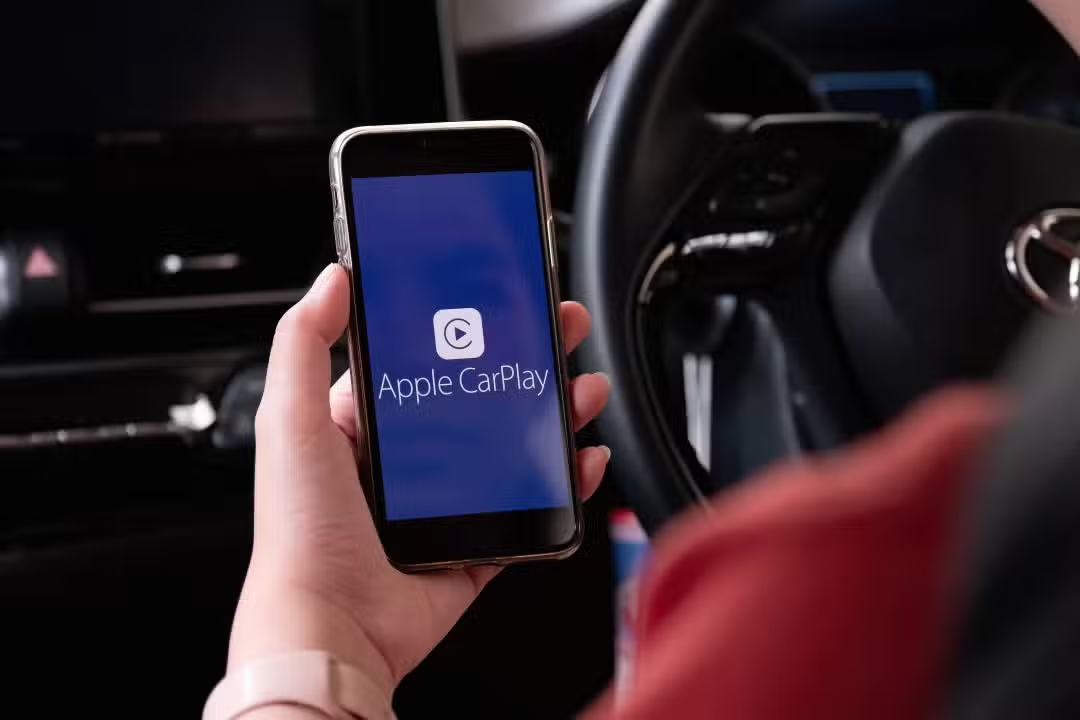
Rivian stated that the rise of artificial intelligence will transform the control experience in vehicles. Essa vision positions systems like Apple CarPlay and Android Auto as obsolete technologies, according to the electric car manufacturer. The company’s bet is on the deep integration of voice assistants, promising a fundamental redefinition of the driver’s interaction with the car.
Wassym Bensaid, head of software at Rivian, highlighted the potential of AI. Ele believes voice will become the primary interface in vehicles. Essa approach minimizes the need for screen mirroring and prioritizes solutions developed internally by the company, aligning with a trend observed in other large automakers.
Rivian prioritizes in-house software development and AI
Rivian’s software philosophy diverges from reliance on smartphone mirroring platforms. Bensaid explained in an interview with the Decoder podcast that technologies such as Apple CarPlay and Android Auto completely take over the vehicle’s infotainment system. Esta condition does not align with Rivian’s view of user interaction with its own software. The company, from the beginning, chose to develop internal solutions.
Diversos car manufacturers, including Tesla and General Motors, have also chosen their own embedded software solutions. Essa trend indicates an industry move towards greater control over the user experience. Rivian argues that an in-house solution allows for deeper, more personalized integration. Isso translates into features tailored specifically for your vehicles and drivers.
Developing a proprietary software ecosystem gives Rivian the flexibility to innovate quickly. The company can implement new functions and improvements without having to wait for updates from third parties. Isso ensures agility in responding to consumer demands and technological evolution.
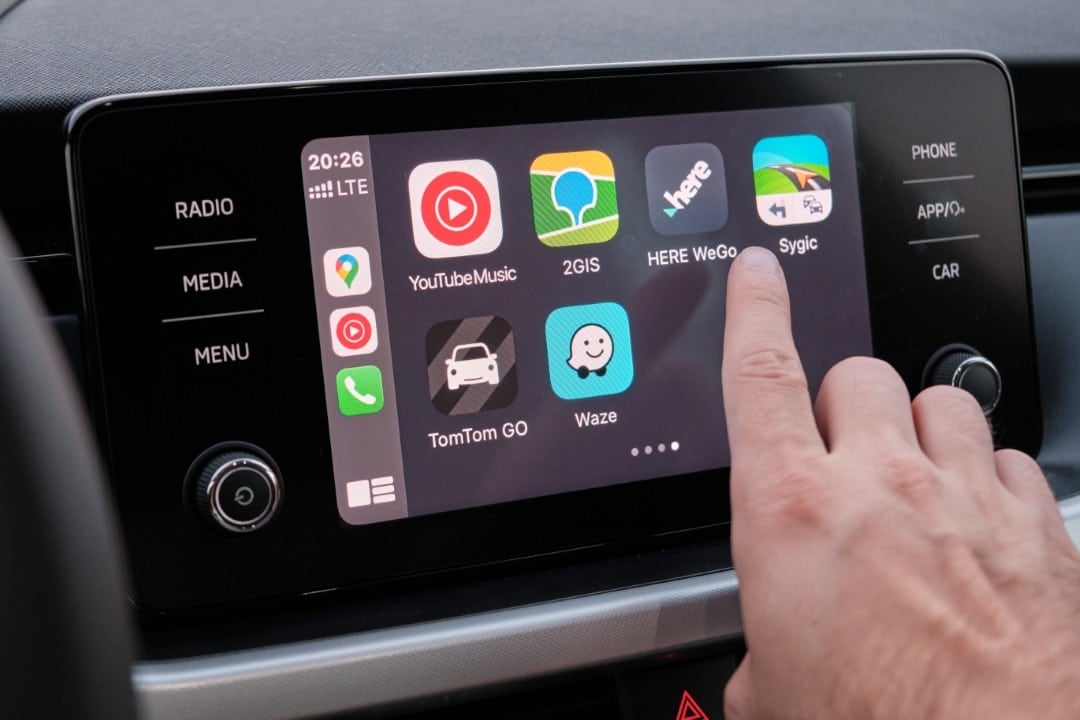
Interface voice with artificial intelligence as the future of controls
Rivian believes that artificial intelligence will be the main way drivers interact with their cars. Recursos like Rivian Assistant will be central, controlling important vehicle functions as the technology matures. Essa uses voice as the primary interface to simplify car operation.
Bensaid stated that the advancement of AI technologies makes the CarPlay debate completely obsolete. Ele highlighted Rivian’s investment in its own technology and software. The executive believes that cars are migrating from being just “defined by software” to being “defined by AI”, opening up new possibilities.
The experience with voice assistants has not always been ideal in the past, leading to complaints from customers, including Rivian. Bensaid recognizes these challenges. Ele emphasizes the need to continually improve speech recognition software. The company is committed to correcting these issues, ensuring greater reliability.
Interaction with applications, traditionally based on buttons and icons, will be transformed. Segundo Bensaid, an “agentic integration” will offer a more complete user experience. Isso means that the AI will act as an intelligent agent, understanding and executing complex commands.


Redução Demand for CarPlay Drives Rivian Strategy
Rivian’s strategy of prioritizing in-house software development and AI has minimized demand for integrations like CarPlay. Há Five years ago, more than 70% of respondents to an Rivian survey expressed interest in having Apple CarPlay in their vehicles. Contudo, this request has dropped below 25% recently.
Essa’s significant drop reflects Rivian’s success in improving its own infotainment solutions. The company has released a number of features over the past five years. Esses developments have increased the level of convenience of onboard technology, surpassing Apple’s ability to offer similar CarPlay integrations so quickly.
The advantages of a proprietary solution include:
- Agilidade in development:Rivian can launch and update features faster without relying on external partners.
- Redução hardware costs:Deep integration with native AI minimizes the need for additional hardware.
- Interface simplified:Elimina the need to navigate complex menus to find resources.
- Custom Experiência:The software is designed specifically for the vehicle and its characteristics.
- Controle total over data:Rivian keeps track of vehicle usage data.
The ability to innovate independently has allowed Rivian to meet consumer expectations with alternative solutions. The company demonstrates that it is possible to offer a satisfactory user experience without resorting to smartphone mirroring systems. Essa approach reinforces the vision of an automotive future driven by artificial intelligence.
Otimização hardware and local artificial intelligence inference
Rivian also focuses on optimizing the computational costs associated with AI. The company can implement usage limits to prevent users from chatting with the assistant for hours. Essa measure aims to control cloud processing spending. However, the main goal is to move much of the AI inference into the vehicle itself.
Bensaid mentioned that the upcoming XMM3 infotainment chipset will enable this transition. With its own hardware and software, the vehicle will process conversational commands locally. Isso reduces dependency on remote data centers. The onboard processing capacity guarantees greater speed and privacy in interactions.
The automotive industry is moving towards solutions that offer greater convenience to the driver. Isso also provides more useful data for automakers. Embora The ability of companies like Rivian to deliver fully AI-controlled cars on a large scale is still a question, the advances are remarkable.
Voice Assistentes have become surprisingly good at interpreting human commands. The Volvo EX60, with its Gemini integration, impressed in recent reviews. Esse’s progress suggests that the future of truly capable in-vehicle voice assistants may arrive sooner than many expect. Rivian bets on this future with its software and hardware architecture.
Veja Tambem em Latest News (EN)

New Xiaomi Watch S5 debuts in China with 21-day battery life and integrated HyperOS 3 system

Alignment between Sun and Moon in 2026 causes total darkness in Europe and mobilizes scientific tourism

PlayStation Store releases catalog with discounts of up to 75 percent on games for PS4 and PS5

São Paulo plans to renew Calleri until 2028 and has a striker in the squad

Streaming platforms reveal 20 unmissable films to watch in June on Netflix, Prime Video, Peacock and HBO Max

Norway dominates Sweden and takes a 3-0 lead at half-time in an international friendly
BYD Dolphin Mini surpasses Volkswagen Tera by 3 units in May; Fiat Strada leads overall sales

Palmeiras defines Luighi as negotiable and shields Flaco López and Allan against market harassment

Croatia calls up 26 players for World Cup with Luka Modric and Bruno Petkovic out

Phoebe Bridgers announces benefit concert at Madison Square Garden with tickets starting at $1

Disney+ displays intense programming in June with pre-Cup, Series B and Roland Garros