

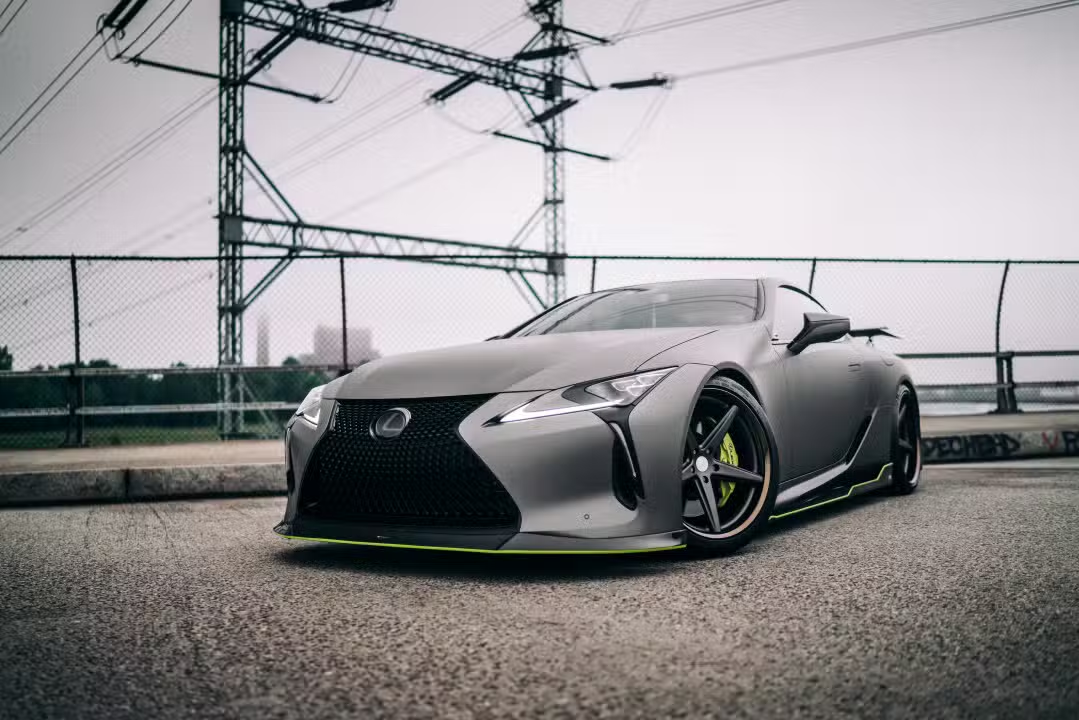
Lexus has decided to cancel the development project for its next generation electric sedan. The model was expected to directly rival the BMW i3 and the Mercedes-Benz Classe C EV.
The luxury Japanese automaker’s initiative was inspired by the LF-ZC concept, representing an ambitious step in the electrification of its lineup. The decision was motivated by the reduction in demand for electric vehicles in the US market, redirecting the focus to crossovers and SUVs with greater commercial appeal.
Projeto ambitious and cutting-edge technology
Lexus’s canceled electric model was at an advanced stage of development, with expectations of incorporating significant innovations that would put it at the forefront of automotive technology. Seu design would be intrinsically based on the LF-ZC concept, featuring a sports sedan, with a low profile and a notably futuristic aesthetic. Inicialmente, production of what would be the electric IS was scheduled to begin later this year, indicating an aggressive schedule for its launch. However, these plans were postponed until mid-2027 before the recent definitive cancellation, according to reports.
One of the most notable and technologically advanced features of the design was the intention to utilize gigacasted parts. Estes are significantly larger chassis and body components than those typically used in the traditional automotive industry. Essa technology, pioneered by Tesla in its Modelo Y, aims to simplify the assembly process. Além also seeks to reduce the number of parts required and, consequently, reduce production costs, in addition to increasing the structural rigidity of the vehicle for better performance and safety. Sua adoption by the Toyota and Lexus demonstrates a commitment to innovation in vehicle manufacturing methods.
Previously revealed Detalhes indicated that the top-of-the-line version of the electric sedan would have a power output of approximately 500 horsepower. The estimated range would reach an impressive 1,000 km on a single charge, a significant milestone that could alleviate many consumers’ “range anxiety.”
Isso suggested the possible integration of a solid-state battery, a technology in which Toyota has invested in research and development for years. Essas batteries promise higher energy density, faster charging times and greater safety compared to conventional lithium-ion batteries. The innovation could revolutionize the electric vehicle market.
The vehicle would also be about 3 inches longer than the current IS sedan. Suas dimensions would make it 2.5 cm shorter than the ES model, positioning it in a specific niche within the brand’s sedan range.
Strategic Reorientação and alternatives on the market
The main reason for abandoning the project lies in the perception of a declining demand for electric vehicles in the North American market. Cenário is what has led many automakers to reevaluate their electrification strategies on a global scale. Fatores as the still-developing charging infrastructure and the high prices of many electric models contributed to this slowdown in growth. A certain apprehension among consumers regarding technology and real autonomy under different conditions of use also affected confidence.
Lexus, responding to this market trend and constantly changing policies, chooses to concentrate resources and investments in segments with greater volume and acceptance. Crossovers and SUVs, with their versatility, increased interior space and greater ground clearance, are widely preferred by today’s US consumers. Eles value practicality and a sense of security in their vehicles.
The company already offers electrified alternatives in its line that can satisfy a portion of buyers looking for a three-volume design with advanced propulsion. The Lexus ES, for example, offers electric and hybrid powertrain options. Embora the ES is a larger sedan than the canceled electric model, it represents a viable option within the brand’s range. The ES EV version starts at $48,895 and comes standard with an integrated NACS charging port, making it easy for owners to access a vast network of fast and convenient chargers.
Continuous Presença of the combustion IS and future launches
Apesar of the cancellation of the electric sedan and changes in the electrification strategy, the Lexus maintains the third generation of the combustion IS on the market. Este model was originally released in 2013 and has undergone three significant restyling to keep it competitive. The vehicle remains available in several key markets, including the Estados Unidos, with a starting price of US$46,795, offering an option for those who prefer traditional propulsion. Consumers can choose between 3.5-liter V6 or 5-liter V8 engines, both designed to offer different levels of performance and a dynamic driving experience.
The 2026 line, however, will bring an important change: the IS 300 hybrid variant will no longer be available. Essa decision marks yet another change in the model’s engine offering, simplifying the range of options for buyers. Lexus refuses to discontinue the current IS, indicating the strategic importance of the traditional sedan to its loyal customer base and brand identity, even in the face of the advancement of electrification. In the broader context of the group, Toyota demonstrates resilience and a multifaceted approach by launching several new electric models in the US this year, bucking the trend of slowing EV sales seen by many other manufacturers in the global market.
- Novos launches planned for the North American market, which reinforce the group’s commitment to electrification in different segments, include:
- Lexus TZ, a new electric vehicle from the luxury brand.
- Three-row SUV Toyota Highlander, which expands the offering of electrified family vehicles.
- Novo Corolla EV, with a truly futuristic look, which can meet the demand for an electric sedan smaller than the ES and serve a wider audience looking for a compact, zero-emissions vehicle.