
Manufacturer Samsung accelerates release of the One UI 8.5 system for more than 40 cell phone models
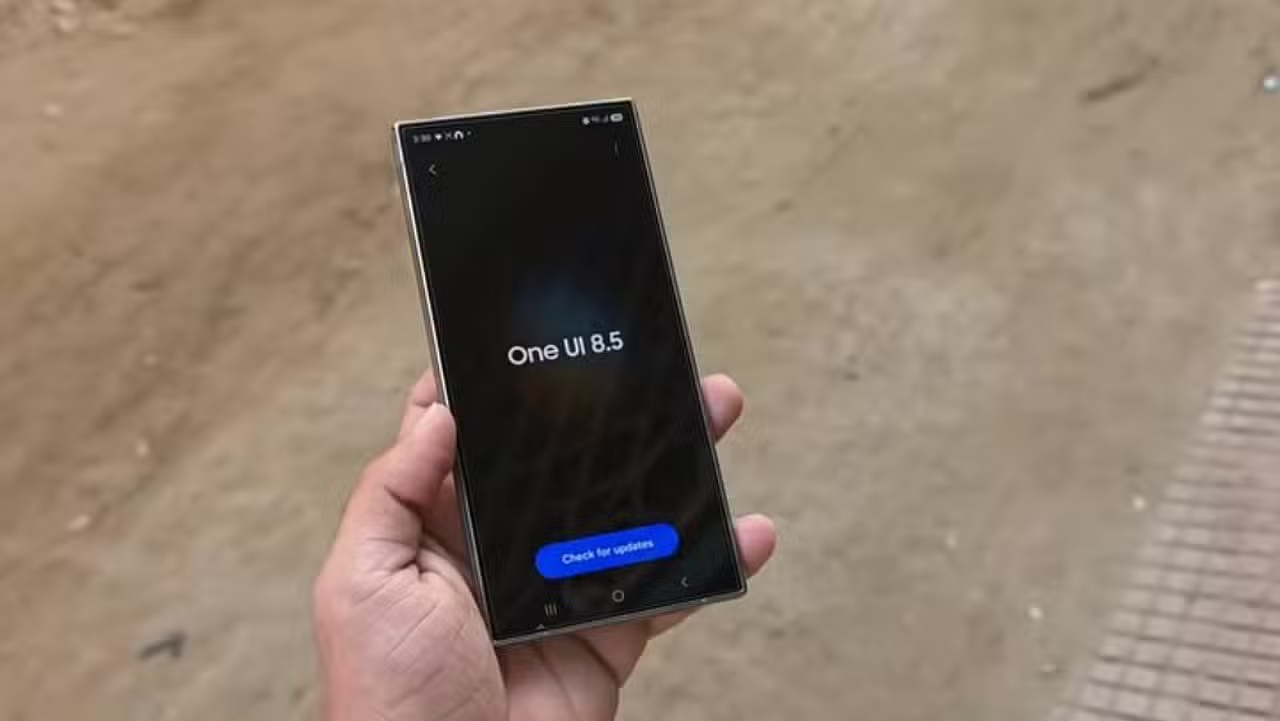
Samsung began global distribution of the One UI 8.5 interface on May 11, 2026. The software update reached more than 40 models of the brand’s cell phones and tablets in an interval of a few weeks. The South Korean manufacturer’s advancement exceeds the technology market’s expectations in relation to traditional deadlines. The delivery speed of the new operating system covers several product lines simultaneously.
The rapid release strategy directly impacts the experience of millions of consumers around the world. The company seeks to ensure that performance improvements reach users in the shortest possible time. Essa operational agility represents a competitive differentiator in today’s mobile device sector. The company’s logistical planning allowed a large-scale implementation without records of critical failures on distribution servers.
Estratégia simultaneous release in different regions
Samsung’s update schedule demonstrates a significant change in the way the company manages its data packages. Historicamente, smartphone manufacturers adopted spaced phases to release new versions of operating systems. The company’s current model contrasts with these old practices by making downloads available to multiple countries at the same time. The globalized approach requires a robust network infrastructure to support the intense traffic generated by devices.
The priority on delivery speed meets a constant consumer demand for technological innovations. Mobile device users value brands that keep their devices up to date and secure against vulnerabilities. The initial distribution performance of One UI 8.5 reflects the effectiveness of preliminary tests carried out by the brand’s engineers. The absence of considerable delays reinforces the reliability of the software transition process on equipment.
Especialistas from the technology industry note that the ability to update dozens of models quickly sets a new standard for the industry. Competition in the cell phone market requires companies to offer prolonged and efficient support. The South Korean manufacturer’s initiative puts pressure on other brands to review their own system release schedules. The final benefit falls on the consumer, who receives new resources with greater speed and stability.
Cobertura wide covers input and mid-range devices
The scope of the new version of the operating system is one of the most relevant aspects of this update cycle. One UI 8.5 is not just restricted to high-cost models, which traditionally occupy the top of companies’ priority list. The software package also includes input and intermediary devices, ensuring democratization of access to innovations. The presence of the Galaxy A16 smartphone in the list of compatible devices illustrates the company’s inclusion policy.
More affordable Modeloss often face long waiting periods before receiving major interface changes. The decision to prioritize these devices sends a clear message about the brand’s commitment to all price ranges. The initiative values the investment of customers who opt for more economical lines in retail stores. The entry-level cell phone market represents a significant portion of the company’s global sales and requires continuous attention.
The diversity of updated equipment includes the popular Galaxy S, Galaxy Z and Galaxy A series. Support also extends to the Galaxy M, Galaxy Tab lines and the Galaxy XCover category of rugged devices. Essa extensive coverage ensures that different consumer profiles can experience the navigation improvements. The company’s software policy gains strength with the inclusion of models launched in previous years and which continue to be in operation.



Official Relação for devices receiving One UI 8.5
The manufacturer released the complete list of equipment capable of installing the new user interface. The list includes everything from the most recent releases to devices from previous generations that still have active factory support. Owners of these models must observe system notifications to initiate the download procedure. The compatibility list covers the following brand product families:
- Galaxy S: S25, S25+, S25 Ultra, S25 Edge, S25 FE, S24, S24+, S24 Ultra, S24 FE, S23, S23+, S23 Ultra, S23 FE
- Galaxy Z: Z TriFold, Z Fold 7, Z Flip 7, Z Flip 7 FE, Z Fold SE, Z Fold 6, Z Flip 6, Z Fold 5, Z Flip 5
- Galaxy A: A56, A55, A36, A35, A26, A17, A16
- Galaxy M: M56
- Galaxy Tab: Tab S11, Tab S11 Ultra, Tab S10+, Tab S10 Ultra, Tab S10 Lite, Tab S10 FE, Tab S10 FE+, Tab S9, Tab S9+, Tab S9 Ultra, Tab S9 FE, Tab S9 FE+, Tab A11+, Tab Active 5
- Galaxy XCover: XCover 7 Pro, XCover 5 Pro
The extensive list confirms the company’s intention to maintain a unified and updated ecosystem. Software standardization facilitates application development and integration between different devices from the same brand. Users who have a company cell phone and tablet notice a more fluid transition between the screens of both devices. Maintaining a single system reduces fragmentation, a historical problem in the world of mobile devices based on the Google operating system.
Novidades visuals and guidance for system check
The update to One UI 8.5 introduces a series of improvements focused on the everyday consumer experience. The modifications focus on visual adjustments, performance gains and the addition of new customization tools. Users find more intuitive navigation and smoother transition animations when switching between heavy apps. Source code optimization allows programs to run more energy-efficiently on the device’s hardware.
Battery management has received special attention from developers in this version of the software. The system identifies usage patterns and suspends background processes that consume energy unnecessarily during the day. Home screen and lock screen customization options have been expanded to offer greater aesthetic control to the owner. The device’s security is also reinforced with corrections for recent vulnerabilities detected in the digital environment.
Consumers who have compatible devices can check the availability of the package manually. The procedure requires accessing the device’s settings menu, locating the software update section and selecting the download and install option. The distribution process takes place in regional batches to avoid overloading the technology company’s servers. The technical recommendation advises that the download be carried out using a stable Wi-Fi network and with the device connected to the socket to avoid interruptions.
Veja Tambem em Latest News (EN)

Yuki Yamada posts photo with beard and grimace on Instagram and surprises fans

Costco sees record demand at U.S. gas stations with lower prices

Passenger tries to enter cockpit and forces diversion of United Airlines flight to Madison

Astronomer explains white light recorded after meteor falls near volcano in Philippines

Comedian Sakamoto-chan reveals type 2 diabetes remission after lifestyle changes

Avi Loeb says discovery of alien intelligence can unite humanity amid global crises

Police investigate death of Hilde Ann Lynn Helphenstein in room at Rosewood São Paulo

Avi Loeb suggests that dark comet 1998 KY26 could be Soviet probe Phobos 1

Typhoon Chan-mi approaches Okinawa and Amami with strong winds this Tuesday

Bad smell in children’s feet has specific causes and can be controlled by parents

Google releases Android 17 Beta 4.1 for Pixel devices
