President Donald Trump says Iran did not notify US about interruption of peace talks, despite agency
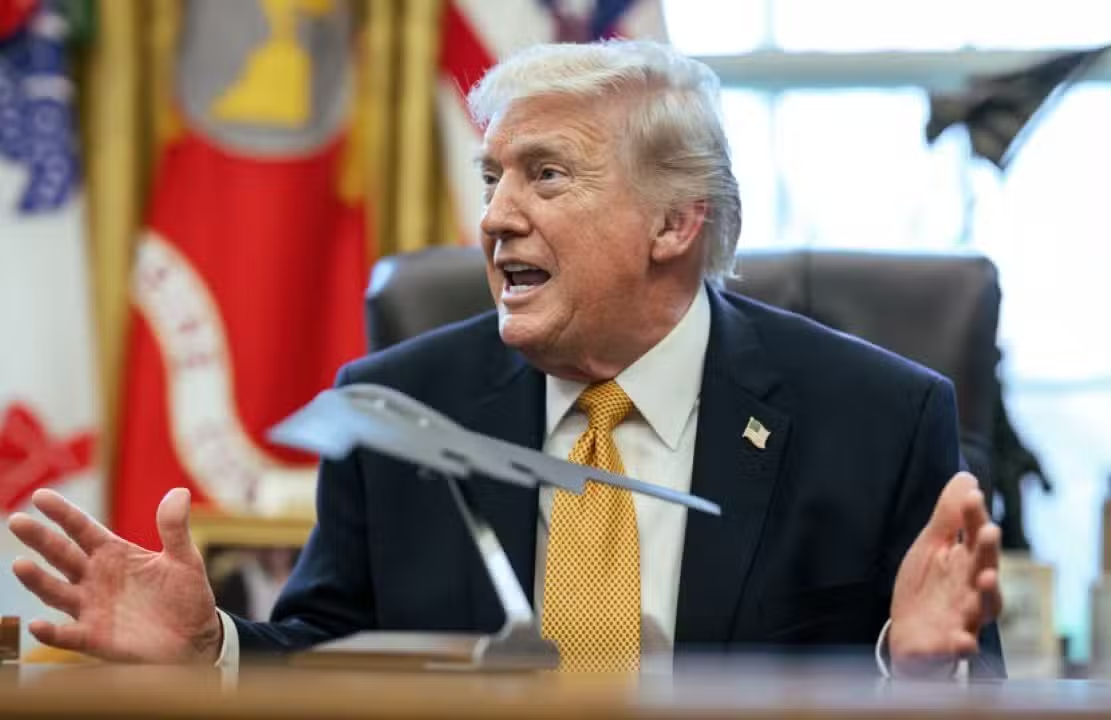
The president of Estados Unidos, Donald Trump, declared this Monday (1st) that the American government had not received any official notification from Irã regarding the suspension of negotiations aimed at ending the war. The statement differs from reports published by an Iranian news agency that indicated the interruption of dialogue between the nations.
Apesar of the possible interruption of talks, Trump expressed that there would be no problems in waiting for a mutually acceptable agreement. The context of indirect negotiations between Irã and the USA is sensitive, with mediators acting to facilitate communication between the parties and seek stability in the region.
Posição’s Estados Unidos on Dialogue
Trump commented to NBC News during a phone interview that the parties involved “have been talking too much, to be honest”, suggesting that “silence would be really nice”. The statement reflects a cautious stance and an apparent lack of urgency on the part of the American administration to speed up the process. Ele emphasized his perception that there is no pressure to close a deal quickly while maintaining a position of strength.
Ainda regarding the escalation of the situation, the American president clarified that a suspension of negotiations by Irã would not imply an immediate return to large-scale military operations by Estados Unidos in the region. Ele reiterated the maintenance of a containment strategy, stating that the “blockade is unshakable”. Esta tactic seeks to pressure the Iranian government through sanctions and other coercive measures, without resorting to direct confrontations that could increase global tensions.
Iranian Versão on interruption of dialogue
Iranian news agency Tasnim had previously reported that Irã had suspended its indirect negotiations with Estados Unidos. Segundo the agency, this decision came after Israel ordered its troops to advance deeper into Líbano, a move that intensified the regional conflict and raised stability concerns. The Israeli measure was seen as a destabilizing factor, directly impacting diplomatic efforts.
Irã, which maintains ties with militant groups in the region, reportedly took this decision as a response to perceived aggression, signaling a temporary retraction in dialogue. The suspension of negotiations highlights the complexity of relations in the Oriente Médio, where military actions in one country can have immediate repercussions on peace efforts in others. Official communication from Teerã regarding this interruption, however, has not yet reached Washington, according to president Trump.
Regional Cenário and the conflict in Líbano
The broader context of the suspension of negotiations includes the deteriorating situation in Líbano, as per reports of Israeli attacks on the neighboring nation. Análises indicate that Israel’s attacks on Líbano are significantly hampering any prospect of an end to the ongoing war in the region. Gabinete of Segurança of Israel has intensely debated the possibility of a ceasefire, but military operations continue.
Irã, in turn, expressed that it welcomes the idea of a ceasefire in Líbano, which demonstrates an openness to de-escalation on certain fronts of the conflict. However, Israeli military actions on the ground, especially the advance of troops, create an environment of distrust and make direct diplomatic progress unfeasible. Regional dynamics are marked by complex alliances and historical rivalries that constantly test the capacity for dialogue and peaceful resolution.



Poder bargaining and unshakable blockade
Trump has argued for having significant bargaining power over Teerã, indicating that the “silence” strategy and maintaining the blockade are key elements of his approach. Ele reiterated that it does not feel pressured by a deadline, which allows the US to sustain its negotiating position. The US administration seeks to ensure that any terms of agreement are favorable to the interests of the Estados Unidos and its allies.
- The president highlighted the following actions and stances several times:
- The belief that “silence would be very good” in negotiations.
- The belief that there is “no pressure to reach an agreement quickly”.
- The guarantee that the “blockade is unshakable” against Irã.
- The statement that there will not be “bombing everything there”, but rather containment.
- Maintaining “bargaining power” over Teerã.
Esses points demonstrate Casa Branca’s confidence in its ability to influence Irã’s behavior through non-military means, primarily using economic and diplomatic sanctions to achieve its strategic objectives. The insistence on the blockade aims to weaken the Iranian economy and limit its ability to finance activities that the US considers destabilizing.
Implicações of indirect trades
The indirect nature of the negotiations between Estados Unidos and Irã reflects the deep distrust and absence of effective direct diplomatic channels between the two countries. Mediadores, usually from allied or neutral nations, play a crucial role in conveying messages and proposals, trying to build bridges between administrations. Dynamic Essa, however, makes the process slower and more susceptible to interruptions.
The suspension communicated by the Iranian agency, although not officially confirmed by the US, adds a layer of uncertainty to the already fragile process. The success of future talks will depend not only on the political will of both sides, but also on the mediators’ ability to reactivate dialogue and find common ground, especially in light of the military escalation in the region. The current impasse highlights the persistent challenges in seeking a lasting resolution to the tensions between Washington and Teerã.
Veja Tambem em Latest News (EN)

Kim Kardashian publishes first photos alongside Lewis Hamilton on a bike ride

MSI Claw 8 EX AI+ is presented at Computex with Intel Arc G3 Extreme

Italy evaluates renewal of cut in fuel tax with gasoline at 2 euros per liter without discount

The Lone Gunmen celebrates 25 years as a spin-off of The X-Files with a comedic tone

PlayStation Plus Essential monthly games arrive in June with Grounded and Warhammer 40,000 Darktide

ROG Xbox Ally X20 Bundle arrives with translucent design and AR glasses for 20 years of ROG

Coronation Street dedicates episode to Alan Rothwell after original actor’s death

Preliminary agreement between Iran and the US is suspended after Israeli bombings in Lebanon

Alaskan Bush People star Matt Brown found dead in river at age 43 after disappearing

Nvidia announces Rtx Spark chip to reinvent the PC and challenge Intel and Apple

44-year-old man tries to abuse 5-year-old girl in Tyumen and is stopped by children in Russia