

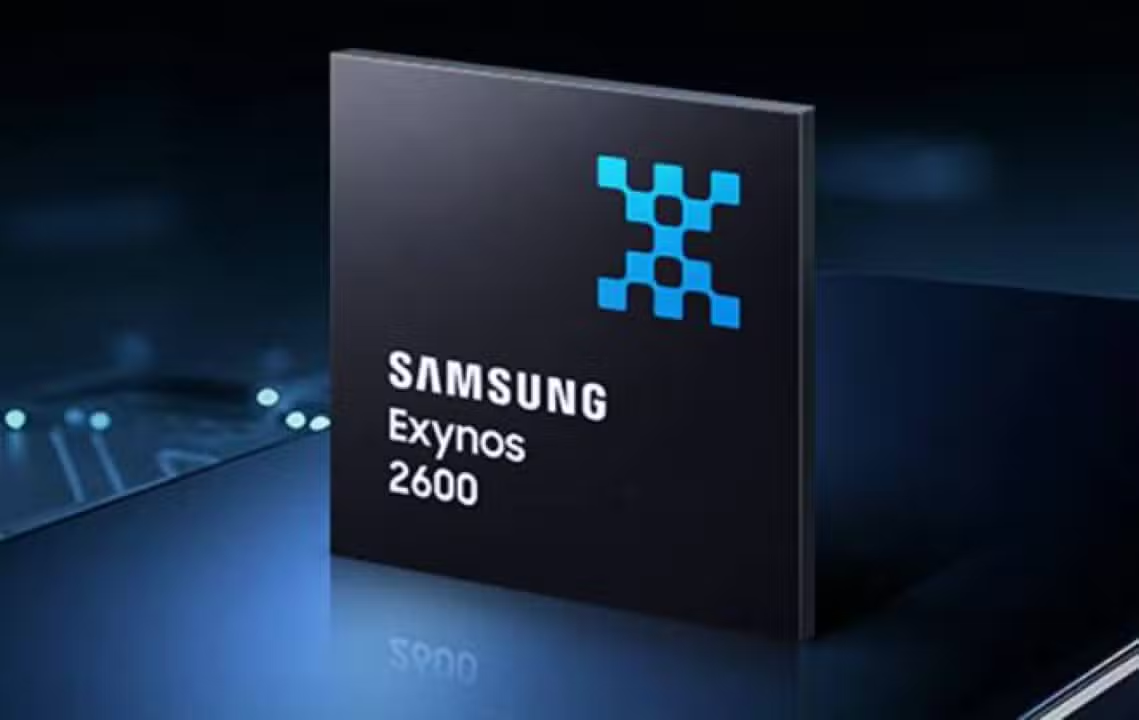
The Samsung’s Exynos 2600 processor recorded superior results to the Qualcomm’s Snapdragon 8 Elite Gen 5 in sustained performance evaluations. The South Korean component used a passive cooling solution integrated into the silicon during extreme stress procedures. The rival chip operated under cryogenic liquid nitrogen cooling. The architectural difference defined operational stability under maximum processing loads. Hardware with native dissipation maintained the operating frequency without experiencing sudden drops in performance.
The technical data emerged from practical tests carried out by the Geekerwan channel. The international portal Wccftech subsequently shared the information. The competitive advantage of the Samsung component arises from the implementation of Heat Pass Block (HPB). Esta thermal structure acts directly to mitigate heat in mobile devices. The mechanism optimizes heat transfer in a way that is superior to conventional methods in the semiconductor industry. The change in the chip’s internal design redefines construction standards for the next generation of smartphones.

Funcionamento of Heat Pass Block architecture
The Heat Pass Block system incorporates a copper heatsink coupled directly onto the silicon die. Traditional chip engineering uses thermal paste and external vapor chambers for temperature control. The new dedicated layer integrates the processor structure itself. Immediate contact with the heat source accelerates thermal dissipation. The proactive approach reduces the risk of overheating in high-performance appliances. Heat generated by processing cores finds an immediate escape route before radiating to adjacent components.
The innovation solves flaws in the Package-on-Package (PoP) standard. The PoP model stacks DRAM memory on top of the central processor to save physical space on cell phone motherboards. The proximity of the components generates mutual heating during complex tasks. Increased temperature causes early thermal throttling. The drop in operating frequency degrades the fluidity of the operating system. HPB eliminates the need for this direct stacking. The CPU and DRAM begin to operate in more favorable physical conditions. System stability remains intact over prolonged periods of heavy use.
Efficient thermal control represents a historic challenge for semiconductor manufacturers. The millimeter space inside cell phone chassis prevents the installation of robust physical fans. Passive dissipation depends exclusively on the conductivity of the internal materials. Copper has high efficiency in this transfer of thermal energy. The direct application of metal to the Exynos 2600 core maximizes the contact area. Heat quickly flows to the edges of the device before reaching the critical operating limit established by hardware safety systems.
Resultados practical on benchmark platforms
The synthetic evaluation metrics confirm the frequency sustaining capacity of the new architecture. The Snapdragon 8 Elite Gen 5 experienced drops in main core clock after minutes of continuous stress. The extreme external cooling did not compensate for the limitations of the internal design. The Exynos 2600 maintained linear processing speed. Stability proves the effectiveness of native dissipation. Sustained performance ensures that the user does not notice slowdowns after long sessions of demanding use.
The Geekbench 6 application quantified the performance of both processors in intense usage scenarios. The numbers reveal different strengths in the architectures of the two companies. The Samsung’s native 10-core configuration ensured leadership in concurrent tasks. Qualcomm maintained superiority in individual data processing. HPB’s ability to mitigate warming under prolonged stress boosted the South Korean component’s results in continuous stress tests.
- The Exynos 2600 achieved 10,444 points in the software’s multithreaded evaluations.
- The Snapdragon 8 Elite Gen 5 scored 10,207 points in the same multi-core scenario.
- The Qualcomm chip recorded 3,588 points in the single-core test.
- The Samsung component scored 3,105 points in the individual core measurement.
The multithread score reflects the device’s ability to run several heavy applications at the same time. High-resolution video editing and 3D graphics rendering depend on this metric. Single-core performance impacts the speed at which everyday applications open and the system’s immediate response. The balance between the two fronts defines the final user experience. Heat Pass Block ensured that the Exynos 2600 sustained its top score longer during benchmark test repeats.
Commercial Distribuição in the Galaxy S26 line
Samsung will maintain the regional division strategy for the distribution of new processors. The Exynos 2600 will equip the base versions of the Galaxy S26 and the Galaxy S26 Plus. The Brasil will receive devices with the South Korean component. Europa, Coreia of Sul and Índia are also part of the list of markets selected for HPB technology. The segmentation repeats the commercial pattern adopted by the company in previous generations of the Galaxy S family. The logistical decision optimizes the manufacturer’s global supply chain.
The Galaxy S26 Ultra will utilize the Snapdragon 8 Elite Gen 5 on a global scale. The top of the line model has an internal steam chamber with larger dimensions than other devices in the series. The Galaxy S26 Plus features a thinner chassis and a smaller traditional cooling system. The device may register an increase in temperature on the display after hours of playing heavy games. HPB’s efficiency mitigates heating, but the laws of thermodynamics still impose physical limits on the compact hardware.
Hands-on tests provide simple alternatives for users who demand continuous maximum performance. Installing an external ventilation accessory on the back of the smartphone stabilizes the temperature of the front panel. The fan clip dissipates residual heat accumulated in the glass or metal housing. The domestic solution costs little and guarantees the safety of the equipment. The use of extreme cooling methods is restricted to technical analysis laboratories and overclocking competitions.
Movimentações from the competition and future projects
The effectiveness of Heat Pass Block provoked immediate reactions in the global semiconductor industry. Documentos leaks indicate that Qualcomm develops a similar thermal solution for the Snapdragon 8 Elite Gen 6 Pro. The future processor will use 2 nanometer lithography. Reducing the size of transistors increases energy density and requires new dissipation methods. MediaTek and Apple are also monitoring the technology for implementation in their next chips. The integration of cooling systems at the silicon level becomes the new standard in the mobile technology market.
The Samsung engineering division is already working on the evolution of the current thermal architecture. The company’s laboratories design the Side-by-Side (SBS) system for the future Exynos 2700 processor. The new format will abandon vertical stacking of components. The CPU and DRAM memory will be positioned side by side on the main board. Direct cooling will act on both chips simultaneously. The structural change aims to definitively eliminate temperature restrictions on high-performance mobile devices.
The transition to the SBS format will require adaptations to the internal design of smartphones’ printed circuit boards. Repositioning the memory will occupy a larger horizontal area within the chassis. Engineers will need to relocate other components, such as camera modules and batteries, to accommodate the new semiconductor arrangement. The technical effort seeks to deliver stable frame rates in next-generation games and uninterrupted processing by artificial intelligence algorithms running locally on the device.