
Czech Jakub Mensik defeats João Fonseca in Paris and ends the Brazilian’s campaign at Roland Garros

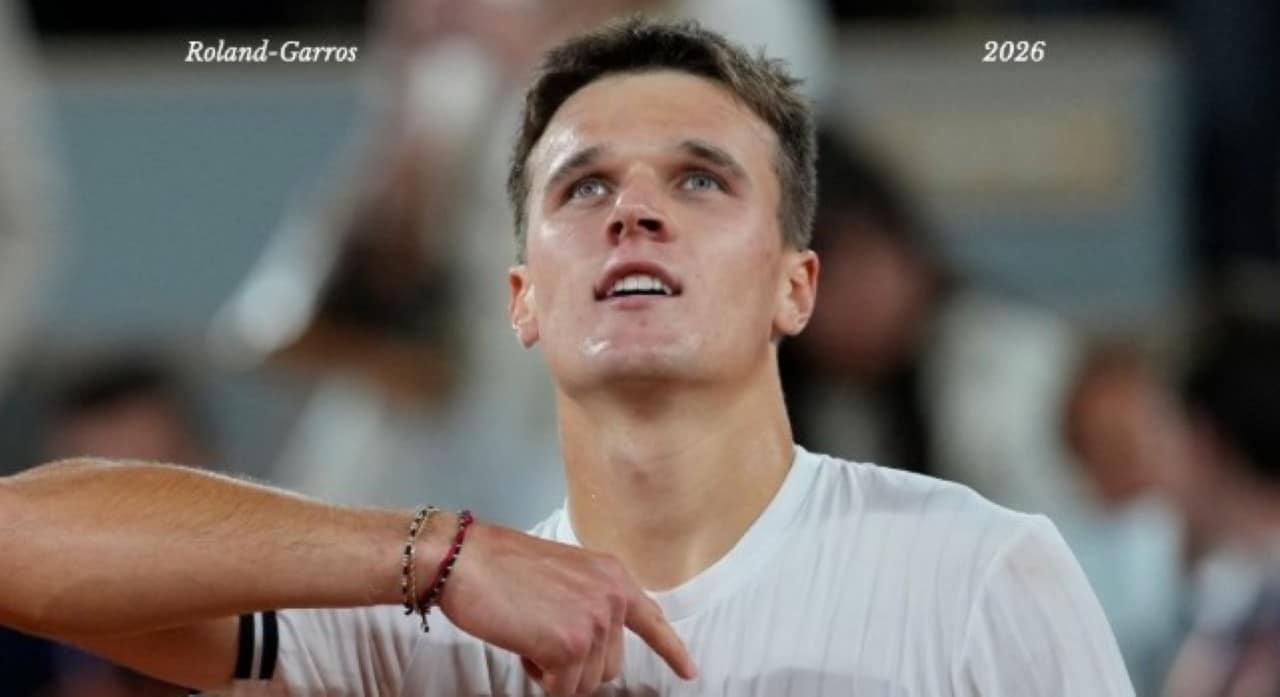
Czech tennis player Jakub Mensik guaranteed his qualification for the Roland Garros semifinals by defeating Brazilian João Fonseca by 3 sets to 0. The match, played on the Philippe-Chatrier court, ended with scores of 6-4, 6-3 and 7-6, after two hours and 44 minutes of confrontation. The duel brought two of the main names of the new generation of the world circuit face to face.
With the result, the European athlete advances in the singles bracket of the tournament played in Paris and awaits the definition of his next opponent. The elimination marks the end of the Brasil representative’s best campaign at an Grand Slam event. The number 26 seed confirmed his technical superiority in the decisive moments against the current number 28 seed.
The course of the match and the Czech tennis player’s initial dominance
The first set started with a fast pace and deep ball exchanges from the first games. Jakub Mensik managed a break of service early on, establishing an advantage that would dictate the course of the end. The high use of the European’s first serve made it difficult for the Brazilian to return, as he had to play backwards. João Fonseca made unforced errors at critical moments, allowing the opponent to close the opening half at 6-4.
The dynamics of the confrontation underwent few changes during the second set. The República Tcheca athlete maintained control of the rallies at the back of the court, demonstrating consistency with his right and left strikes. Essa’s solidity forced the South American tennis player to adopt a defensive posture most of the time. In an attempt to reverse the disadvantage, the Brazilian sought to shorten the points and climb to the net, but the strategy came up against the precision of his opponent’s passes.
The rival maintained a high percentage of successes in service games, which prevented any attempt at an immediate reaction. The efficiency in executing the defining blows guaranteed Jakub Mensik’s victory in the second half by 6-3. The unfavorable score required a drastic tactical change on the part of the national representative to avoid elimination in straight sets.
Reação in the third set and the fierce dispute in the tiebreak
The third set registered the highest level of competitiveness of the entire clash in the French capital. The Czech tennis player started the partial by breaking his opponent’s serve and quickly took a 2-0 lead. The situation indicated a quick end to the match, but the 19-year-old increased the intensity of his game. Ele adjusted his positioning for the return and began attacking the ball with greater depth, disturbing the server.
The change in tactical stance resulted in João Fonseca recovering from the service break. The confrontation became balanced, with both competitors confirming their serves in the following games. The Brazilian even led the score at specific moments, raising the audience present in the central arena. The French spectators recognized the athlete’s physical effort and began to expressively encourage each point won.
The equality on the scoreboard remained until 6-6, which forced the tiebreak to be decided. The tiebreaker required strict emotional control on both sides of the net. Jakub Mensik got a mini-break in the first points and built a safety margin on the scoreboard. The Brazilian showed resistance by saving set points after exhausting rallies, but ended up being beaten 7-6 at the final point.
Impacto from the closed roof on the court Philippe-Chatrier
The environmental conditions had a direct influence on the tactical development of the duel in the quarter-finals. The Roland Garros organization ordered the closure of the retractable roof of the Philippe-Chatrier court before the start of the warm-up. The measure changed the traditional characteristics of the game on Parisian clay, transforming the place into an indoor environment. Essa modification makes the dirt surface slightly faster than usual.
The superior speed of the court favored the aggressive playing style adopted by the European tennis player. Jakub Mensik’s powerful serve gained additional effectiveness without the interference of external factors, such as wind or the city’s characteristic humidity. The ball traveled with greater weight, which required quick adaptations in the defensive movement of the South American opponent.
Apesar from the adverse scenario, the Brasil athlete showed considerable technical evolution in return games throughout the match. Ele managed to win 63% of the points played when the opponent needed to use the second serve. However, his rival’s ability to set the pace with winning shots and dominate territory at the back of the court prevailed in the final count.
Estatísticas of the confrontation and serving performance
The statistical survey of the match highlights the balance established in the final stretch of the confrontation. João Fonseca won 72% of the points in which he managed to place his first serve on the court. Esse number surpassed the winner’s own performance on this specific basis during the two hours and 44 minutes of play. In the overall total of points, the Czech athlete accumulated 117 hits against 111 from the Brasil representative.
The volume of play imposed by the European made a difference in the numbers related to reception. Ele controlled the actions by returning the serve, scoring 51 points against the opponent’s 35 in this regard. The winner was also successful in 13 service games throughout the contest. The double faults occurred at inopportune moments and harmed the national tennis player’s performance.
The tournament’s official data details the athletes’ performance in crucial fundamentals for the final result of the match.
- Jakub Mensik fired 11 aces during the three sets played in the central arena.
- The European tennis player converted five of the 21 break points created throughout the match.
- Ambos competitors committed exactly four double faults in the match.
- João Fonseca saved multiple break chances in moments of greatest pressure.
Consistency under pressure determined the advancement of the number 26 seed. Ele managed the natural fluctuations of the match and contained his opponent’s growth in the third set. The precision in executing winning blows prevented the duel from being extended to a fourth half.
Projeção in the ranking and the future of the new generation of tennis
The campaign built on França’s clay courts represents an important step in João Fonseca’s professional trajectory. The athlete reached the quarterfinal stage after defeating more experienced competitors in the opening rounds of the tournament. The performance in Paris consolidates its position among the main promises of the new generation of the Associação and Tenistas Profissionais circuit.
The points added in the French Grand Slam will guarantee a significant rise for the Brazilian in the next update of the world ranking. The experience gained when facing elite players in best-of-five sets format matches provides a solid foundation for the season’s next commitments. With the elimination, Brasil ends its participation in the men’s singles bracket of the current edition of the event.
Jakub Mensik advances to the semi-final stage with confidence high after the straight sets victory. Aos 20 years old, the tennis player is looking to reach his first final in a competition of this demanding level. The European’s next opponent will be defined by the crossing of the other half of the main draw. The tournament organization made the result official in the early evening, according to local time.
The Brasil representative left the sports complex facilities applauded by the spectators present on the main court. The combative stance maintained until the last point generated a positive reception from the French public. The result in Roland Garros moves the national tennis scene and establishes new perspectives for the competitive calendar in the second half of the year.





