
James Webb Telescope identifies methane in the atmosphere of exoplanet TOI-199 b 330 light years away

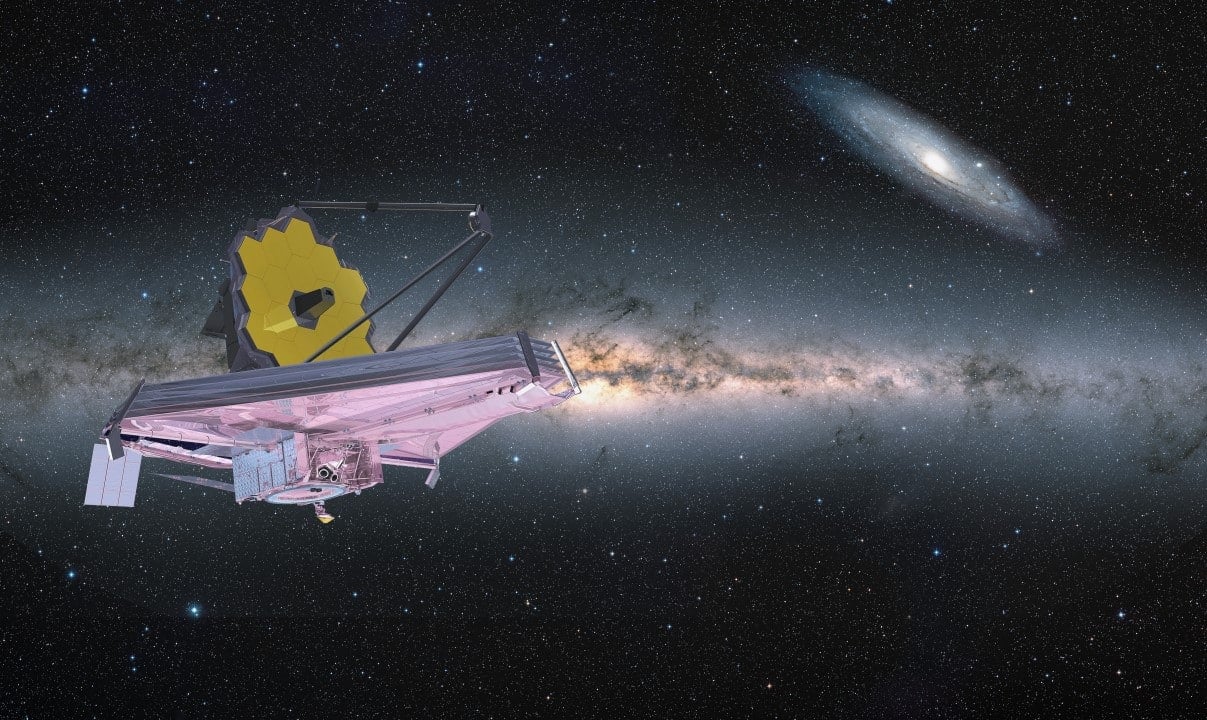
Telescópio Espacial James Webb recorded the presence of methane in the atmosphere of the exoplanet TOI-199 b. The celestial body is located at a distance of 330 light years from our solar system. The detection marks a significant advance in the observation of gas giants with temperatures considered moderate by current astronomical standards. The space equipment captured the data through detailed spectrographic analyzes during the planet’s transit in front of its star.
The data obtained provides essential information about the chemical evolution of distant worlds. Most of the exoplanets studied in depth to date have extreme conditions of heat or intense cold. The temperate environment of this star creates an ideal scenario for testing theoretical models of planetary formation. Pesquisadores uses this unprecedented information to understand the dynamics of complex stellar systems and the distribution of gases in the universe.
Características physics and orbitals of the star
The exoplanet TOI-199 b has dimensions that approximate it to the size of Saturno. Its orbit occurs around a G-type star, a stellar classification that bears direct similarities to Sol. The star completes an entire rotation around its host star in a period of approximately 100 days. Essa’s orbital configuration directly contributes to the milder climate observed by scientists.
The planet’s equilibrium temperature reaches 350 K, equivalent to about 77°C. Esse thermal level rules out any possibility of harboring life on Earth. The moderate condition, however, prevents fundamental chemical processes from being hidden by extreme radiation or particle freezing. Scientists consider this temperature range a highly valuable natural laboratory for modern astrophysics.
- Distância is exactly 330 light years from Terra.
- Proporções physics comparable to the planet Saturno.
- Estrela host classified in type group G.
- Ciclo full orbit estimated to take 100 Earth days.
- Ambiente thermal stabilized in the range of 77°C.
The combination of these physical factors makes the target a priority on international agencies’ space observation agendas. Temperate gaseous Gigantes rarely undergo such in-depth atmospheric analysis due to technological limitations of previous telescopes. The scenario changed drastically with the entry into operation of new light-gathering instruments focused on the high-resolution infrared spectrum.
Espectroscopia of traffic and applied technology
The team of scientists applied the transit spectroscopy technique to map the composition of the air on the planet. The method consists of observing the exoplanet at the exact moment it crosses the front of its star. Durante this movement, a tiny fraction of starlight passes through the edges of the planetary atmosphere. Gas molecules absorb specific wavelengths before the light travels through space and reaches orbiting telescope mirrors.
The main equipment responsible for capturing the data was the Instrumento NIRSpec (Near-Infrared Spectrograph). Telescópio Espacial James Webb operators configured the complex system to operate in G395M spectroscopic mode. Essa specific calibration operates in the near-infrared range and guarantees the medium resolution necessary to identify subtle chemical signatures that would go unnoticed at other wavelengths.
The collection process required absolute precision from the ground monitoring team. Cada’s transit of the planet lasted about seven hours of uninterrupted focused observation. The researchers totaled approximately twenty hours of direct observation to consolidate the information captured. The massive volume of data guaranteed a clean signal and eliminated margins of error when reading the light spectra processed in the laboratories.
Confirmação of theoretical methane models
The clear identification of methane gas represents the central point of the recently completed astronomical study. The compound’s spectral signature appeared clearly in the graphs generated by the infrared instrument. Modelos Ancient mathematicians already indicated that methane should remain stable in gas giants with temperatures in the range of 70°C to 80°C. Practical observation has validated decades of theoretical calculations made by physicists and astronomers.
The presence of the substance does not indicate biological activity on the exoplanet TOI-199 b. Methane arises from purely natural chemical reactions that occur under high pressure in the atmospheric layers of gas giants. The importance of the finding lies in proving that planetary chemistry works in other stellar systems exactly as predicted by modern physics established in Terra.
Quando real data confirms the mathematical equations, the scientific community gains confidence to design more ambitious studies. Validating the models allows astronomers to interpret the composition of even more distant and complex worlds with a solid basis for comparison. The thermal behavior and distribution of chemical elements become reliable parameters for planning future missions to explore the deep universe.
Próximas steps of space investigation
The current mapping represents only the initial phase of the ongoing research project on the star. Astronomers are already developing new technical proposals to direct Telescópio Espacial James Webb again to the same star system in the next observation cycles. The objective of future captures involves the exact measurement of the proportion between the different gases that make up the planet’s complete atmosphere.
The team of experts intends to investigate the dynamics of internal chemical processes that occur in the deepest and most inaccessible layers of the gas giant. The data collected will serve as the primary basis for a direct comparison with the massive planets in our own solar system. Júpiter and Saturno have complex atmospheric dynamics that may share structural similarities with the newly analyzed world hundreds of light years away.
The detailed study of exoplanets with unique characteristics refines the general understanding of the structural formation of our galaxy. The cataloged information helps reconstruct the long evolutionary history of planetary atmospheres, including the physical processes that shaped Terra itself in its early stages of formation. Infrared observation technology will continue to provide concrete answers to fundamental questions of modern astronomy over the next decades of operations in space.



