

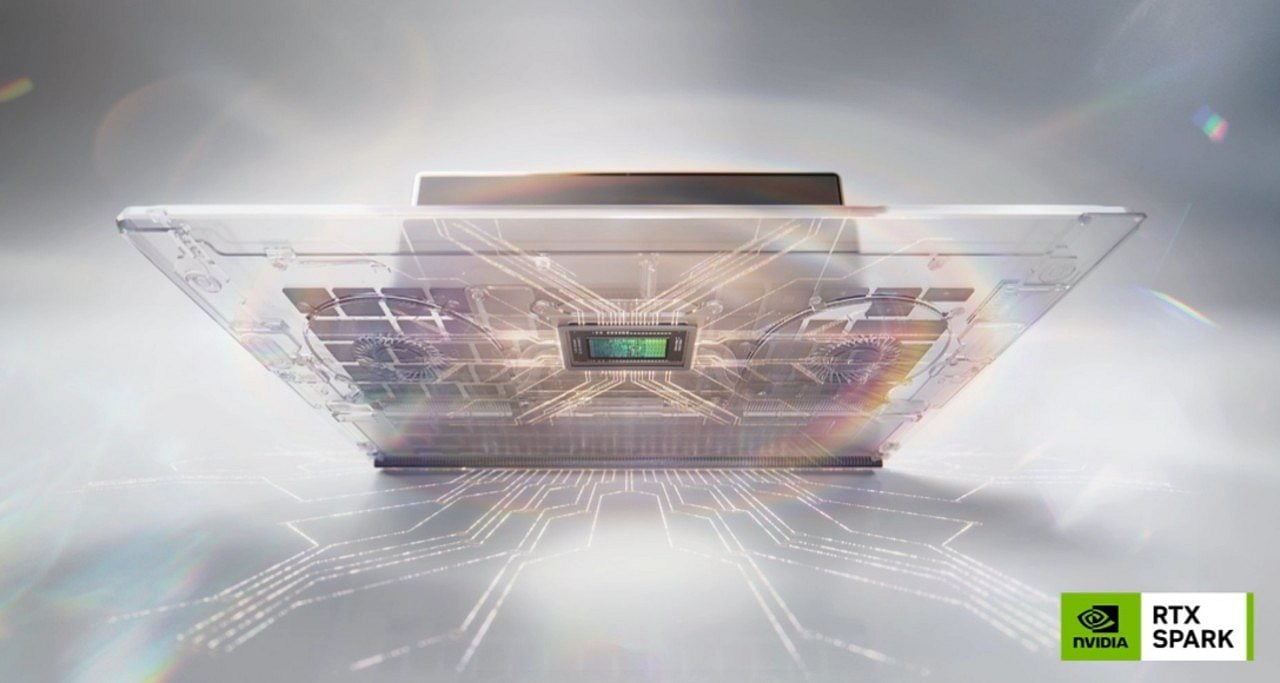
Semiconductor manufacturer Nvidia has officially launched the RTX Spark processor, a component developed specifically for personal computers with a focus on artificial intelligence. The announcement positions the company on a new front in the hardware market, seeking to transfer complex data processing capacity from cloud servers to everyday machines. The product presentation took place at the Computex technology fair, hosted by Taipei, Taiwan.
The commercial strategy aims to integrate generative tools natively into conventional operating systems. With the new feature, the company intends to transform the equipment into autonomous virtual assistants, reducing dependence on continuous internet connections. The movement changes the dynamics of the technological sector, placing the brand in direct competition with corporations historically consolidated in the manufacture of central processing units for the end consumer.
Arquitetura of the new component prioritizes local processing
The development of the RTX Spark represents a change in the way artificial intelligence applications interact with the average user. The chip’s architecture allows high computational demand tasks to be performed directly on the machine. Essa technical feature eliminates the need to send sensitive information to external data centers. Data privacy gains an extra layer of physical protection. Profissionais that deal with confidential information find in this solution a safer environment for the use of advanced algorithms.
Nvidia’s executive director, Jensen Huang, used his speech at the Asian event to scale the impact of the technology. The executive compared the current transition of personal computers to the revolution caused by the arrival of the first smartphones on the global market. The company’s vision classifies the new hardware as a superchip designed for the era of personal agents. The machine stops being a passive data entry tool and acts in a predictive manner.
The ability of computers to adapt to these new demands defines the future of personal computing, according to the manufacturer’s own assessment. Massive investment in research and development in recent years has allowed the miniaturization of technologies previously restricted to large corporate servers. The local execution of language models and image generators requires energy and thermal efficiency that the new component promises to deliver without compromising the design of portable devices.
Disputa for participation in the global computer industry
The introduction of hardware focused on artificial intelligence signals an immediate challenge to the historical leaders in the computer segment. Apple and Intel have dominated retail processor delivery and architecture for decades. The company founded by Steve Jobs is betting on its own manufactured M series to guarantee performance in its devices. Intel maintains its hegemony in supplying CPUs to the Windows ecosystem, also directing recent efforts towards the integration of neural networks into its chips.
The global personal computer market has a high concentration among a few manufacturing brands. Dados surveyed by research company Gartner show that Lenovo, HP, Dell and Apple accounted for almost 75% of global sales in the first three months of the year. The Nvidia seeks to capture a significant share of this commercial volume by offering the RTX Spark as the main engine of a new generation of machines. The strategy involves convincing consumers that native artificial intelligence is a basic requirement for hardware upgrades.
The advance on PC retail comes at a time of historic capitalization for the semiconductor manufacturer. Exponential growth in the sale of infrastructure for data centers has raised Nvidia’s market value to over US$5 trillion. The absolute dominance in providing graphical processing units for training large language models guaranteed the necessary resources for this new commercial offensive. The expansion to consumer desks attempts to replicate the technical monopoly achieved on corporate servers.
Fabricantes confirm adoption of technology for the second half of the year
The commercial viability of the new processor depends on building a robust ecosystem of industrial partners. Nvidia has reached agreements with the world’s leading computer manufacturers to ensure the RTX Spark hits shelves quickly. The new line of equipment will run the Windows operating system, taking advantage of the installed base of billions of users. The official forecast indicates that the first models equipped with the technology will be available for purchase in the second half of the year.
The consortium of companies that will adopt the component in their assembly lines includes the brands with the highest sales volume in the sector. Collaboration ranges from productivity-focused notebooks to high-performance workstations.
- Lenovo
- HP
- Dell
- Microsoft Surface
- Asus
- MSI
The launch schedule also foresees the participation of other Asian manufacturers in a second phase of distribution. Modelos produced by Acer and Gigabyte will reach the market at a later date, expanding the technology’s reach. Spreading the chip across multiple brands avoids dependence on a single sales channel and forces standardization of hardware focused on artificial intelligence in the Windows environment.
Restrições commercials affect exports to the Asian market
Nvidia’s technological advancement occurs amid a backdrop of geopolitical tensions and severe government regulations. Departamento of Comércio of Estados Unidos published new guidelines on May 31 to restrict the export of high-capacity artificial intelligence chips. The measure directly affects the company’s advanced processors, such as the Blackwell line, when the final destination is the Chinese market. The new rule requires specific and detailed licenses for the approval of any international shipment of this type of material.
American supervision expanded the scope of sanctions to prevent commercial triangulations. The licensing requirement now also applies to subsidiaries of Chinese companies operating outside China’s territory. The stated objective of the Estados Unidos government is to contain the technological advancement of Pequim in areas considered critical. The federal administration tries to prevent cutting-edge components from being used in the development of systems with potential military or cyber espionage applications.
Export control policies redesign the semiconductor industry’s global supply chains. China represents one of the largest technology consumer markets in the world, and the partial blockade affects the revenue planning of Vale and Silício giants. The American government maintains its position of prioritizing national security and maintaining the technological leadership of the country and its allies. Nvidia needs to balance aggressive expansion into the personal computer market with strict compliance with federal foreign trade rules.