

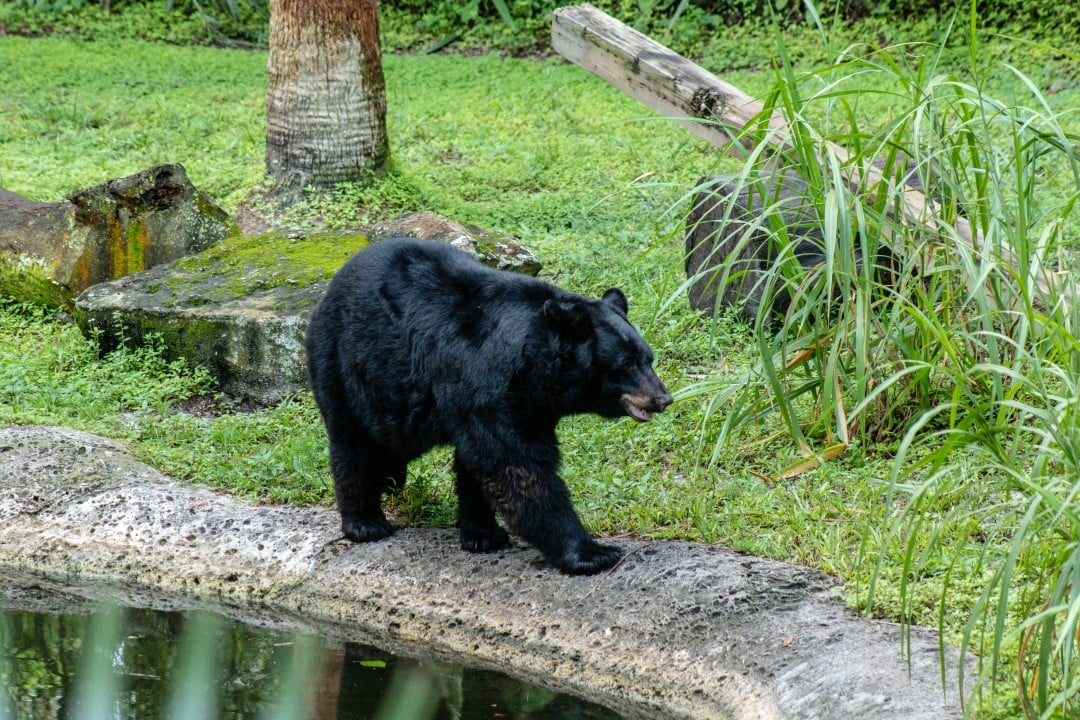
An adult Asiatic black bear appeared on the afternoon of June 10 in the Amanohashidate area, one of Japan’s three most famous tourist spots, located in Miyazu City, Kyoto Prefecture. The animal was seen running along wooded trails, entered the sea and swam towards the north shore of the famous pine-covered sand bridge. Witnesses reported bewilderment when they saw the bear among birds at sea.
Police, residents and members of the hunting association tried to drive the animal away with noise and fireworks. Despite efforts, the bear reached the beach, went to a residential area and climbed a tree near a ryokan. Monitoring lasted until night.
Authorities use tranquilizer darts for capture
At around 10:30 pm, a private company hired by the city hall fired two tranquilizer darts. The bear, about 1.4 meters long, was captured and later killed. Footprints were found the next morning in the direction of the initial escape.
The incident caused an uproar among visitors at the site, which usually receives crowds. Police advised the public to take cover inside buildings while the animal was free.
Local schools distribute bear bells
On the morning of June 11, children on their way to Fuchu Municipal Primary School carried bear bells in their backpacks. Director Shigeki Kakinaka explained that the bells have been distributed for years because bears appear almost daily in the region. One father reported relief after the capture, although his son was scared.
Record increase in bear sightings in Japan in 2026
Amanohashidate’s case comes amid a significant jump in bear encounters in Japan. Preliminary data shows that the number of Asiatic black bear sightings rose sharply in 2025 and remains high in 2026, driven by mountain food shortages, habitat loss and climate change affecting the animals’ behavior.
In Kyoto, the phenomenon is not isolated. Monitoring maps record dozens of recent occurrences in the province, which led city halls to reinforce preventive measures. Experts point out that the expansion of urban areas and the search for food explain why bears come increasingly closer to tourist and residential areas.
The episode reinforces the need for clear safety protocols in regions with a frequent presence of wildlife, especially in destinations that mix nature and a large flow of visitors like Amanohashidate.