
Roland Garros organization changes game time between João Fonseca x Jakub Mensik in the quarterfinals

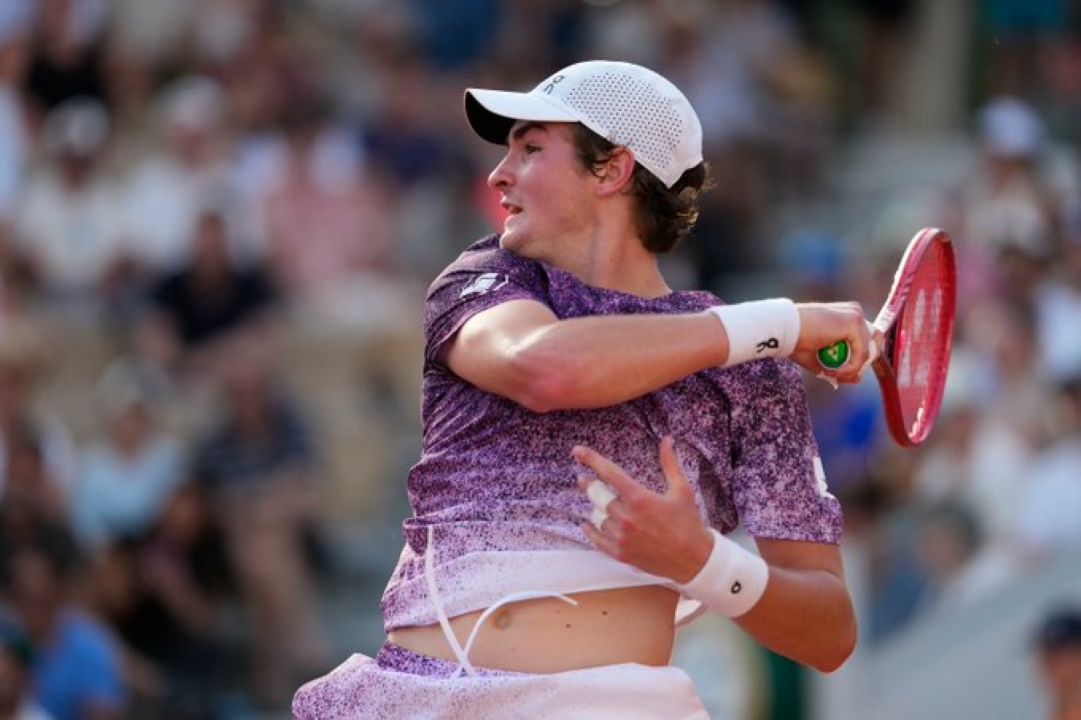
The organization of the Roland Garros tournament has adjusted the official match schedule for this Tuesday’s decisive round. The clash valid for the quarter-finals of the youth group between the Brazilian João Fonseca and the Czech Jakub Mensik underwent a time change. The initial plan released by the international federation underwent changes at the beginning of the day. The clash between the two prospects on the base circuit will start at 3:15 pm. The time follows the local time zone of the French capital.
The change in grid occurred due to unstable weather conditions in Paris. The extension of previous professional clashes in the same playing area also impacted the decision. The event directors needed to readjust the flow of athletes onto the court. The measure seeks to avoid the accumulation of delays in closing the night round. Representantes from the tennis players’ technical teams received notification about the transfer immediately.
Atrasos in programming forces adjustment on court Philippe-Chatrier
The central court of the clay complex remains the stage for the commitment that defines one of the Grand Slam semifinalists. The allocation of this specific game on Philippe-Chatrier reflects the strong public appeal for the youth teams this season. Sports commissioners monitor the weather forecast on an ongoing basis. The organization’s aim is to ensure the completion of all scheduled matches without last-minute transfers. The use of covered secondary courts is restricted to cases of extreme rain.
The refereeing officials explained that the programming adjustments serve to preserve the physical integrity of the junior competitors. Long Torneios require strict control of the rest time between warm-ups and the official start of the contests. The dynamics of television broadcast channels also influenced the change in the European afternoon timetable. The coaches of the two athletes reconfigured their preparation routines on attached courts. The adjustment sought to align the players’ physical peak with the new moment of entry into the main arena.
The winner of this game guarantees fundamental points for the world ranking of the international tennis federation. The victory ensures their place in direct competition for a place in the grand final of the French tournament. The pressure for impressive results in the transition to the professional circuit adds extra weight to the confrontation. The two tennis players see the match as a turning point in their campaigns in the current clay court season.
Game Estratégias puts aggression against tactical variation
The duel pits the number 28 seed and the number 26 seed in the tournament face to face. Czech Jakub Mensik reaches the quarterfinal stage after overcoming intense physical rounds. The European athlete presents an aggressive style of play from the first movements. Ele demonstrates strong reliance on first serve to dominate short rallies from the back of the court. The tennis player’s physical fitness went through severe tests in the previous phases due to the heat and slow pace of the clay court.
The Brasil tennis player seeks to consolidate his outstanding campaign in the continental Europa. João Fonseca demonstrated considerable technical progress in controlling left side strikes during the initial rounds. The Brazilian works with his team to neutralize the opponent’s main weapons in the first games. The carioca’s strategic planning involves constant variation in the height of the balls. The frequent use of left tackles appears as an alternative to breaking the República Tcheca competitor’s usual rhythm.
The ability to sustain consecutive wins in loot games will be rigorously tested. The large dimensions of the central court escape areas require greater space coverage. Jakub Mensik bets on flat and deep balls to push the Brazilian behind the baseline. João Fonseca counters with angled counter strikes to force the Czech to move laterally. The mental stability to deal with unforced errors will determine the level of confidence for the rest of the knockout clash.
Fatores climatic and technical experts define preparation for the confrontation
Preparation for this match involved detailed performance analysis on videotapes from previous rounds. The coaches of both teams focused on specific aspects that usually decide the result on Parisian clay. The technical departments mapped out the central execution points for today afternoon:
- Eficiência when returning withdrawals at a speed exceeding 200 kilometers per hour.
- Reaction Tempo on fast transitions from baseline to network.
- Controle emotional in moments of service break in the decisive set.
- Adaptação immediately responds to wind variations in the upper ring of the Philippe-Chatrier court.
- Taxa of hitting winning balls with the forehand after the third rally.
- Gestão of energy when changing sides under high humidity conditions.
The Brazilian tennis player’s training department has intensified reception work in the last few hours. The coaches believe that blocking the powerful first serve will put João Fonseca on equal footing in the longer rallies. Footwork on clay received special attention in yesterday’s training. Precise movement prevents unnecessary slipping on the side lines of the Philippe-Chatrier. The Brasil tennis player showed confidence in the ball sessions that preceded the definition of the modified schedules.
Ausência’s history on the professional circuit raises expectations
Sports analysts highlight the lack of consolidated historical data from previous clashes between the two athletes. Jakub Mensik and João Fonseca do not record previous matches on the ATP professional circuit. Numbers collected by the tournament’s official statistics teams are not available for public viewing prior to the start of play. Essa lack of comparative numerical indicators increases the tactical mystery surrounding the duel. Scout departments assess that traditional performance criteria will need to be measured point by point.
The count of aces and the rate of double faults committed will serve as the first thermometers of tactical efficiency. Taking advantage of the first service will dictate the pace of games at Philippe-Chatrier. Analysts indicate that the break points saved will play a crucial role in defining who will take control of the score. Recent history shows that both have the capacity to record long sequences of scored points. Territorial dominance on clay will depend on who finds the correct ball time the fastest.
The República Tcheca team set up a defensive wall based on consistent groundstrokes. The objective is to wear down the América and Sul athlete physically. Jakub Mensik’s coaches know that the Brazilian has a dangerous attacking game when he receives short balls in the middle of the court. The Czech corner’s order is to keep the length of the strikes close to the baseline. The tactic aims to prevent the opponent from going to the net with an advantage in defining points.





