
Soviet probe Venera 13 withstands extreme heat and reveals first color images of Venus

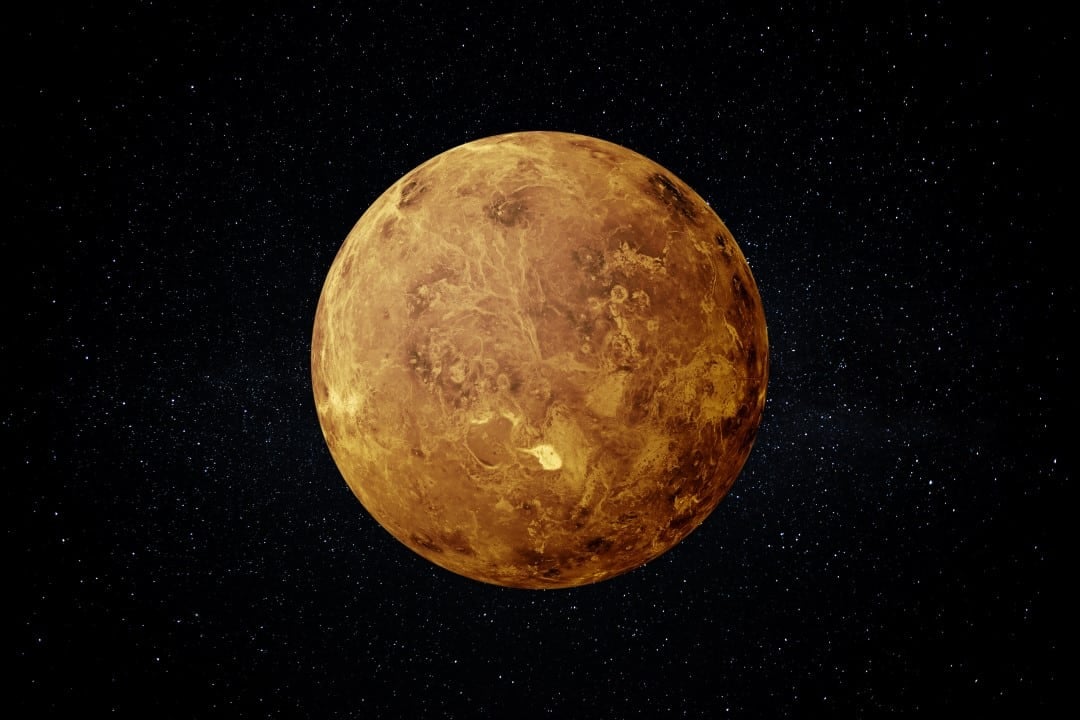
The Soviet space probe Venera 13 made the history of interplanetary exploration when it touched the surface of Vênus on March 1, 1982 and transmitted unprecedented data to Terra. The equipment surpassed initial survival estimates and operated for 127 minutes in an environment considered one of the most hostile in Sistema Solar. Durante During this period, the lander managed to record and send the first color photographs ever captured from the soil of another planet.
The success of the mission surprised scientists, since the equipment was expected to operate for just 32 minutes. The Venusian surface has temperatures reaching 457 degrees Celsius, enough heat to melt metals such as lead and zinc. Além In addition, the atmospheric pressure at the site is equivalent to 89 times that recorded at sea level at Terra, creating a scenario that crushes common structures in a matter of moments.
Soviet Engenharia vs. Vênus’s Extreme Environment
Para face these extreme conditions, engineers at the NPO Lavochkin office developed a robust design focused on structural resistance. The lander was designed with thick walls specifically designed to withstand crushing pressure, similar to that found almost a thousand meters deep in Earth’s oceans. The planet’s atmosphere is composed mostly of carbon dioxide, with thick clouds of sulfuric acid circulating at high altitudes.
The thermal survival strategy involved advanced techniques for the time. The interior of the probe received high-efficiency thermal insulation and went through a pre-cooling process before beginning its descent through the dense Venusian atmosphere. Essa combination of factors delayed the warm-up of the internal electronic systems, allowing the instruments to operate for four times longer than originally planned.
- The module operated as a pressurized container shielded against the corrosive atmosphere.
- The thermal insulation system delayed the penetration of extreme heat into the probe core.
- The cameras and mechanical arm maintained operation while the internal temperature slowly rose.
- Continuous data transmission occurred in communication with the orbital ship that was flying over the region.
- The analysis of soil samples took place inside a sealed and depressurized internal chamber.
The descent occurred on a rocky plain located east of the region known as Phoebe Regio, at coordinates of 7.5 degrees south latitude and 303 degrees east longitude. The equipment touched the ground at a controlled speed of between 7 and 8 meters per second. Imediatamente upon impact, the protective lens caps were ejected by a pyrotechnic system, freeing the cameras to begin visual scanning of the surrounding terrain.
Captura of the first color images and soil analysis
At the time of landing, the sun was approximately 54 degrees above the Venusian horizon. Devido At the extreme density of the carbon dioxide atmosphere, only about 2.5% of sunlight could reach the surface. Esse natural atmospheric filter gave the environment diffuse lighting with intense yellow-orange tones. The probe’s telephotometric cameras captured panoramas in monochromatic sequences, using filters in red, green and blue colors.
The visual data was transmitted to the Terra, where engineers combined the frequencies to form the final color images. Durante After 127 minutes of operation, Venera 13 sent 11 complete and ten partial panoramas. The photographs revealed a terrain covered by flat, laminar rocks, spread over a fine-grained, dark-colored soil. Partes of the lander itself appeared in the foreground of the images, including the fully functioning drilling rig. Pequenos soil grains showed subtle movement, indicative of a weak breeze at the site.
Paralelamente captured images, the probe’s robotic arm extended to collect material from the surface. The sample was deposited in an internal chamber maintained at 30 degrees Celsius and with reduced pressure. An X-ray fluorescence spectrometer carried out the chemical analysis of the collected material. The results indicated the presence of rocks classified as melanocratic alkaline gabbro, a composition that resembles terrestrial basalts with a high potassium content.
Comparativo of resistance with other space missions
The performance of Venera 13 gains even more prominence when compared to other missions from the same space program. The twin probe Venera 14 landed on the neighboring planet just four days later, on March 5, 1982, about 950 kilometers away from the original location. Apesar was built to the same technical specifications and materials, the second probe operated for just 57 minutes before succumbing to the extreme conditions, encountering a slightly different soil composition.
Scientists attribute this variation in durability to small differences in local landing conditions. Fatores as the thermal conductivity of the specific soil where each module landed and subtle variations in ambient temperature directly influenced the speed at which heat penetrated the protective hulls. The Venera 13 benefited from a conservative engineering margin and a slightly more favorable landing location for thermal dissipation.
Antes of this milestone, the Venera 9 and 10 missions, carried out in 1975, had already managed to transmit images of the surface, but only in black and white format. The technological leap represented by the 1982 probes marked the culmination of the Soviet Vênus exploration program, setting records for data transmission and photographic quality that remain unmatched in the history of Sistema Solar exploration.
The scientific legacy that has remained unexplored for decades
Além historical photographs and chemical analysis of the soil, the Venera 13 mission recorded the sounds of the Venusian wind and the noise of the module’s own impact against the rocky soil. The equipment also carried out precise measurements of local temperature and pressure throughout its operating period. Esse dataset has decisively complemented scientific knowledge about the planet’s atmospheric and geological dynamics, offering a unique visual window into Terra’s neighbor.
The images captured in 1982 remain the only color photographs of Vênus’s surface obtained directly from the ground by any space mission. Nenhuma, another space agency, managed to repeat the feat of carrying out a successful landing and maintaining a prolonged operation on the Venusian surface in the following decades. Contemporary exploration projects continue to face the same technological obstacles of extreme heat, crushing pressure, and severe chemical corrosion.
Venera 13’s landing module is still in the exact spot where it landed, exposed to the relentless conditions that have slowly degraded its metallic structure over the years. Pesquisadores and space agencies around the world continue to consult the raw data collected by the mission to plan future interplanetary explorations. The unexpected success of the probe reinforces the importance of establishing conservative safety margins in the design of equipment intended for such extreme physical environments.





