
Victims of shark attacks on beaches in Greater Recife remain in the ICU of Hospital da Restauração


Duas people attacked by sharks on the coast of Grande Recife remain hospitalized in serious condition in Unidade of Terapia Intensiva (ICU). The incidents occurred less than 24 hours apart between Sunday and Monday, prompting the immediate mobilization of rescue teams. The victims suffered lower limb amputations after emergency removals from the sea. Hospital of Restauração, located in the Derby neighborhood, in the central region of the capital of Pernambuco, concentrates highly complex specialized medical care for both patients.
João Lucas Castor Nemezio Sales, aged 11, and Marcela Vitória of Lima Santos, aged 19, are clinically stable at the current stage of treatment. The medical team confirmed the absence of new bleeding in the latest assessments carried out in intensive care beds. Both patients required large-scale blood transfusions due to the profound hemorrhagic shock suffered in the first moments after the attacks. Recovery requires continuous care, administration of specific medications and uninterrupted monitoring of vital signs.
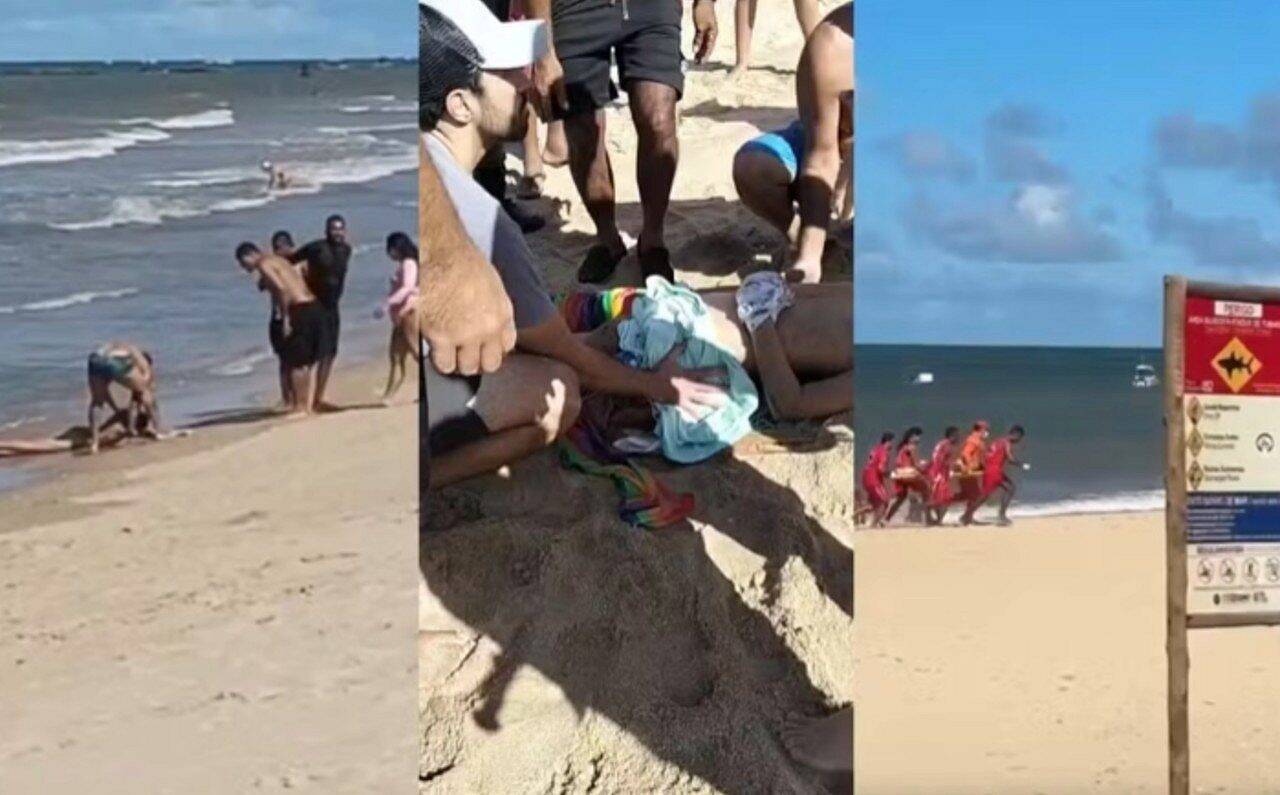
Dinâmica from the beach incidents of Piedade and Boa Viagem
The first record of the sequence took place on Sunday at Praia of Piedade, located in the municipality of Jaboatão of Guararapes. João Lucas bathed in the sea in the company of uncles, cousins and friends during leisure time. The attack occurred suddenly in an area of shallow water. Panic took over the surroundings. Parentes and lifeguards acted quickly to remove the boy from the water and begin damage containment protocols. The initial assistance took place at Hospital of Aeronáutica, located close to the sand strip, ensuring the boy’s stabilization.
Transfer to the reference unit in the central area of Recife took place shortly after ensuring basic vital functions. The second case occurred on Monday at Praia of Boa Viagem, in the south of the capital. Marcela Vitória was at sea with a group of friends and family when he was attacked. A cousin helped remove the young woman from the water amid the rough waves.
The intervention of a doctor from Minas Gerais who was walking along the promenade was decisive for the victim’s survival. Time was short. The professional applied an improvised tourniquet to the young woman’s right leg. The technical maneuver contained the massive loss of blood while still in the sand. An ambulance initially transported the patient to Hospital Alfa, also in the Boa Viagem neighborhood. The on-call team performed the first emergency surgical procedures before definitive referral.
Procedimentos doctors and clinical picture in Hospital by Restauração
The director of the health unit, Petrus of Andrade Lima, detailed the complexity of the surgical interventions carried out in the last few hours. João Lucas underwent a left leg amputation procedure. The pediatric patient also suffered significant injuries to his hand and thigh on the same side of his body. Surgeons repaired the fractures in his hand during the long operation. The boy overcame the most critical phase of the initial physical trauma.
The medical team sent the boy to the Pediátrica ICU shortly after leaving the surgical suite. Marcela Vitória arrived at the hospital without his right leg, lost when he hit the sea. Specialists focused their efforts on containing severely injured blood vessels. The surgical procedure prepared the affected region for the future healing process. The adult patient occupies an isolated bed in the Geral ICU.
Multidisciplinary support in the hospital environment involves traumatologists, vascular surgeons, specialized nurses and physiotherapists. The health institution also provides daily psychological support for the victims’ families. The length of hospital stay remains undefined for both cases. Physical rehabilitation will require adaptation to the use of orthopedic prostheses in the coming months. The severe trauma care protocol follows strict hospital control guidelines.
Histórico of occurrences and monitoring on the coast of Pernambuco
Comitê Estadual of Monitoramento of Incidentes with Tubarões (Cemit) counts four attacks in the state in the year 2026 alone. A 13-year-old teenager died in January after suffering a fatal attack on Praia Del Chifre, in the municipality of Olinda. The recent records raise the alert level of public security authorities throughout the metropolitan region. Coastal mapping indicates the areas of greatest vulnerability for bathers.
The state government database documents 84 incidents with sharks since 1992. The cities of Recife and Jaboatão of Guararapes concentrate the vast majority of incidents over the last three decades. The official survey points out the exact geographic distribution of cases on the main beaches in the region and the Fernando and Noronha archipelago.
- Boa Viagem (Recife) leads the historical statistics with 25 reported cases.
- Piedade (Jaboatão of Guararapes) appears in second position with 24 records.
- Del Chifre (Olinda) records six occurrences since monitoring began.
- Anpesca (Fernando of Noronha) has four incidents in the archipelago.
- Paiva (Cabo of Santo Agostinho) also records four attacks in the period.
Outros points on the coast of Pernambuco have sporadic records in the Cemit database. The beaches of Cacimba, Pina, Conceição, Candeias and Barra of Jangada are part of the list of locations with incident history. The mapping also includes Enseada from Corais, Baía from Sueste, Ponta from Pedras, Bode, Pau Amarelo and Leão. The danger signs cover dozens of kilometers of continuous coastline.
Comportamento of flathead and tiger species on the urban coast
Expert analysis identified the species responsible for the attacks this beginning of the week. The bull shark caused the injuries to the 11-year-old boy in Jaboatão of Guararapes. The tiger shark attacked the 19-year-old girl in the capital of Pernambuco. Marine biologists study the movement patterns of these large predators. Ambas the species regularly frequents the warm waters of the northeastern coast.
The bull shark has the biological characteristic of hunting in very shallow and turbid waters. The animal usually investigates potential prey near the sand strip. The tiger shark explores coastal areas in search of food and has a great capacity for ocean movement. Fatores environmental conditions directly influence the approach of animals to the wave breaking zone. The underwater topography of the region facilitates access for predators.
The presence of deep channels parallel to the beach creates a natural navigation corridor for marine fauna. Inadequate waste disposal and the mouth of nearby rivers alter the dynamics of the local ecosystem. The beaches of Grande Recife went through a period without new incidents until the recent sequence of attacks. Corpo of Bombeiros reinforced the lifeguard staff in the observation towers distributed across the sand.
State public safety authorities recommend extra caution to visitors to the extensive urban waterfront. Official guidance advises against swimming in the sea at times of high tide or in areas without the protection of natural reefs. Advancing beyond the waist line in the water significantly increases the risk of unwanted encounters. Daily monitoring of oceanographic conditions guides the preventive actions of rescue teams along the coast.





