
Space agency NASA officially allocates $188 million to Blue Origin to build the Blue Moon Mark 1 lunar module
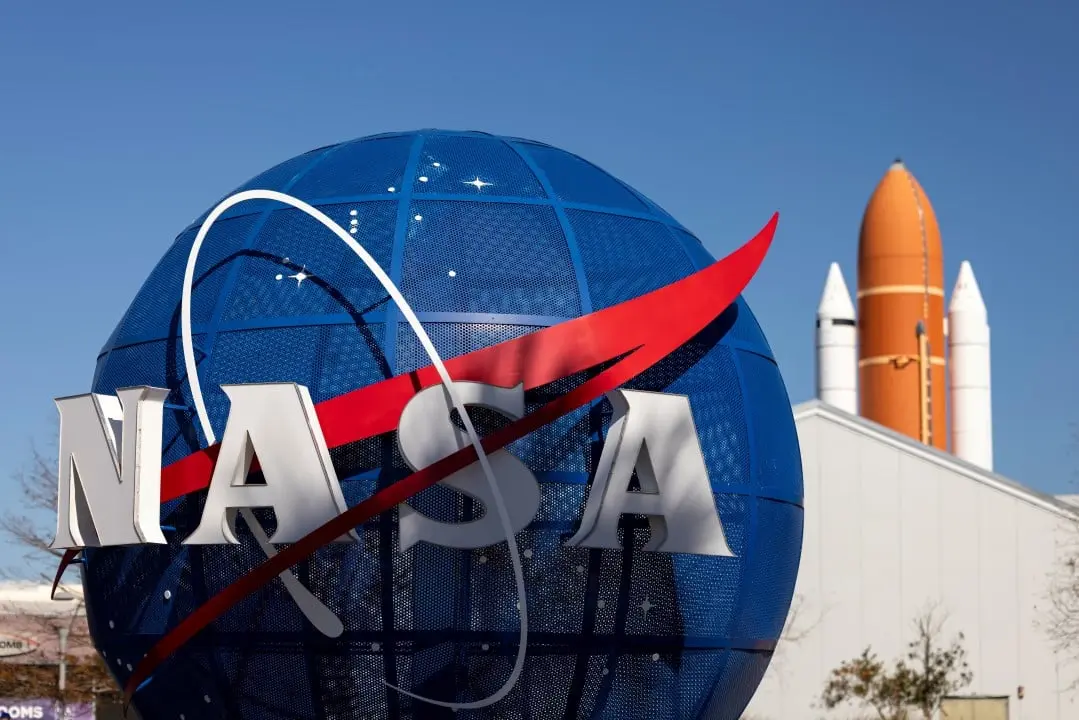
Estados Unidos’s space agency, NASA, formalized the transfer of US$ 188 million to the company Blue Origin. The amount finances the development and construction of the Blue Moon Mark 1 lunar landing module. The equipment will be sent to Lua on an unmanned mission in the coming years. The initiative is part of efforts to establish a solid infrastructure before sending new astronauts to the Terra natural satellite.
The contract reflects a change in the way the American government conducts space exploration. NASA is now prioritizing the delegation of projects to the private sector, seeking to reduce operational costs and accelerate the pace of missions. The strategy aims to create a robust commercial ecosystem outside Earth orbit. The Blue Origin module will serve as a fundamental piece for transporting heavy loads.
The trade agreement and the space agency’s strategy
The injection of resources into Blue Origin consolidates the company’s position in the aerospace market. The initial value of US$188 million covers the preliminary stages of the project, but the total contract could reach higher figures if cargo transportation targets are met. The Blue Moon Mark 1 is designed to land precisely at any point on the lunar surface. The ability to deliver supplies is vital to maintaining future bases.
The American space agency seeks to avoid dependence on a single supplier for its missions. Contract diversification ensures that the program moves forward even if one of the companies faces technical delays. The current contracting model differs from past decades, when the government assumed all financial and operational risk. Agora, private companies invest their own capital and sell the transport service to the public administration.
Read also: NASA prepares Artemis 3 mission of unprecedented complexity to test lunar integration
Module development requires the integration of complex navigation and propulsion systems. Blue Origin uses proven technologies in its suborbital rockets to ensure the safety of the lunar landing. Accuracy at the time of descent is one of the biggest challenges in modern space engineering. Advanced Sensores maps terrain in real time to avoid craters and rocks during final approach.
Fases of the Artemis program and the exploration schedule
NASA’s planning for the return to Lua is divided into progressive stages of complexity. The Artemis program establishes a clear roadmap for the sustainable occupation of the natural satellite. The first phase, expected to take place between 2026 and 2028, focuses on ensuring safe access and exploring available resources. The lunar south pole is the main target due to the confirmed presence of ice in permanently shadowed craters.
Frozen water represents an invaluable strategic resource for space exploration. Ice can be converted into drinking water, oxygen for life support and hydrogen for rocket fuel. Extracting and processing this material on-site dramatically reduces the need to ship supplies from Terra. The Blue Moon Mark 1 will carry the equipment needed to begin these mining and analysis operations.
The second phase of the project will take place between the years 2029 and 2032. The focus will shift to implementing energy infrastructure and transport logistics. Redes high-capacity communications and solar power generation systems will be installed on the surface. The creation of an operational base requires the uninterrupted operation of exploratory machines and vehicles.
From 2032 onwards, the third phase aims to consolidate the permanent human presence at Lua. The infrastructure built in the previous steps will serve as a foundation for long-lasting habitats. The natural satellite will act as a testing ground for technologies that will be used in future missions for Marte. The experience gained in local resource management will be applied to deep space exploration.
Parcerias with the private sector drives innovation
Today’s space ecosystem depends on a diverse network of commercial and technological partners. Além from Blue Origin, other companies received significant contributions to develop complementary solutions. Collaboration between different actors accelerates the pace of discoveries and dilutes the risks inherent to space exploration.
Understand the case: NASA Expedites Artemis 3 Mission with Orion Integration and Lunar Landing Tests
- Firefly Aerospace has secured a $75 million contract to send four payloads to Lua using the Elytra Dark system.
- The companies Astrolab and Lunar Outpost work on the development of surface exploration vehicles aimed at scientific research.
- The financing program encourages the participation of startups and university research centers in the creation of new technologies.
The integration of systems developed by different suppliers requires a high level of coordination. NASA acts as a project manager, setting technical standards and safety requirements. Smaller companies often act as subcontractors to large aerospace corporations. Esse business model allows specific innovations to quickly reach the market.
The supply of specialized components has become a profitable sector within the space industry. Sensores radiation, ultra-light solar panels and materials resistant to extreme temperatures are highly demanded. Competition between companies reduces manufacturing costs and improves equipment quality. Public investment acts as a catalyst for economic growth in the advanced technology sector.
Desafios technological and testing in extreme environments
The transition from the terrestrial environment to the vacuum of space poses severe obstacles to engineers. The equipment sent to Lua faces extreme temperature variations, intense cosmic radiation and abrasive lunar dust. Regolith, as the layer of dust on the surface is called, can damage mechanical joints and solar panels. The durability of materials is extensively tested before any official launch.
Carrying out simulations on Terra is a mandatory step in the development process. Desertos arid and volcanic regions serve as proving grounds for exploratory vehicles. The tests evaluate structural resistance and the ability to move over rough terrain. Collecting empirical data allows for the refinement of projects and the correction of potential flaws.
The reports generated during these simulations are subjected to rigorous evaluation by regulatory agencies. Technical approval is an essential requirement for the release of government funds. Transparency in the certification process guarantees the safety of missions and the efficient use of public resources. Blue Origin and its partners follow strict protocols to ensure the successful landing of Blue Moon Mark 1.
More on this story: Aerospace pioneer Wally Funk passes away at age 87 after making history in Earth orbit
The advancement of lunar exploration redefines the limits of human engineering. The construction of a cislunar economy, spanning the space between Terra and Lua, opens new frontiers for science and industry. The financial transfer for the construction of the landing module represents a concrete step towards this future. Continued collaboration between government and private enterprise will shape the next decades of human presence in the cosmos.
More news in Latest News (EN)
See more → PlayStation 6 component bills surge to $960 amid memory crunch
 Rockstar North adds canine waste throwing to GTA 6 worldRockstar North details dog mechanics and street combat in GTA 6
 Corporate ChatGPT users gain custom text style replicationWorkplace ChatGPT starts copying individual writing stylesTop Ukrainian prosecutor resigns following probe into vast illegal call center network schemeCalls intensify for Australia to assert foreign policy independence over extensive US military presenceSaxony-Anhalt results underscore growing momentum for European far-right parties ahead of key votesJulia Louis-Dreyfus reveals intense creative clashes shaped iconic sitcom ‘Seinfeld’s’ groundbreaking humorU.S. forces dismantle sophisticated floating drug refueling station tied to Ecuadorian narco-terror groupGiants make unexpected roster move, release longest-tenured player Darius Slayton as Harbaugh era beginsEiffel Tower closure sparks outrage as staff protest gender segregation during VIP religious group visit
More news on Mix Vale
- 1AfD state election triumph prompts urgent review of Germany’s democratic foundations
- 2Aaron Judge returns to Yankees lineup, igniting playoff push after three-month rib injury absence
- 3High-altitude tragedy: Climber perishes after fall on Aspen-area 14er summit
- 4Egyptian TV personality and 11 co-defendants condemned to death for large-scale synthetic drug trafficking
- 5Canada activates massive tariffs on American imports reaching C$27.6 billion, intensifying cross-border trade spat
- 6AfD’s near majority in Saxony-Anhalt state vote triggers widespread concern across Germany
- 7Promotores desistem de apelo sobre confissão de Khalid Sheikh Mohammed para garantir julgamento em 2028
- 8Ejection of eight fans from Portland Thorns game sparks debate over free speech and stadium rules
- 9Christine Taylor detalha pedido de emagrecimento para interpretar Marcia Brady em filme clássico dos anos 90
- 10Investigators retrieve flight recorders after deadly Amazon cargo plane overruns Miami runway, killing five