
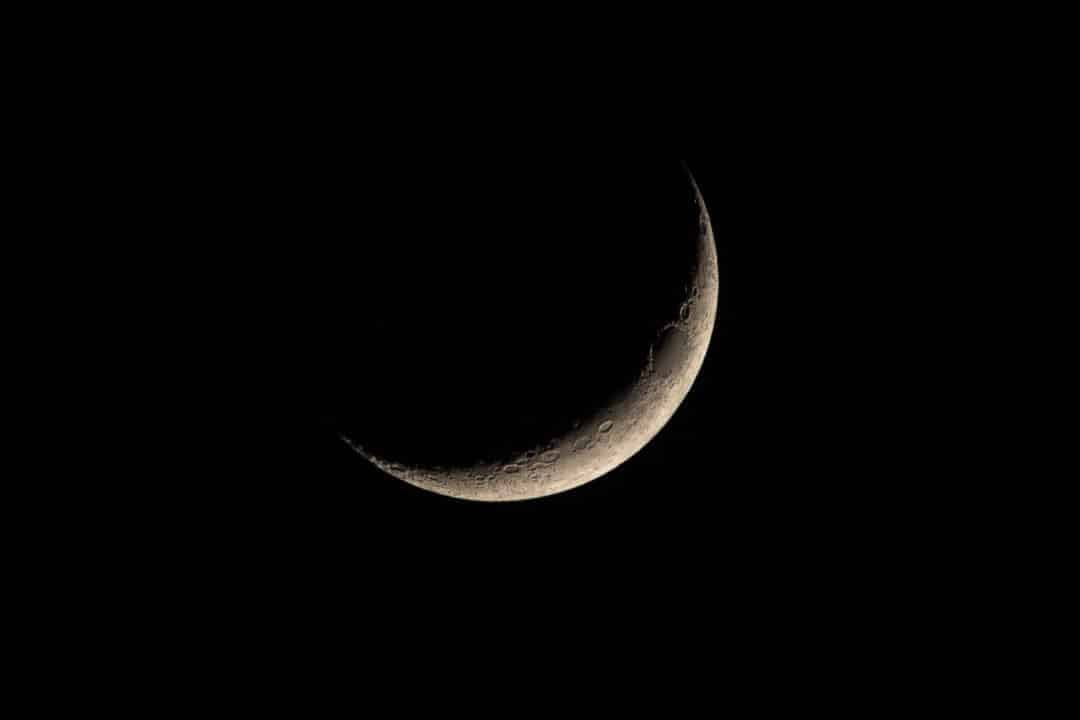
Nesta Thursday, June 4, 2026, Lua is in the waning gibbous phase. The satellite has around 85% of its surface illuminated. Observation is possible at night and early in the morning.
The phenomenon marks the period after the full Lua at the end of May. Visibility gradually decreases until the new Lua arrives.
Current Fase confirms transition in lunar cycle
The waning gibbous Lua appears after the full phase. Nessa step, the illuminated portion begins to shrink. The shape resembles an inverted letter D when viewed from the Hemisfério Sul.
Astrônomos records the lunar age at around 18 days. The distance between Terra and the satellite is close to 390 thousand kilometers. Visible illumination drops day by day.
Essa phase lasts approximately seven days. The complete cycle, called lunation, lasts an average of 29.5 days.
- The Lua partially reflects sunlight
- The illuminated side appears smaller and smaller
- Visibility occurs mainly after sunset
- The satellite sets later each day
Próximas June calendar changes
The last quarter occurs on June 8th, around 7am. Depois becomes new Lua on the 14th, at 11:56 pm. The growing Lua arrives on the 21st, at 6:55 pm. The full Lua closes the month on the 29th, at 8:58 pm.
Essas dates follow the time of Brasília. The month started with remnants of the full Lua of May 31st. The sequence follows the natural pattern of orbital movement.
Learn more: What is the phase of the Moon today? Lunar calendar for June shows waning this Monday
Observadores may notice Lua during the day in some phases. However, the best time to see details is during the transition to night.
Como identify the phases of Lua in Hemisfério Sul
The appearance changes depending on the position of the observer. No Hemisfério Sul, the waning Lua forms an inverted crescent C. Já the crescent is more reminiscent of a D unlike the North American standard.
Lua always shows the same face to Terra. Isso occurs because the rotation and translation times are synchronized. The phenomenon is called synchronized rotation.
The gravitational interaction between Sol, Terra and Lua defines the cycle. Cada phase results from variation in illumination angle.
Diferenças between hemispheres in lunar observation
Quem is in Hemisfério Norte sees Lua “upside down” in relation to Sul. The inverted orientation affects the perceived shape in the waxing and waning phases.
Follow: all about gibbous gibbous moon
Apesar besides, Lua is the same. The difference is just perspective. Viajantes that cross Equador notice the gradual change in appearance.
The visible face remains constant. Somente 59% of the total surface can be observed from Terra over time due to libration.
Distância and technical characteristics of the satellite
The average distance from Lua to Terra is approximately 384 thousand kilometers. On June 4th, the value is around 390 thousand km. Essa variation happens because of the elliptical orbit.
On the same topic: What is the phase of the moon today (05/06)? See the lunar calendar for June 2026 with waning on the 8th
The lunar diameter measures about 3,474 km. Gravity on the surface is equivalent to one-sixth of that on Earth. Temperaturas vary drastically between lunar day and night.
Cientistas use this information for space exploration studies. Future Missões plans permanent lunar bases.
Lunar Ciclo has influenced human activities for centuries
Ancient Povos used phases for agricultural calendars. Pescadores and farmers still follow the cycle today. The high and low tide also follows the lunar rhythm.
Modern science explains the phenomenon by celestial mechanics. The alignment between the three celestial bodies creates different visibilities.
What to expect in the next few days of observation
Lua will decrease in size until the 8th. Depois from Lua new, the crescent reappears in the western sky at dusk.
Full coverage: Latest News (EN)
Quem likes amateur astronomy and can use binoculars or small telescopes. Aplicativos mobile phone show exact position in real time.
The clear sky favors observation. Evite light pollution in large cities for better visualization.