
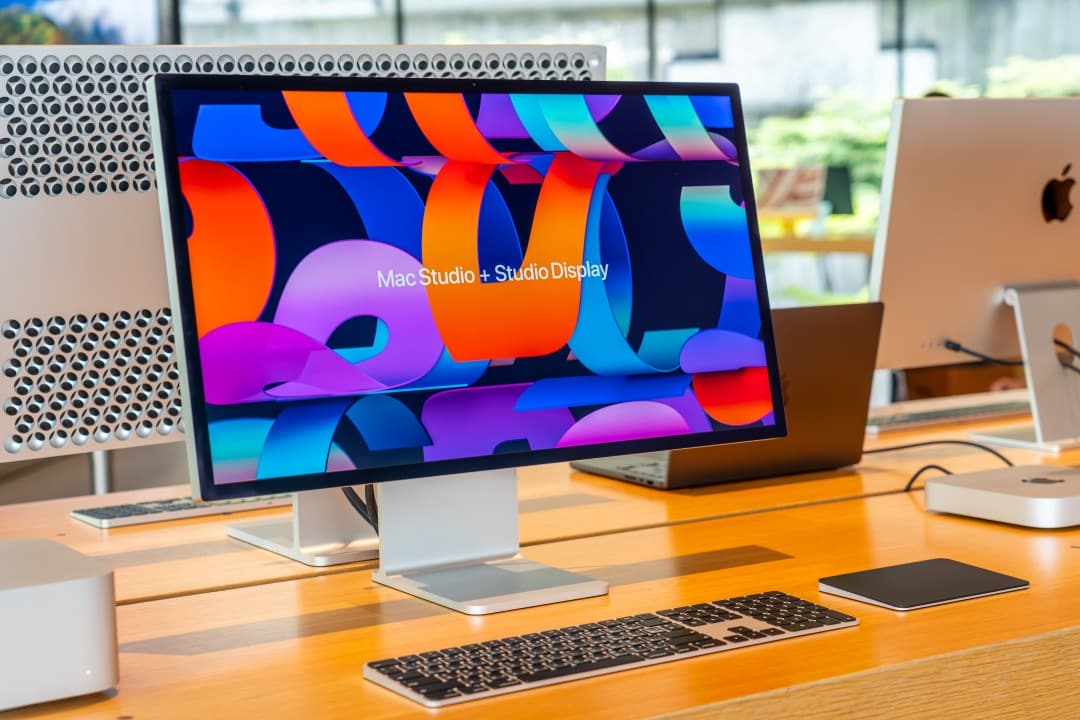
Apple is working on the development of a new generation of its monitor aimed at the professional public, expected to be launched in the first half of 2026. The equipment, provisionally called Studio Display 2, should feature a refresh rate of 90Hz. The technical specification goes against the initial expectations of the technology market. Analistas designed the inclusion of the 120Hz ProMotion standard, already present in other premium devices from the manufacturer. The decision represents an intermediate leap compared to the current model.
The clues about the new configuration emerged after analyzing preliminary codes for the iOS 26 operating system. The choice for a frequency lower than the company’s maximum standard is based on the hardware architecture. Engenheiros seek to preserve the bandwidth of Thunderbolt connections. The central objective is to guarantee the simultaneous operation of multiple high-demand peripherals without compromising image stability. The new monitor should also incorporate mini-LED backlight technology.
On the same topic: Apple launches second generation of Studio Display with improvements in audio and Thunderbolt connectivity
Descoberta in internal codes and technical limitations
The first information about the adoption of a 90Hz panel circulated at the end of 2024. An anonymous report in a specialized technology program pointed out that Apple was testing liquid crystal screens with this specific frequency. The component would be intended for a new line of products, including the iPad Air and the iMac. Indirect confirmation has recently occurred through leaks of internal software builds. Desenvolvedores found direct references to video controllers limited to this refresh rate.
The technical restriction is directly linked to the data transmission capacity of current cables and ports. Sending a video signal at 5K resolution requires a massive amount of information per second. Increasing the rate to 120Hz would consume practically all the bandwidth available on a standard connection. The manufacturer opted for a balance point. The 90Hz rate offers more fluid navigation than the traditional 60Hz, but leaves free space on the cable for other transfers.
Video editing and graphic design Profissionais often connect external hard drives, audio interfaces, and other accessories directly to the monitor ports. Saturation of the data band would cause slowdowns in these secondary equipment or force compression of the video signal. The Apple prioritizes delivering an image without loss of quality. The stability of the ecosystem of chain-connected accessories played a role in defining the panel’s specifications.
Especificações dedicated imaging and processing
The Studio Display 2 will maintain the dimensions established by the first generation of the product. The 27-inch panel will continue to offer 5K resolution, ideal for the operating system interface scaling system of Mac computers. The main visual change will occur in the adoption of mini-LED technology. Esse system uses thousands of independent lighting zones on the back of the screen. The practical result involves deeper blacks and significantly higher contrast than the model currently sold.
Full coverage: Latest News (EN)
The change in the lighting system will allow native reproduction of content in High Dynamic Range (HDR). The maximum brightness of the equipment should exceed the 600 nits mark of the 2022 version. The internal hardware will also undergo a complete redesign. Rumores indicate the inclusion of the A19 processor or a variant of the Pro line. The dedicated chip will take on complex tasks independently. The component will manage the integrated webcam’s image processing and spatial audio capabilities.
- 27-inch Tela with native 5K resolution.
- Painel with mini-LED backlight technology.
- Update Taxa fixed at 90Hz limit.
- Full-featured Suporte for HDR content playback.
- Updated internal Processador for media management.
- Conexões based on the new Thunderbolt standard.
The presence of a powerful processor inside a monitor alleviates the workload of the main computer. The chip runs artificial intelligence algorithms to keep the user centered during video calls. Real-time audio processing also occurs on the equipment itself. Essa independent architecture ensures that advanced features work smoothly regardless of the model of Mac connected to the display.
Certificações regulatory and competitive landscape
Movement behind the scenes in the supply chain indicates that the project is moving into the final stages of development. An unprecedented device from the brand, identified by the alphanumeric code A3350, recently appeared in a regulatory database at China. Product registration with Asian government agencies usually precedes the start of mass production. The approval standard coincides with the historical launch schedule of the company’s computer division.
Journalist Mark Gurman, from the agency Bloomberg, corroborated the launch window for the first months of 2026. The retail market already reflects this imminent transition. Lojas specialized in several countries report a gradual decrease in stocks of the first generation of the monitor. The scarcity of specific configurations, especially those with nano-texture glass, signals a reduction in the pace of manufacturing the old model.
The positioning of the new product faces a tougher professional monitor market. Fabricantes competitors already sell screens with 5K and 6K resolution that combine mini-LED technology with refresh rates above 120Hz. The choice of 90Hz places the Apple equipment at an intermediate level in the high-cost segment. Brand Consumidores, however, tend to prioritize native integration with the operating system and accuracy in factory color calibration.
Impacto in workflow and connectivity
The transition from 60Hz to 90Hz generates an immediate visual impact on the daily use of the system. Scrolling web pages, moving windows, and interface animations become noticeably smoother. The gain in fluidity occurs without requiring extreme effort from the computer’s graphics processor. Profissionais who work with photography and editorial design value chromatic fidelity and lighting uniformity more than refresh rates aimed at the electronic games market.
The launch of the monitor will take place in parallel with the introduction of new processor architectures from the manufacturer. The equipment was designed to operate in conjunction with the future M5 line of chips. Integration with the Thunderbolt 5 standard represents a leap in data transfer capacity. The new generation of communication ports significantly expands bandwidth. The combination of these technologies will facilitate the assembly of complex workstations based on computers such as the Mac Studio or Mac mini.
The port structure on the back of the monitor must receive updates to keep up with the new speed standard. The 2022 model has an Thunderbolt 3 port and three conventional USB-C connections. The adoption of newer protocols will allow direct connection of very high-speed storage systems. The monitor will function as a high-performance connection hub. The 90Hz architecture ensures that the intense data traffic from these peripherals does not interfere with the quality and stability of the image displayed on the screen.