
Space agency details composition of interstellar comet 3I/Atlas after nucleus fragmentation

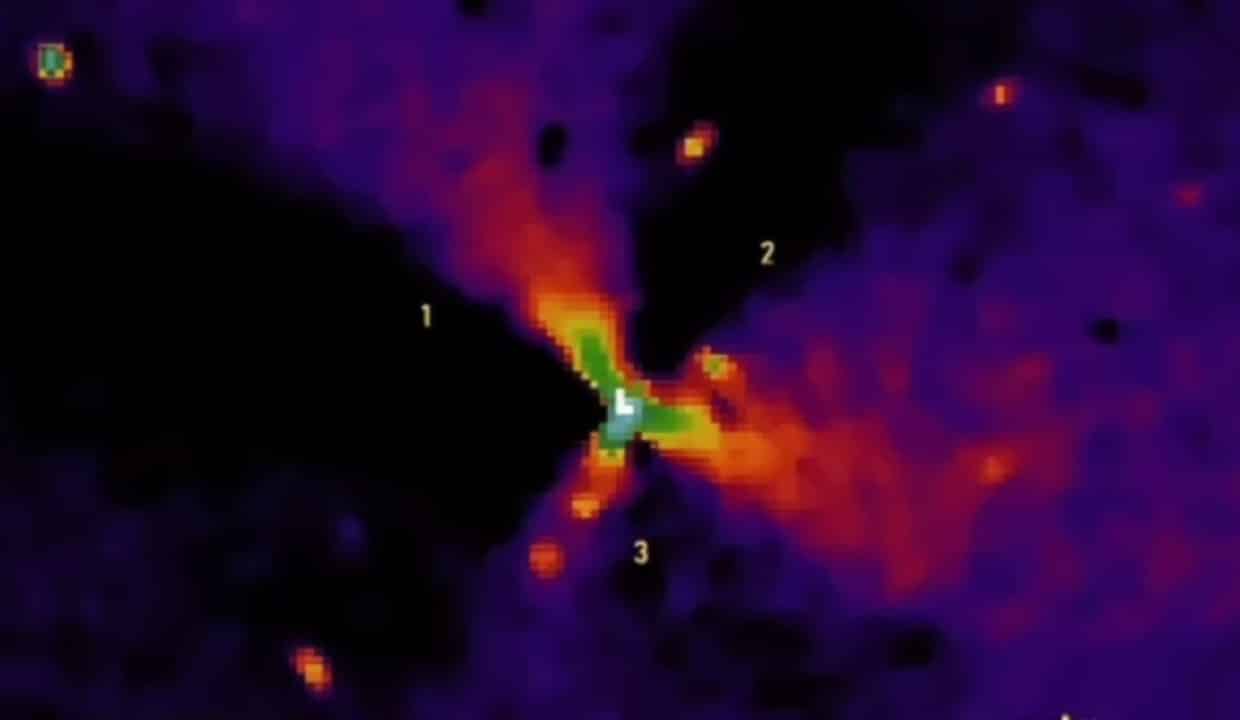
The American space agency released new analyzes of the interstellar comet 3I/Atlas in 2026. The recent data deepens knowledge about the structure of objects formed outside the solar system. The celestial body crossed the terrestrial neighborhood with a hyperbolic trajectory. Pesquisadores used advanced computational models to map the visitor’s chemical composition. The persistence in studying this material demonstrates the relevance of cosmochemistry in understanding the universe.
The unexpected disintegration of the object in 2020 generated an unprecedented opportunity for science. The event exposed the primitive material stored inside the core for millennia. Cientistas managed to observe the dynamics of distant planetary systems through the fragments. The exchange of matter between galaxies takes on new contours with the information processed by state-of-the-art telescopes. Cada new discovery illuminates fundamental processes that shape the cosmos.
Hyperbolic Trajetória and confirmation of external origin
The ATLAS warning system identified the celestial body in Havaí in August 2019. Early observations indicated orbital behavior common to local celestial bodies. Later Cálculos changed this initial perspective definitively. The hyperbolic route confirmed that C/2019 Q4 traveled countless light years before reaching the gravity of Sol. The object’s extreme speed prevented it from being captured by solar orbit.
The object became the second interstellar visitor detected by humanity. The expectation of observation with the naked eye mobilized astronomers in several countries and generated great mobilization. The comet offered a direct glimpse into the star formation environment of other regions of the galaxy. The speed and angle of approach ruled out any possibility of Oort’s cloud origin. The trajectory traced by the space agency’s computers pinpointed its extrasolar origin.
Fragmentação’s core exposed chemical elements
The comet’s behavior changed drastically in April 2020. The closest approach to Sol caused the main structure to break due to the increase in temperature. The Hubble telescope recorded the splitting of the nucleus. The breakage of the material frustrated amateur observers, but delivered valuable data to researchers. Fragmentation allowed the study of internal properties in a way that would not be possible if the body remained intact.
The exposure of the internal layers allowed the mapping of properties previously inaccessible to optical instruments. Scientists assessed the physical strength and cohesion of interstellar material under thermal stress. Analysis of the pieces revealed the presence of volatile ices in the deep structural composition. The way the object fell apart provided crucial information about the formation of atmospheres on exoplanets.
Data collection involved a network of high-precision equipment spread across the globe and in space. Researchers used different wavelengths to examine space debris in real time:
- The James Webb space telescope has identified specific molecular signatures through advanced infrared vision.
- Observatório Espacial Herschel measured the exact proportion of gases emitted during core heating.
- The Atacama Large Millimeter/submillimeter Array (ALMA) mapped the dust distribution around the fragments.
- Grande Telescópio of Ilhas Canárias provided detailed spectral data from the Earth’s surface.
The combination of these technological tools overcame the barrier of cosmic dust that obscured vision. The joint reading of the instruments generated a complete chemical profile of the disintegrated object. The ability to detect such faint elements testifies to the advancement of modern astronomical engineering.
Semelhanças with the solar system and prebiotic blocks
The spectroscopic results showed a significant concentration of silicates in the ejected dust. The material also carries complex organic compounds in its primary structure. The composition strongly resembles comets formed in our own solar system. Essa similarity indicates that planetary formation processes follow universal patterns, regardless of the host star. The building blocks seem to repeat themselves in different corners of the galaxy.
The team detected water and carbon monoxide molecules in the gases released by the fragmentation. The proportions of these elements present small variations compared to native celestial bodies. The subtle differences reflect the exact pressure and temperature conditions of the original stellar nursery. The thermal reading indicates that the comet formed in an extremely cold and dense molecular cloud.
The identification of organic matter reinforces theories about the distribution of essential elements in the universe. The transport of prebiotic ingredients between stellar systems gains material evidence with the analysis of 3I/Atlas. The building blocks of life travel through interstellar space aboard these primitive objects. The seeding of new worlds through cometary impacts is becoming an increasingly well-founded hypothesis.
Diferenças in relation to ‘Oumuamua and new technologies
The detection of 3I/Atlas established a direct comparison with ‘Oumuamua. The first interstellar visitor, recorded in 2017, exhibited an unusual elongated shape and apparently rocky composition. The second object presented classic and unmistakable characteristics of an active comet. Continuous emission of gas and dust formed a bright tail before ultimate structural collapse.
The distinction between the two celestial bodies proves the vast diversity of materials that roam Via Láctea. Modern astrophysics depends on identifying new targets to consolidate its theoretical models of galactic evolution. Space agencies invest heavily in modernizing their preventive tracking systems so as not to miss opportunities. Early detection is the biggest challenge in contemporary astronomy.
The Vera C. Rubin Observatory project represents the next step in the search for external visitors. The installation will continuously scan the sky with increased sensitivity and an unprecedented field of view. The frequency of observations will exponentially increase the probability of intercepting smaller bodies at high speed. Systematic mapping promises to revolutionize the cataloging of orbital anomalies.
Preparação for future rapid reconnaissance missions
The processing of information from 3I/Atlas guides the planning of new space operations in 2026. NASA is working on developing immediate response protocols for transient astronomical events. The central objective involves launching interceptor probes capable of reaching these moving targets. The agency seeks to reduce the time between discovery and the launch of a dedicated mission.
Rapid reconnaissance missions require early detection of the target even at the edge of the solar system. The window of opportunity to reach an object on a hyperbolic trajectory lasts only a few months. Aerospace engineering focuses on creating lightweight vehicles with high acceleration and autonomous propulsion capabilities. The use of gravitational assistance will be essential to match the speed of probes to that of comets.
Interstellar exploration advances with each fragment of data consolidated by international research centers. The continued study of these cosmic messengers defines the limits of knowledge about galactic evolution and primordial chemistry. Current technology turns disintegration events into detailed catalogs of extraterrestrial chemistry. Understanding our own formation processes depends directly on the analysis of what comes from outside.





