
Flávio goes to court to annul desadoption and recover affiliation after losing his surname in SC

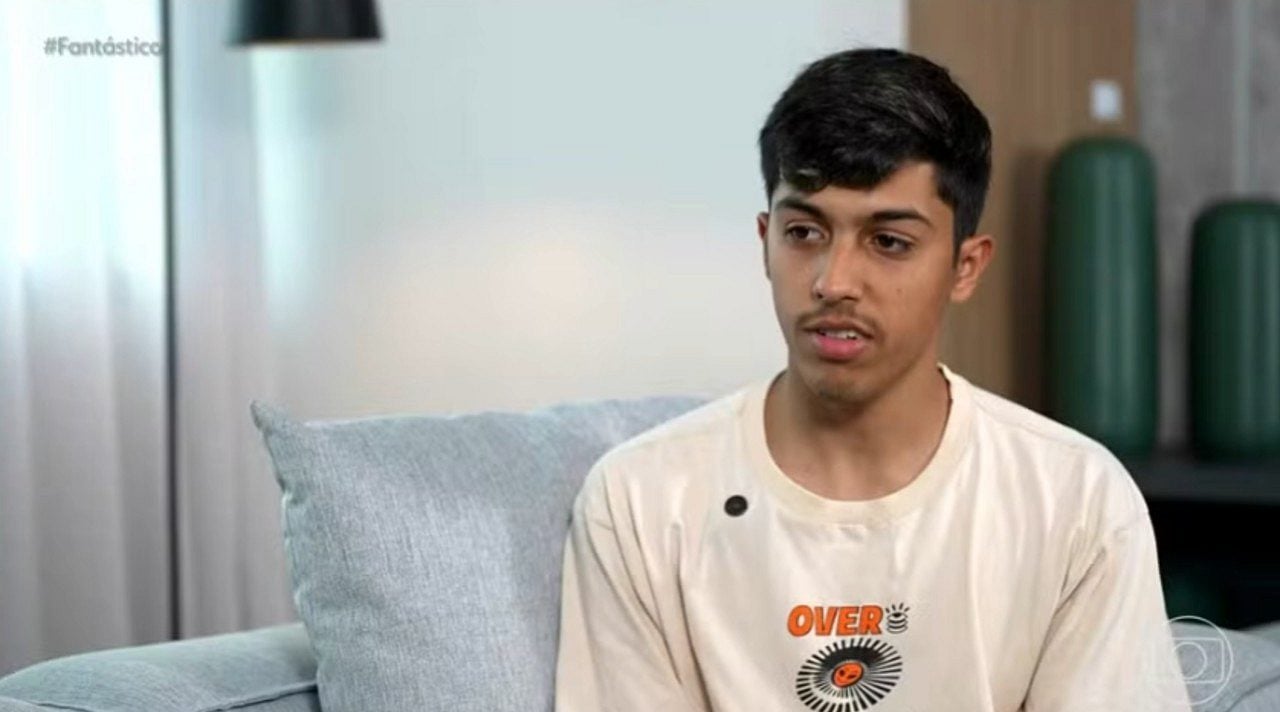
A young man from Santa Catarina filed a rescission action with Justiça to annul a “de-adoption” process that resulted in the loss of his surname and bond with his adoptive mothers. Flávio of Silva Maximiano Júnior, now 21 years old, seeks to reverse a decision he considers illegal. The case raises important questions about Brazilian legislation regarding filiation and the possibility of revoking an adoption that has already been formalized.
The situation began after a family argument, when Flávio, then 18 years old, decided to leave the house of Lilian Regina Terres Moroso, a lawyer, and Sonia Moroso Terres, a judge. At the time, he was required to sign documents formalizing the termination of his membership. The young man claims to have been forced to make a choice between his girlfriend and his family, opting to sign what was presented to him in order to leave the residence.
Processo court with questionable procedure
Flávio of Silva Maximiano Júnior reported that the day after the argument, a lawyer linked to one of the mothers’ offices approached him with the necessary documentation. Ele signed a power of attorney and a formal request for the adoption to be undone. Surpreendentemente, the request to break the filial bond was approved by Justiça in just 45 hours, a period considered unusual for processes of such complexity.
Atualmente, Flávio contests the speed of the decision and the absence of procedures that are generally mandatory in cases involving the family. Ele argues that there was procedural fraud and that the procedure did not include a hearing or a psychosocial study. Estes elements are essential to authorize any type of break in the emotional-family bond, especially in adoptions. The absence of these steps raises serious doubts about the legal validity of “de-adoption”.
Versões conflicted over “de-adoption” initiative
The adoptive mothers, Lilian Regina Terres Moroso and Sonia Moroso Terres, presented their version of the facts through lawyer Sílvia Domingues Santos. Segundo the defense, the initiative to undo the adoption would have come from Flávio himself. Elas claim to have tried to convince him to give up the idea, accepting his son’s decision with great suffering and reluctance. The Moroso Terres family adopted Flávio in childhood, and he spent his adolescence living with a brother, also adopted by the couple, establishing a long family history.
The mothers’ lawyer stated that “The mothers never agreed, the mothers begged, asked, cried and did everything to dissuade Flávio from this decision, but there was no way.” Essa’s statement contrasts with the young man’s narrative, who felt coerced and had no alternative. The legal dispute seeks to clarify what was the true driver of the breakup process and whether all parties acted in accordance with the law and in the best interests of the young person.
Ministério Público from Santa Catarina warns of “filial divorce” not provided for by law
Ministério Público of Santa Catarina (MPSC) has already spoken out about the case, classifying it as a type of “filial divorce”, something that is not supported by Brazilian legislation. The body emphasized that the country’s legal system does not provide for the termination of parentage, whether biological or adoptive, based merely on an emotional rupture. Adoption, once established, is an irrevocable act that gives the adopted person the same rights and duties as a biological child.
Essa Ministério Público’s position reinforces Flávio’s thesis about the illegality of the process. The complexity of the case led Tribunal de Justiça de Santa Catarina to inform that the matter is under analysis at two levels: both administrative and judicial. The final decision could establish an important precedent for the interpretation of adoption legislation in the country and the rights of adopted children.
Flávio’s search for recognition and a future
Hoje, Flávio from Silva Maximiano Júnior works with electrical maintenance of vessels in the city of Itajaí, in Santa Catarina. Ele does not necessarily seek to recover the adoptive family’s surname, but rather to regain the rights inherent to filiation and, mainly, coexistence with his brother, who was also adopted by Lilian and Sonia. Seu’s lawyer, Rodrigo of Santos Monteiro, summarized the young man’s situation: “Today, Flávio does not have a family. Ele has been returned to no one.”
Flávio’s case became more complex when we consider the story of an older sister, also adopted by the couple, who did not adapt to the new family and returned to the shelter after two months. The experience of Flávio, who found himself without a name and without a formal bond, highlights the fragility and importance of legal recognition of membership. Apesar after the breakup and the intense legal dispute, he continues to make plans for the future. “I’m going to be someone in life, I’m going to have my family, my children and I’m going to be very happy,” said the young man, demonstrating resilience.
The rescission action filed by Flávio is based on several fundamental points to annul the “de-adoption” sentence:
- Fraude procedural in conducting the request.
- Rapidez unusual in the court decision, approved in 45 hours.
- Ausência hearing to hear the parties involved.
- Falta of psychosocial study to assess the impact of breaking the bond.
- Inobservância of Brazilian legislation, which does not provide for revocation of adoption.





