
Italian Flavio Cobolli wins second set and equalizes score in Roland Garros final against Alexander Zverev

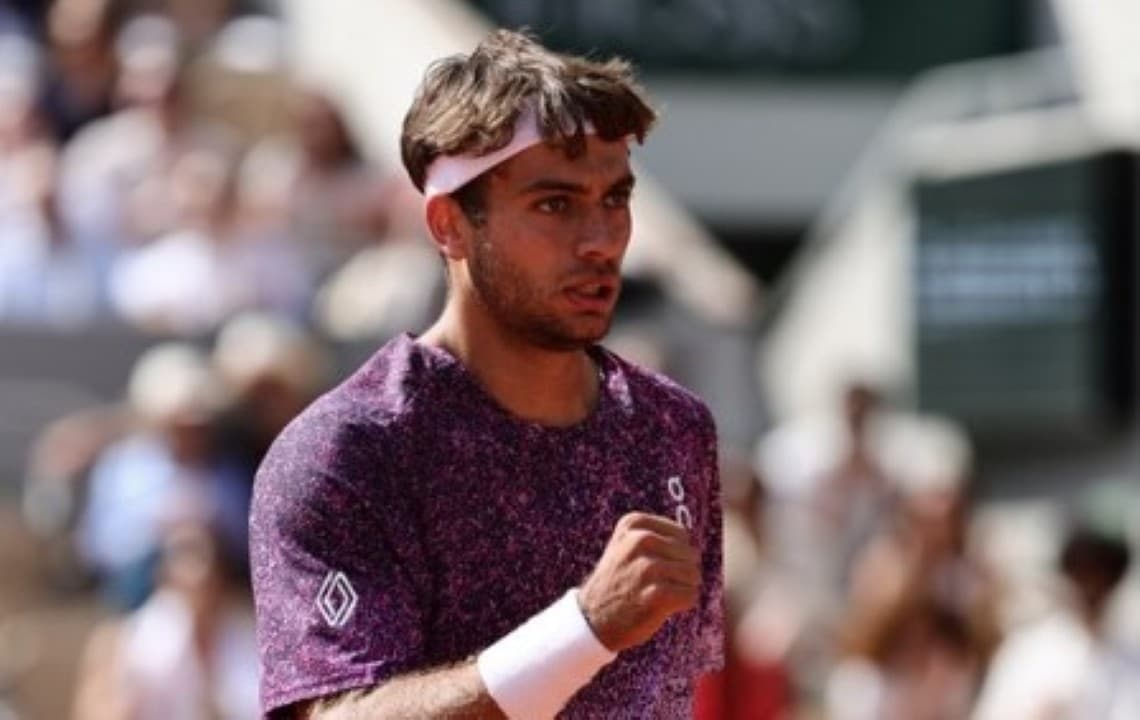
Italian tennis player Flavio Cobolli won the second set and tied the Roland Garros final this Sunday morning. The match against the German Alexander Zverev takes place on the Philippe-Chatrier center court, located in the sports complex in Paris. The score points to equality of one set to one after a remarkable recovery from the 24-year-old athlete. The world number two had dominated the opening half with a large advantage and set his pace. The clash defines the grand champion of the Grand Slam tournament traditionally played on French clay. The expectations of the public present reflect the importance of the duel in the recent history of the sport.
German tennis player’s initial Domínio on center court
Alexander Zverev started the contest with high intensity and precision in his shots from the ground. The athlete set an aggressive pace from the first minutes of the clay court decision. The strategy devised by his team worked quickly. The German broke his opponent’s serve on consecutive occasions and closed the first set quickly 6-1. Zverev’s powerful serve made it difficult for the Italian to return, as he made several unforced errors in an attempt to shorten the points.
The difference in experience in the finals of major tournaments weighed in on the defining moments of the opening section. The number two in the ATP rankings exploited Cobolli’s forehand with deep and extremely heavy balls. Absolute control of the actions remained with the German throughout the first stage of the game. The fans present at the stadium watched an almost impeccable performance from the tennis player who was considered the favorite before the start of the match.
Ajustes tactics secure draw in second set
The dynamics of the match changed drastically on the way back to the second half. Flavio Cobolli changed his position when returning the serve and began to lengthen the ball exchanges at the back of the court. The new tactic required much more physical and mental exhaustion from both competitors. The Italian managed a fundamental break of service at a key moment and managed the advantage until closing the set at 6-4. Defensive consistency replaced the rush and anxiety at the beginning of the game.
The tennis player born Roma saved decisive break points when he was under strong pressure from his opponent. The constant variation of plays, including the precise use of the diagonal backhand, destabilized the German tennis player’s defense. Zverev tried to react in the final games of the partial to avoid a draw. The effort of the world number two came up against the solidity shown by the Italian at that specific moment of the confrontation. The draw in the overall score lifted the audience in the Parisian stands and brought new energy to the final.
Desempenho on serve and partial match numbers
The confrontation statistics reflect the different strategies adopted by the finalists on Paris’s clay. The partial numbers show a clear contrast in each competitor’s playing style. The basis of the serve, in particular, presents notable discrepancies between the two athletes on the court.
- Alexander Zverev registered 21 aces compared to just three from Flavio Cobolli during the match.
- The German tennis player committed five double faults, while the Italian athlete only had two.
- Flavio Cobolli achieved 78% success in the first service, surpassing the 61% recorded by its rival.
- The Itália tennis player won 73% of the points played with his first serve in the second set.
- The world number two converted three of six break points created, and his opponent took advantage of one of two.
- The total number of points won is 67 for the Italian and 56 for the German so far.
Efficiency in the first serve helped Flavio Cobolli to sustain his games in the second half with greater ease. The high number of aces from Alexander Zverev confirms the characteristic power of his opening blow. The dispute remains extremely balanced in terms of technical details and each player’s ability to adapt tactically throughout the sets.
Histórico of confrontations and decision weight in Paris
The direct retrospective between the two finalists records four previous meetings on the men’s professional circuit. Alexander Zverev has the advantage in history with three victories. Flavio Cobolli, however, won the most recent match played between them. The Italian’s triumph occurred in the Munique tournament, also held on clay courts. Familiarity with the slow surface favors a style of play built on patience, long rallies and a lot of physical preparation.
The current final carries a huge historical weight for both competitors. The German tennis player is looking for his first Grand Slam title after playing three other finals in tournaments at this level without success. The 24-year-old athlete is participating in his first decision in one of the four main events on the world tennis calendar. The Italian’s run to the grand final included victories against highly ranked opponents and a walkover advance to the semi-final stage. Winning the coveted Taça from Mosqueteiros represents an unprecedented and transformative milestone for the career of either of the two finalists.
Condições game and physical demands on clay
The Roland Garros men’s final in the 2026 season tests athletes’ endurance to the absolute limit. Clay is widely recognized as the most demanding and exhausting surface on the world tennis circuit. Long ball changes require constant movement, precise sliding and a lot of leg strength. The total departure time already exceeds the mark of an hour and a half of intense duration. The weather conditions in the French capital directly influence the ball’s behavior during rallies. The current climate makes the game slower and the ball heavier after the bounce.
Essa specific feature forces tennis players to generate their own power in continuous attacking strokes. Alexander Zverev uses his large wingspan to cover the court and look for tight angles on serves. Flavio Cobolli relies on extreme agility to reach difficult balls and prolong points as much as possible. Coaches monitor every movement from the stands with extra attention to tactical details. The third set started with the German on serve and maintained a high service success rate on both sides of the net. The definition of the great champion will depend on the ability to maintain mental focus and physical integrity in the next few hours of fierce competition.



