
Avi Loeb argues for imagination in the stars and common sense on Earth with Breakthrough Day premiere

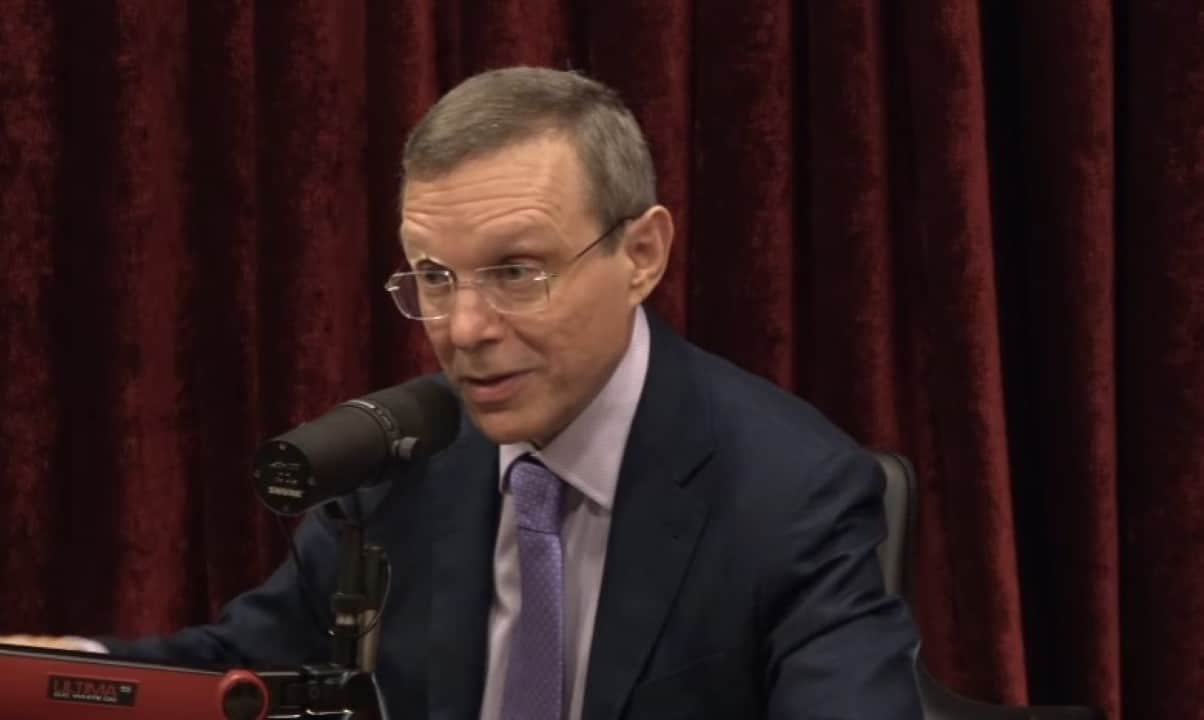
Astrophysicist Avi Loeb published an article in which he defends the balance between imagination about the universe and scientific rigor. The reflection comes days before the premiere of Steven Spielberg’s film Breakthrough Day, scheduled for next week.
Loeb highlighted that Spielberg’s film has the merit of expanding the public’s imagination about the unknown. He cited Albert Einstein’s phrase that imagination is more important than knowledge. The text argues that the United States is investing $700 billion this year in data centers, but the observable universe contains much larger scales.
There are more than a billion Earth-Sun analogues in the Milky Way alone. The observable universe is home to about a trillion galaxies. Beyond the cosmic horizon, the volume could be at least 64 billion times larger, according to the astrophysicist. Building data centers that would capture all this knowledge would require an investment of around 4.5 x 10⁴³ dollars.
Spielberg film stimulates debate about life beyond Earth
Director Steven Spielberg returns to the theme of contact with non-human intelligences. The film Breakthrough Day imagines a world on the verge of a revelation about the existence of hidden extraterrestrial life. The cast includes Emily Blunt, Josh O’Connor, Colin Firth, Eve Hewson and Colman Domingo. The script is by David Koepp.
Loeb separated his own approach. While Spielberg uses art to inspire, the scientist controls the imagination through the laws of physics. He cited the absence of evidence of deviations from the standard model in laboratory experiments, even after billions of dollars invested. Phenomena like faster-than-light travel or extra dimensions have not appeared at observatories like LIGO-Virgo-KAGRA.
- The astrophysicist recommends collecting better data before concluding that blurry videos of lights in the sky indicate new physics.
- Any supersonic object in the Earth’s atmosphere would generate a fireball and shock wave.
- A 1.6 meter diameter bolide produced a sonic boom over Boston on May 30, 2026.
- The speed of the meteor was about a hundred times that of sound.
Sun will limit time for human construction on Earth
Humanity has a cosmic deadline to act. The Sun will consume all Earth’s structures in 7.6 billion years. All the matter on Earth and the Moon will be incorporated into a white dwarf. Current monuments and buildings are equivalent to sandcastles in the face of this cycle.
Loeb argued that the species will only be remembered in cosmological history if it ventures into the stars. The informational content of the universe far surpasses what exists on Earth. Keeping your “eyes on the court”, like in basketball, means focusing on what really matters beyond the planet.
Investment context and cosmic scale
Today’s data centers map terrestrial knowledge. Expanding into the cosmos would require extreme multiplication of resources. The Milky Way alone offers billion-dollar scales of planetary systems similar to our own. The observable universe multiplies this by trillions.
The argument gains a temporal dimension. The useful life of human buildings on Earth is limited by the stellar cycle. Interstellar expansion appears as a way to preserve the human legacy on scales of billions of years. Loeb maintains scientific caution: no current evidence supports violations of known physical laws.
Reaction to the Boston event reinforces evidence-based approach
On May 30, 2026, a bolide generated a sonic boom heard throughout the Boston region. The object traveled at about 75,000 miles per hour and fragmented at approximately 40 miles in altitude. The energy released was equivalent to around 300 tons of TNT. NASA confirmed the meteoric nature of the event.
Loeb used the case to illustrate that supersonic objects leave clear contrails. Any supposed solid technological artifact would produce a fireball and detectable electromagnetic interaction. The episode serves as a reminder to anchor observations in concrete physical evidence.
Long-term outlook for humanity
The astrophysicist emphasized the need to balance inspiration and rigor. Spielberg’s art fuels the stars’ dreams. Science requires data and tested physical laws. This combination could guide the species beyond Earth before the Sun makes the planet uninhabitable on a cosmological scale.



