

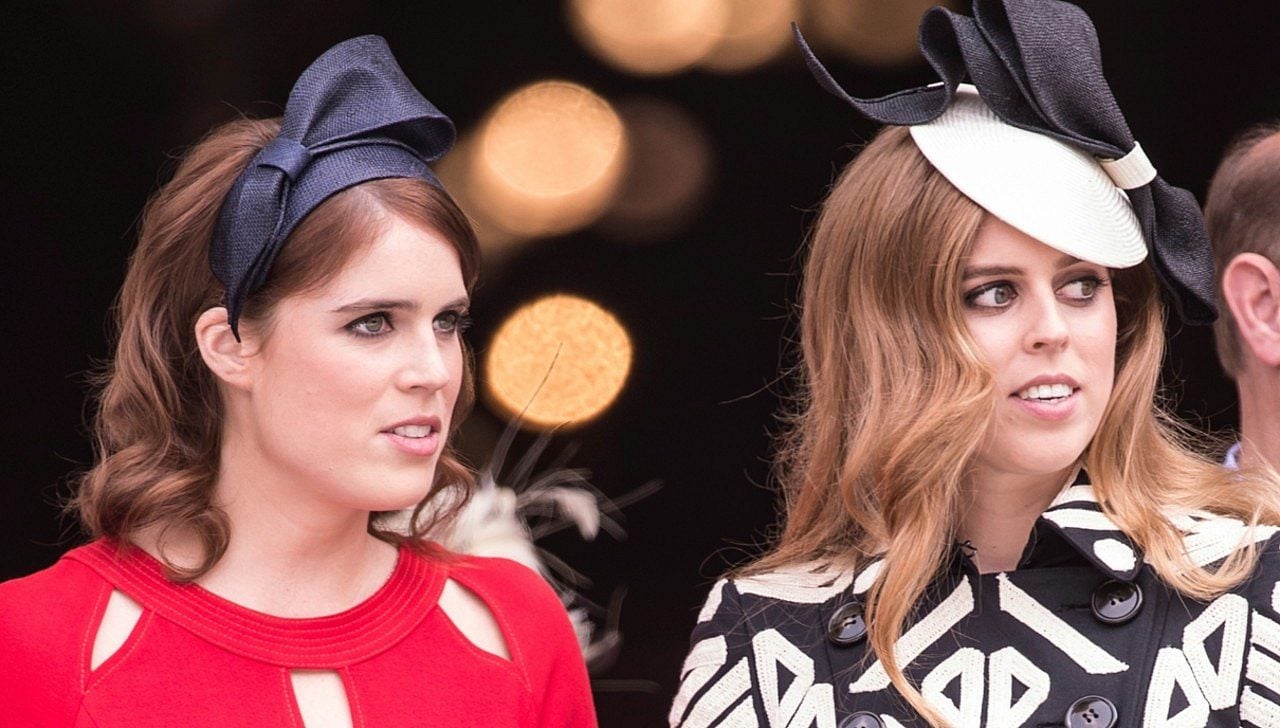
The forced absence of Princesses Beatrice and Eugenie from official British royal engagements has triggered a severe conflict behind the scenes at Buckingham Palace. The sisters’ prolonged distancing from traditional ceremonies generated unrest in the United Kingdom and exposed deep fractures in the family nucleus. The attempt to avoid recent orders limiting the public appearances of the two heiresses ended up worsening the institution’s domestic crisis.
The British press points out that Prince Andrew’s daughters face continuous internal isolation. High-ranking members of the monarchy differ over the treatment given to the two following the scandal involving their father, who was stripped of his royal duties and military honors at the beginning of 2022. The two women, who historically occupied central positions in the dynamics of the royal family, now find themselves in the middle of an intense internal dispute.

Disagreements regarding the presence of heiresses at traditional events
The ban on royal women in historic celebrations raised an alarm about the severity of internal resentment in the palace. In March, internal reports indicated that Beatrice and Eugenie were banned from attending the traditional Royal Ascot horse race. The distance became even more evident when both did not attend the Chelsea Flower Show, while the famous Garden Parties represent another historic event in which they used to actively participate.
The princesses’ absence from the annual spring exhibition, organized by royal officials, was interpreted by palace observers as a clear message of exclusion. The empty space left at the Chelsea Flower Show provoked an immediate reaction from the public, who demonstrated opposition to the measure, and this trend of discontent reached the royal advisors. The systematic emptying of Andrew’s daughters’ agenda made clear the existence of a deliberate maneuver to reduce the political strength of this branch of the monarchy.
Princess Anne contests the isolation imposed on her nieces
Princess Anne confronted exclusion in London and adopted a combative stance to protect her nieces. The daughter of the late Queen Elizabeth II expressed deep dissatisfaction with the fact that young women are being overlooked as a result of the actions of third parties. The consensus among veterans of the monarchy points out that, since the deterioration of the institutional crisis, the king’s sister maintains a firm defense position in relation to Beatrice and Eugenie.
- Demonstration of clear and discreet support for the two nieces behind the scenes of the palace.
- Classification of restrictive measures as unfair and disproportionate.
- Attempts to reverse the loss of the right to participate in future official commitments.
- Requirement of transparent criteria in the distribution of functions within the House of Windsor.
Princess Anne’s central argument is based on the principle of separation of family responsibilities. The heiress internally insists that the treatment of princesses must be fair and impartial. For the sister of King Charles III, punishing her nieces for Prince Andrew’s personal scandals represents a colossal strategic error, capable of weakening the cohesion of the monarchy in the eyes of the international community.
Queen Camilla faces accusations of coordinating exclusion campaign
Queen Camilla, positioned at the opposite end of the family dispute, faces severe criticism for allegedly directly interfering in the monarch’s decisions. Allies of Princess Anne point to the king’s wife as the main coordinator of the process that marginalizes high-ranking princesses. The scenario indicates that Camilla is implementing a plan with the aim of permanently removing Beatrice and Eugenie from the most important social circles of the royal family.
Queen Camilla’s alleged attack aims to shield the institution’s public image from any direct association with Prince Andrew. Internal critics believe that this maneuver works as a tactic to dilute the influence of York’s lineage. The direct clash between Anne and Camilla generates a high level of stress for the communications and security teams at Buckingham Palace.
Impact of the Duke of York scandal on the future of the monarchy
The root of the problem that fuels the internal battle lies in the legal and image obstacles faced by Prince Andrew, arising from his former association with financier Jeffrey Epstein, convicted of sexual crimes in the United States. The Duke of York lost his military titles and royal patronages due to his involvement in the international scandal. Since then, the presence of their direct relatives at official events has been subject to strict monitoring by Crown advisors.
Proponents of a total ban argue that, regardless of the friction generated, preserving the image of the monarchy during the current reign is a non-negotiable priority. On the other hand, the group led by Princess Anne maintains that Beatrice and Eugenie have a history of exemplary behavior and provide relevant services to local society. The current impasse threatens to paralyze key decisions on the king’s representation in international activities scheduled for the coming months.