

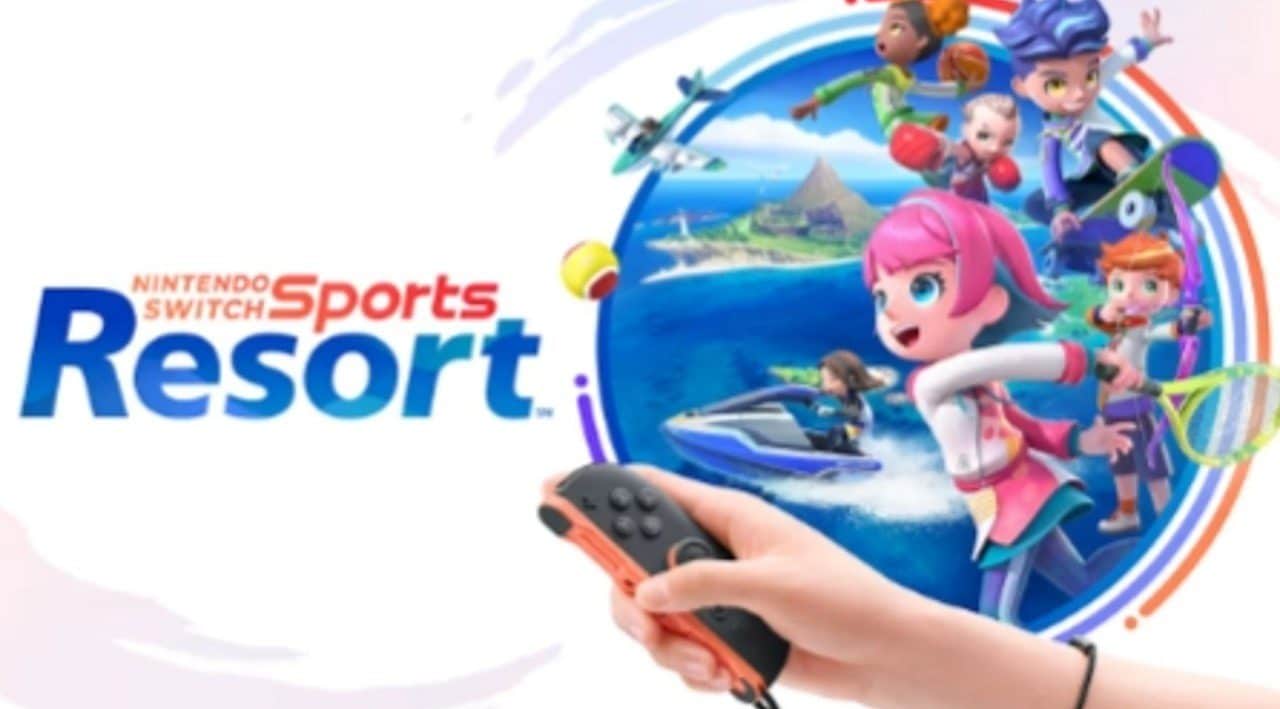
Nintendo officially announced the development of Nintendo Switch Sports Resort, a new title focused on sports and motion controls. The game has a global launch scheduled for October 22, 2026 and will arrive exclusively for the company’s next generation console, the Switch 2. The revelation took place during the Nintendo Direct summer broadcast, confirming the recovery of classic elements that marked previous generations of players and establishing one of the first major releases for the new platform.
Unlike the approach adopted in the company’s previous sports title, which hit the market with a limited number of activities and received additional content over months, the new bet will debut with a complete package from day one. The initial catalog has twelve different modalities, mixing traditional sports and recreational activities focused on physical movement. The strategy aims to consolidate the new hardware in the first few months of its life, betting on the family appeal and the local multiplayer mode that defines the franchise.
Return of the iconic Wuhu Island and avatar options
One of the main attractions confirmed by the Japanese developer is the return of Wuhu Island, the famous tropical setting that served as the stage for the classic Wii Sports Resort more than fifteen years ago. The open map will once again function as the hub of sporting activities, allowing users to explore the local geography, which includes beaches, mountains and urban areas, through specific modalities. The decision responds to a long-standing request from the fan community, who missed a unified and immersive environment in the game released in 2022 for the first version of the hybrid console.
When it comes to character customization, Nintendo chose to offer two distinct fronts to please different consumer profiles. Players will be able to use Sportsmates, recently introduced avatars that have more realistic proportions and vast options for clothing, haircuts and modern accessories. At the same time, the system will maintain full support for traditional Miis, the cartoonish dolls that became the symbol of the Nintendo Wii’s golden age, ensuring the nostalgia factor during matches and competitions between friends.
Catalog of control modalities and mechanics
The list of sports available at launch spans a variety of styles, requiring different levels of physical exertion and precision from users in the living room. The company confirmed that most activities will make intensive use of the motion sensors built into the new Joy-Con 2 controllers. The updated hardware promises to capture gestures with greater spatial fidelity, eliminating reading delays and providing immediate on-screen response during fierce competitions of reflex and strength.
The title revives established modalities that have defined the franchise over the decades, while at the same time introducing new practices into the company’s virtual format. The official selection released during the summer presentation includes the following sports for players:
- Bow and arrow
- Table tennis
- Tennis
- Skateboarding
- Motor tour (jet ski)
- Thumb fight
- Propeller plane
- Boxing
- Golf
- Jump rope
- Volleyball
- Bowling
- Basketball
Among the new features presented, skateboarding stands out for presenting a different control scheme in relation to racket sports. The mechanics of maneuvering the skateboard will require movements that simulate the precision of a computer mouse, indicating an evolution in the way the Joy-Con 2 sensors interpret small wrist and tilt adjustments. The propeller plane will serve not only as a test of aerial skill, but also as the main free exploration tool to fly over and map all the tourist attractions on Wuhu Island.
Commercial strategy and impact on the new console
The choice to launch a Sports series title right at the beginning of the Switch 2’s life cycle reflects a historic and successful tactic by the Asian manufacturer. Games with simple and intuitive mechanics often function as perfect technological showcases to demonstrate the capabilities of new hardware to a casual audience. The accessibility of motion controls breaks the entry barrier for people who are not in the habit of consuming traditional video games, considerably expanding the base of potential buyers for the new equipment.
The period chosen for the product to arrive in physical and digital stores also demonstrates planning aimed at boosting end-of-year sales. The month of October strategically positions the game ahead of the holiday season, a time when couch multiplayer-focused titles see their biggest spikes in global sales. Pre-orders for the digital edition have already been released on the official Nintendo eShop store, allowing interested parties to guarantee an early download and prepare the console for the official launch day.
Analysts in the digital entertainment market point out that the absence of fragmented updates is a positive point for the initial reception of the product by critics and the public. The continuous service model adopted in the predecessor generated debates for delivering an experience considered incomplete in the first months of availability. By making all modalities available simultaneously, the company guarantees a robust package capable of justifying the immediate investment in the brand’s new hardware ecosystem.
Historical evolution of the sports franchise
The trajectory of Nintendo’s sports series is intertwined with the popularization of motion controls in the global technology industry. The phenomenon began in 2006, when the original package accompanied the launch of the Wii console and transformed millions of living rooms into virtual tennis courts and bowling alleys. The commercial success of that iteration changed the design paradigms of the time, forcing competing companies to develop their own motion capture solutions to try and capture a portion of the newfound casual audience.
The direct sequel, released in 2009, introduced the MotionPlus accessory to refine the accuracy of gyroscopic sensors and offer full-scale tracking. It was exactly at this moment that Wuhu Island made its definitive debut, establishing a standard of geographic immersion that fans have been demanding ever since on forums and social networks. The rescue of this specific scenario in the 2026 project works as a direct bridge between the height of the company’s expansion era and the new technical possibilities offered by the Switch 2’s processing architecture.
As development progresses and the launch date in October approaches, the market’s expectation is that the developer will promote new public demonstrations detailing the internal workings of the Joy-Con 2. The perfect integration between the sports software and the physical components of the console will be decisive for the success of the venture on the shelves. The title carries the marketing responsibility of proving that the classic formula of bringing together friends and family around television remains relevant and profitable in a scenario increasingly dominated by individual online experiences.