

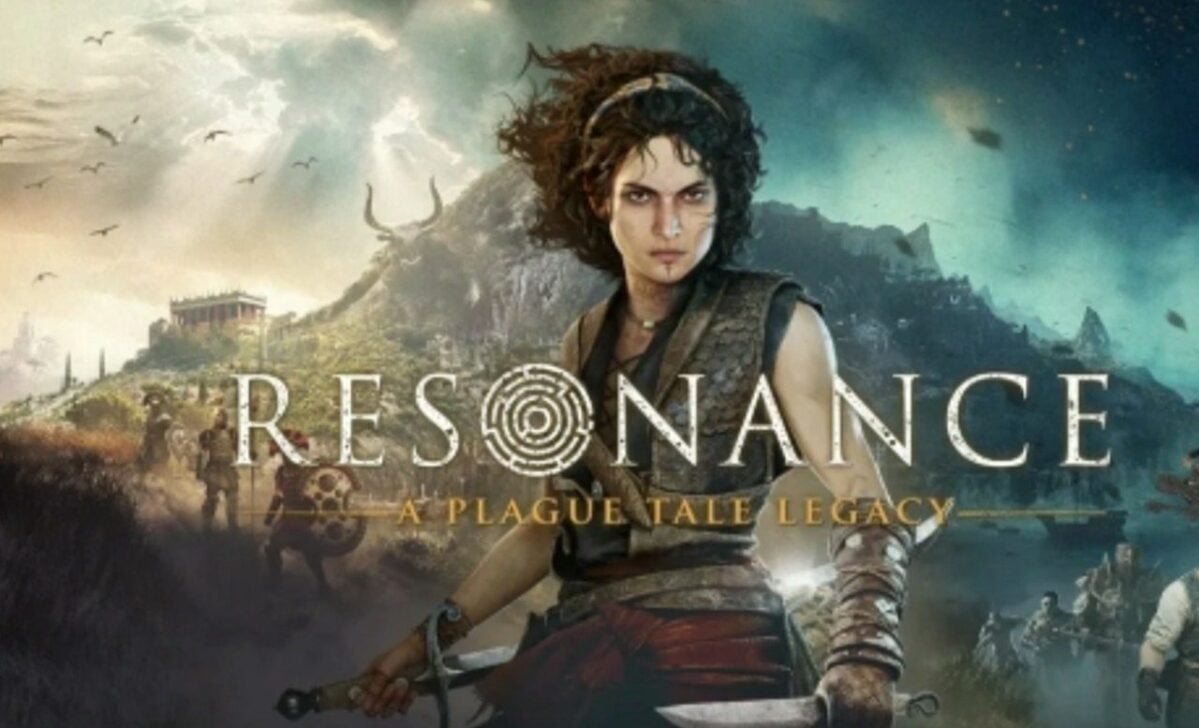
Developer Asobo Studio decided to reformulate the structure of the A Plague Tale franchise, leaving stealth aside to embrace an action and adventure experience with a cinematic feel, along the lines of major PlayStation Studios productions. Called Resonance: A Plague Tale Legacy, the new chapter says goodbye to rat-infested medieval France and transports players to the island of Crete, delivering a narrative focused on direct combat, puzzles and intense sequences.
The brand’s previous titles won over the public by offering high-budget visual quality within unique settings, even with more limited financial resources. However, the basis of the gameplay was always rooted in stealth and solving puzzles, elements that ended up dictating the pace of the story and did not always appeal to all player profiles.
Changing an established formula and abandoning the stealth core may seem like a risky decision at first. However, the practical result of this transition delivers an extremely well-constructed and satisfying action game. During a quick test carried out on a high-performance computer, the already impressive graphics gained even more prominence. Although it does not bring the same weight of innovation seen in the release of Innocence, the plot captures attention from the opening minutes and demonstrates enormous potential.
Pirates and mysteries on Minotaur Island
The main campaign takes place in the year 1333, exactly 15 years before the events played by Sophia in A Plague Tale: Requiem, a period in which Crete was under strong Venetian rule, a real historical detail that enriches the game’s setting. The demonstration reveals that the story is already in its fourth chapter, at which point Sophia and her companion Leni arrive in Greek territory in search of a legendary treasure, with the aim of paying off a debt with the person who saved their lives.
Leni, however, represents just one of several partnerships that will cross Sophia’s path along the journey.
Greek mythology plays a central role in building the title’s atmosphere. As time progresses, the adventurous duo must explore centuries-old ruins, squeeze through secret passages and face heavily armed soldiers who patrol the island in search of the protagonist.
Along the way, the player discovers methods to investigate ancient Greek buildings that remain standing, even surrounded by adverse conditions such as floods and volcanic areas. The visual contrast between medieval architecture and the remains of antiquity creates a powerful and immersive aesthetic identity.
Driven by curiosity, Sophia seeks answers about her own destiny and the ghosts of her past. The character suffers from deep and disturbing visions, in a psychological approach that recalls the style of Hellblade, connecting her to historical figures and mythological artifacts. At specific times, the test requires the player to take direct control of these situations. The relationship with Leni also gains layers of depth, and a quick dialogue reveals the root of the conflicts between them: an anti-heroine stance that makes the protagonist reflect on the legacy she left behind.
The protagonist uses these visions and internal torments as fuel, drawing strength from dramatic performances that drive her advancement.
Exploring the scenarios immediately evokes the feeling of playing something from Naughty Dog or the Tomb Raider franchise. The environments are designed with attention to the smallest details, full of climbable edges and vertical paths. What hides in Crete is jaw-dropping: imposing mythological statues, mechanisms of colossal proportions and architectural structures that defy logic.
Complex and challenging puzzles
The feeling of discovery and the atmosphere of great adventure are effectively transmitted, gaining strength through the action integrated into the scenarios. In certain stretches, it is necessary to carefully investigate the environment to find the correct route, often crossing areas of intricate navigation. The work presents enigmas similar to those faced by Nathan Drake and Lara Croft, but with an extra layer of complexity.
It’s true that puzzles involving the use of mirrors are not exactly new to the industry, but here they receive a special and creative treatment.
Resolving these obstacles requires the manipulation of surprising mechanisms, demanding careful assessment from both sides of the scenario. They continue to be fundamental to progress, keeping the essence of the franchise alive, but as the focus is now on action instead of stealth, the player needs to exercise more observation and logical deduction.
Two aspects about enigmas are worth highlighting. First, when the player gets stuck, teammates don’t deliver the answer right away; you have to press a button to request a hint, allowing everyone to adjust the level of help, while Sophia writes down clues in her diary. Second, the characters react to the mechanisms with the same amazement as those who have control in their hands, questioning the origin of those technologies and sharing the mental and physical relief once the path is finally cleared.
A formidable protagonist in combat
Perhaps the grand scale of the scenarios is the only element missing in the physical clashes. Sophia has dynamic abilities, but the short demonstration did not allow us to explore the full depth of the system. As the heroine faces heavily armored soldiers and imposing enemies, the use of perfect blocks and counterattacks proves to be the most efficient strategy.
In most clashes, opponents appear in greater numbers, but the range of defensive and offensive options is more than enough to control the situation.
The combat system prioritizes dodging and defending at the right time. The proposal is not to eliminate enemies with bloody blows or cinematic finishes, but rather to use the environment itself and the scenario’s traps to your advantage. Critical hits knock guards off balance, knock down archers from high positions, and allow tactical use of explosive barrels.
Although testing time was limited, the skill tree and weapon upgrades appear to follow an intuitive format, ensuring customization of fighting style. Furthermore, the connection with ancient artifacts grants the protagonist special powers. After experiencing flashbacks linked to these objects, Sophia is able to launch devastating attacks during battles.
At specific scripted moments, the player takes full control of these superhuman abilities.
The soundtrack acts as a central pillar of immersion. The combination of vocals, period instruments and cinematic arrangements heightens the tension and spirit of adventure. The game offers dubbing in several languages, but the original voices deliver a greater dramatic impact. In the visual aspect, even though it is a development version with some unstable animations, the use of Unreal Engine 5 is impressive, especially due to the camera work in combat and the realistic lighting.
The official launch of the title is scheduled for 2026, with versions confirmed for computers, desktop consoles and availability on the Game Pass service.
Resonance: A Plague Tale Legacy may even give up part of the stealth identity that established its predecessors. However, this turn to the action and adventure genre has everything it needs to attract a much wider audience, relying on dynamic and accessible mechanics.
Sequences of epic proportions capture the eye and hold attention immediately.
If the final version maintains the diversity of situations presented in the demo, with intelligent puzzles, the mature development of Sophia’s arc and scenarios that never cease to surprise, the new game has the potential to repeat the resounding impact that Innocence made seven years ago. The arrival on the market in 2026 will include the PC, PlayStation 5 and Xbox Series X/S platforms.
These impressions were based on a press preview event played on PC at the invitation of publisher Focus Entertainment.