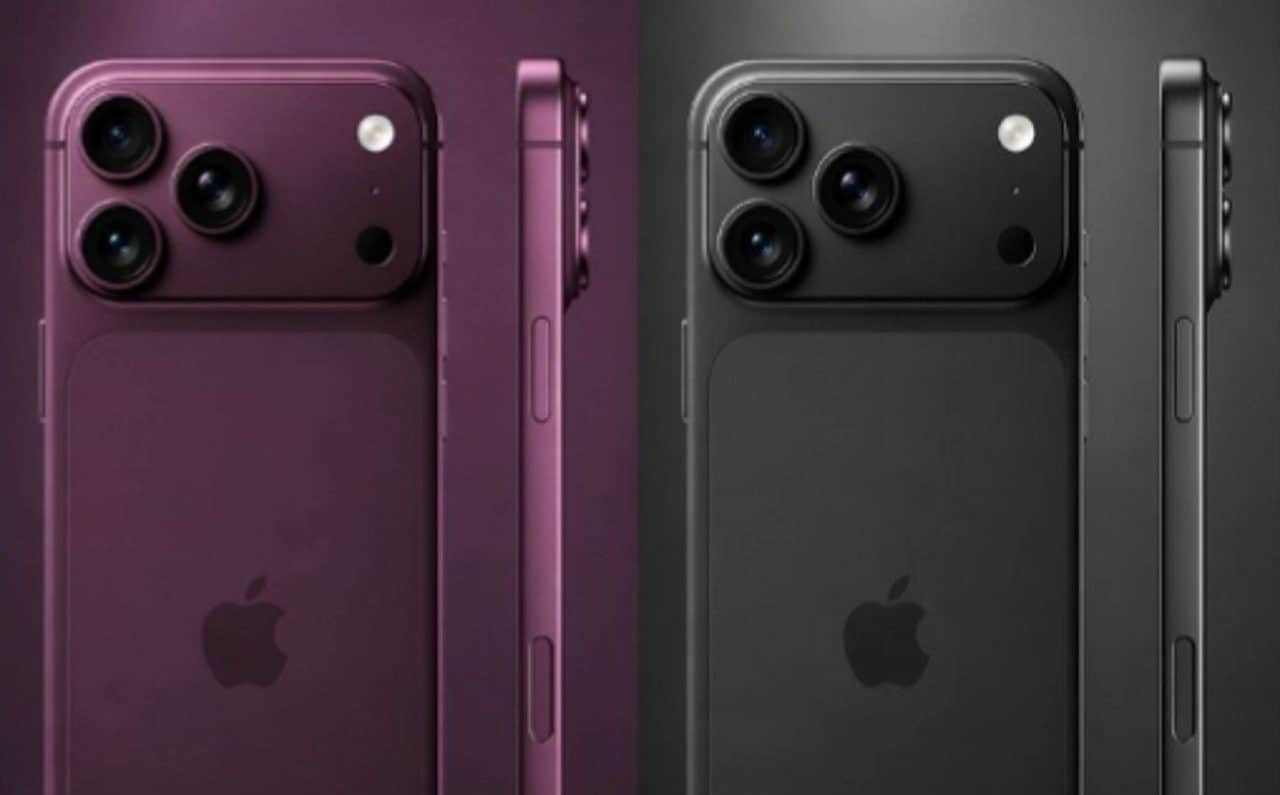
Apple plans a historic change in the power architecture of its next high-end smartphones, marking a new level for the mobile device industry. The future iPhone 18 Pro Max, which has a global presentation scheduled for the brand’s traditional event in September, will be the manufacturer’s first device to break the barrier of 5000 mAh of nominal capacity. Historically, the company has always operated with smaller cells than its direct competitors in the Android universe, relying on rigorous optimization of the iOS operating system to compensate for the difference in hardware. Now, the jump to up to 5200 mAh indicates an aggressive strategy to dominate the extreme autonomy segment, delivering equipment capable of supporting the growing demands of continuous processing.
The engineering behind the energy record in the United States
Reaching the 5200 mAh mark will not occur uniformly across all global markets, depending directly on structural decisions adopted for specific regions. Consumers who purchase the device at retail in the United States will have access to the version with the largest energy cell ever manufactured by the company. This technical feat is the result of a transition process that began years ago, when the brand decided to completely eliminate the physical SIM card drawer in the United States. The exclusive adoption of the eSIM connectivity standard has proven to be a long-term move focused on making maximum use of internal chassis space.
Without the need to accommodate the metal reader, electronic contacts and traditional chip ejection mechanism, engineers gained precious cubic millimeters on the motherboard. This idle area was completely redirected to the battery compartment, allowing the installation of a thicker component with greater chemical density, without compromising the thermal dissipation system. The physical gain ensures that American units fluctuate between 5100 and 5200 mAh, a volume that promises to support entire days of intense use without the need to look for a socket in the middle of the afternoon.
Requirements of the Chinese market limit the expansion of the component
On the other side of the globe, the telecommunications landscape imposes physical barriers that prevent the exact replication of the American engineering model. In China, local operators and consumer behavior require continued support for multiple physical chips, a feature considered essential to the commercial success of any phone in the region. To meet this non-negotiable demand from the Asian market, the assembly line needs to preserve the mechanical card reading module within the device’s structure.
The obligatory presence of this piece steals vital space that would otherwise be filled with energetic material. Consequently, the iPhone 18 Pro Max aimed at the Chinese public will find a slightly lower physical limit, reaching a ceiling of 5100 mAh. To map out the exact differences that will hit shelves in September, hardware distribution will occur under well-defined parameters:
- Units sold in the United States: total removal of the chip drawer, operation restricted to eSIM and expanded battery with capacity ranging from 5100 to 5200 mAh.
- Units destined for China: preservation of the double slot for physical cards, adaptation to Asian networks and battery restricted to the limit of 5000 to 5100 mAh.
- Hardware evolution: regardless of the region of purchase, all variants surpass the maximum capacity offered by the current iPhone 17 Pro Max.
The 100 mAh difference between models from different continents represents a marginal impact on the daily experience, but perfectly illustrates how geography dictates the industrial design of global products. The most relevant aspect for the end consumer is that both versions guarantee a significant generational leap. Active screen time will see a notable increase, benefiting professionals who use the phone as their main remote work tool and reducing the natural wear and tear on the battery over the years, as the device will require fewer complete recharging cycles.
Leaks confirm unprecedented color palette and conservative design
While details about energy management dominate technical discussions on production lines, the new generation’s visual identity has also begun to take public shape. Digital content creator Sahil Karoul recently released photographs of test units on his platforms, revealing the external appearance of the devices. These prototypes, known in the manufacturing industry as dummies, are precise molds sent in advance to case and accessory manufacturers to test their own products.
The leaked photographic material confirms that the main structure of the smartphone will maintain the aesthetic language already consolidated by the brand, without drastic ruptures in the shape of the camera block or the titanium edges. The big visual novelty will be the introduction of four new color options for the rear finish in frosted glass. These new shades seek to renew the commercial appeal of the product in the shop windows, following the profound changes that will take place under the screen during the official announcement in September.
The real impact of the new capacity on consumers’ routine
The introduction of the largest power reserve in the line’s history does not function as an isolated element, but rather as part of a highly integrated hardware ecosystem. The true potential of these 5200 mAh will be unlocked by the new generation of processors developed by the manufacturer itself. The updated silicon architecture promises superior thermal efficiency, ensuring that the phone extracts maximum performance from every drop of energy stored in the cell, avoiding the overheating that tends to drain the charge quickly.
In practice, this combination of massive battery and efficient processor transforms usability in high-stress scenarios for the system. Heavy tasks such as continuous recording of videos in 4K resolution, prolonged play of games with complex three-dimensional graphics and continuous use of GPS navigation will consume the charge much more slowly. The model is positioned as the definitive choice for advanced users who require equipment capable of operating at maximum capacity from the early hours of the morning until the end of the night, raising the bar for competition in the premium smartphone market.
