
August 2026 astronomical calendar brings solar eclipse in Europe and lunar occultation in Brazil

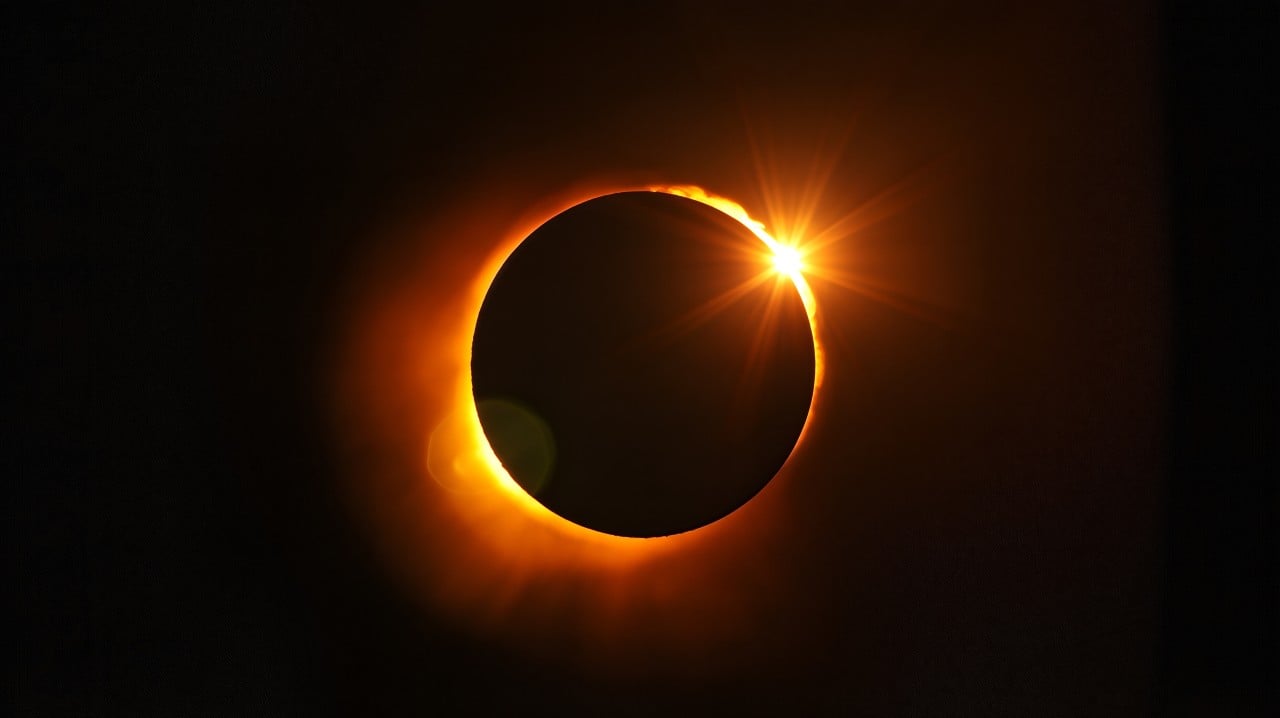
Observation of outer space constantly attracts the attention of scientists and amateurs passionate about the mysteries of the cosmos. The eighth month of the year 2026 holds a double schedule of important planetary movements, requiring Brazilian observers to know exactly which attraction will be available in the country’s skies so as not to miss the exact moment.
Trajectory of the lunar shadow during total blocking of the Sun over the European continent
The complete blocking of sunlight scheduled for August 12, 2026 stands out as a scientific milestone, especially as it is the first event of its kind to cross Europe since 1999. Recent mapping data prepared by the North American space agency illustrates the exact path of darkness, showing the territorial bands that will experience the temporary absence of daytime light.

The phase of maximum darkness will last exactly two minutes and eighteen seconds, reaching its geographic peak a few kilometers off the Icelandic coast. Afterwards, the shadow cone will cross the ocean towards Spanish territory, covering important cities such as Bilbao, Zaragoza, A Coruña and Valencia, ending its route in the Balearic Islands, specifically in Palma.
Lack of visibility of the daytime alignment in the skies of Brazil
Residents of Brazilian territory will not be able to see the Moon overlapping the Sun on this specific date, whether in full or partial mode. The orbital geometry of this event restricts the projection of the shadow exclusively to the highest latitudes of the Earth’s globe.
Despite the physical impossibility of looking at the sky and seeing the change, technology will guarantee access to the show through digital platforms. Cutting-edge institutions, such as the European Space Agency and NASA itself, will organize real-time coverage over the internet, allowing the South American public to follow every second on their screens.
Official schedule to follow the peak of darkness in the Northern Hemisphere
Researchers have already defined the exact schedule for the stars’ transition, a vital planning for teams that depend on photographic precision and data collection. The initial touch of the lunar silhouette on the edge of the star will occur during the period that corresponds to the end of the afternoon in the Brasília time zone.
The restricted time window demands early calibration of telescopes and long-range lenses. As the star will be close to the horizon, eclipse hunters will need to look for mountains or tall buildings that guarantee a clear line of sight, preventing the local topography from hindering the capture of images.
The astronomical clock marks the beginning of full coverage at 4:58 pm in Coordinated Universal Time (UTC), reaching its pitch black height at 5:46 pm and ending the complete passage at exactly 6:34 pm.
National opportunity with the occultation of almost the entire surface of the Moon
The real attraction for those who live in Brazil will happen in the final stretch of the month, more precisely in the early hours of August 28, 2026. This is an almost total shading of our natural satellite, which will have 93% of its bright area swallowed by the Earth’s shadow, leaving only a thin illuminated arc.
Calculations released by the National Observatory confirm that the night transition between the 27th and 28th will be democratic, and can be admired from any Brazilian state. The satellite’s massive entry into the umbra — the darkest and most central region of the shadow cast by our planet — will create a visual effect very similar to that of an absolute blockage.
O processo de escurecimento começará ainda na noite de quinta-feira, dia 27, ganhando intensidade ao longo da madrugada seguinte. The moment of greatest coverage will occur in the early hours of Friday, requiring enthusiasts to adjust their alarm clocks according to the time zone of their respective cities.
Importance of the night event before a long period without similar occurrences
This astronomical configuration of August 28th represents the golden chance for practical observation in the country during the year 2026. After this date, Brazilians will face a fast of almost three years until the next total alignment, which will only color Brazil’s night skies again on June 26th, 2029.
Eye protection protocols for observing solar phenomena
Facing sunlight during spatial alignments requires absolute rigor with eye health, as radiation can irreversibly destroy retinal cells. Everyday accessories, x-ray plates or dark films fail miserably to block the infrared rays that cause silent blindness.
- Never point cell phone lenses, binoculars or cameras at the star without first installing professional filters on the front lens.
- Only purchase cardboard glasses that have the international ISO certification seal specifically for astronomical observation.
- Use the dark glasses used in electric welding masks, requiring shade number 14.
- Build indirect projection systems, where light passes through a small hole in cardboard and reflects the image on the floor or a white wall.
Ophthalmologists reinforce that the grade 14 welder’s lens continues to be the most reliable low-cost barrier available on the market. For those who prefer not to spend anything, the dark box method with a pinhole provides an educational and completely risk-free experience, allowing children and adults to participate in the scientific celebration with guaranteed safety.



