

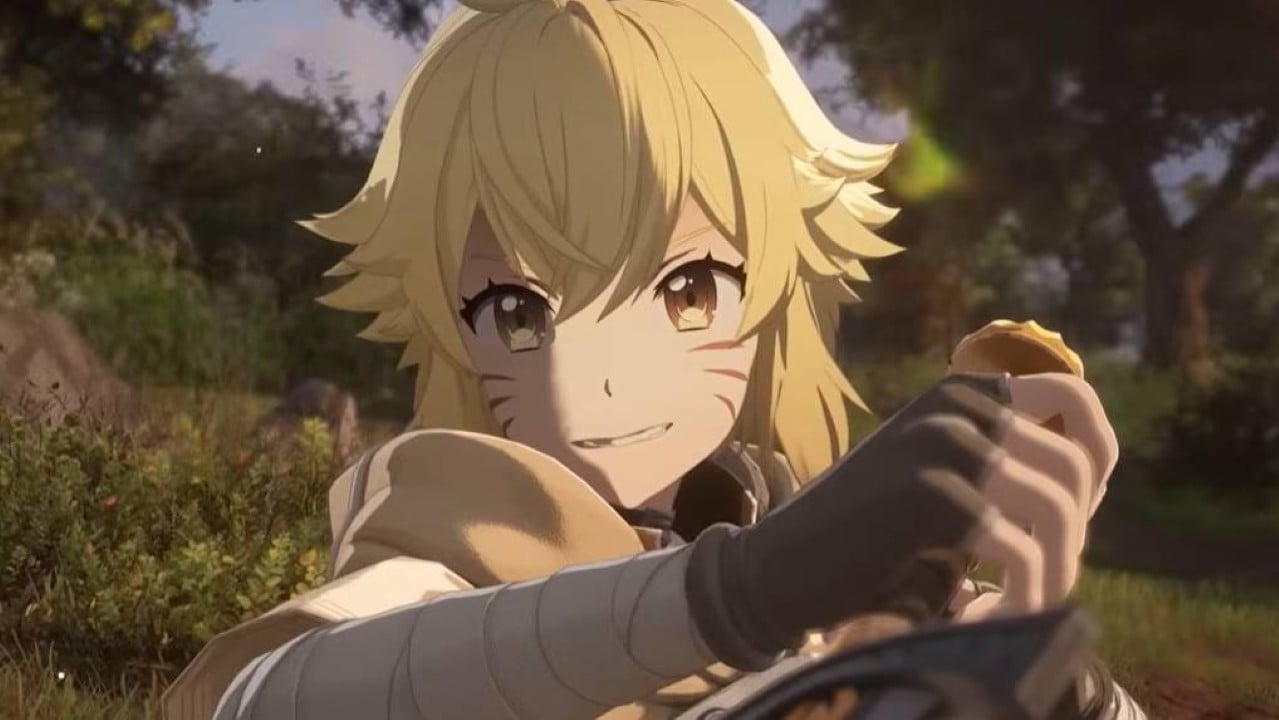
Thanks to the team at Bandai Namco, I recently participated in a hands-on session with Echoes of Aincrad, the upcoming action RPG set in the Sword Art Online universe. I didn’t consider myself the exact target audience before the experience and I confess I was a little skeptical. I watched the first season of the anime a few years ago, but I didn’t follow the franchise much after that and I didn’t play the previous titles either.
For those unfamiliar with the series, Sword Art Online follows thousands of players trapped inside a virtual reality MMORPG, in which death within the game results in death in the real world. The only way to escape is to complete all 100 floors of the enormous floating castle called Aincrad. Despite my initial reservations, I left the preview session wanting to see more of the game.
Echoes of Aincrad takes a different approach than most Sword Art Online games. Instead of putting the player in the role of Kirito, the protagonist of the anime series, the title allows you to create an original character and experience the world of Aincrad through an unprecedented story. Anyone who already knows the premise of Sword Art Online immediately understands the attraction. The player is trapped in the famous floating castle, fighting for survival while exploring increasingly dangerous floors and growing stronger alongside companions.
Partner system steals the show in Echoes of Aincrad’s combat
Combat largely revolves around the relationship between the player character and their chosen partner. While the action itself is fast and responsive, the partner’s abilities steal the show. You can switch between “Switch” and “Free” modes to manage enemy aggression while coordinating attacks and support skills. Holding the left trigger gives you access to both Sword Skills and Partner Skills, opening the way for powerful combos. The game seemed to encourage the use of Iori, who proved especially useful during my session thanks to his support abilities.
The preview version made available had several save files from different moments of the adventure, allowing glimpses of various regions, gameplay mechanics and narrative advances. Although switching between these saves made it difficult to fully understand the overall plot, the story ended up being quite a surprise. I was interested in finding out where the game is going. This wasn’t something I necessarily expected from a franchise that I’ve never delved into this much. I can’t go into specific details here, so I’ll stop for now.
Despite the game’s focus on survival, I found the Very Hard difficulty quite accessible. The gameplay cycle remains the same regardless of the chosen difficulty level. Basically, getting to the nearest safe zone is the priority when entering a new area. From there, you can explore the surrounding environment, hunt enemies, collect resources, and farm weapon drops and blueprints before moving on. The loop felt rewarding, even if it wasn’t as punishing as the game’s marketing initially suggested.