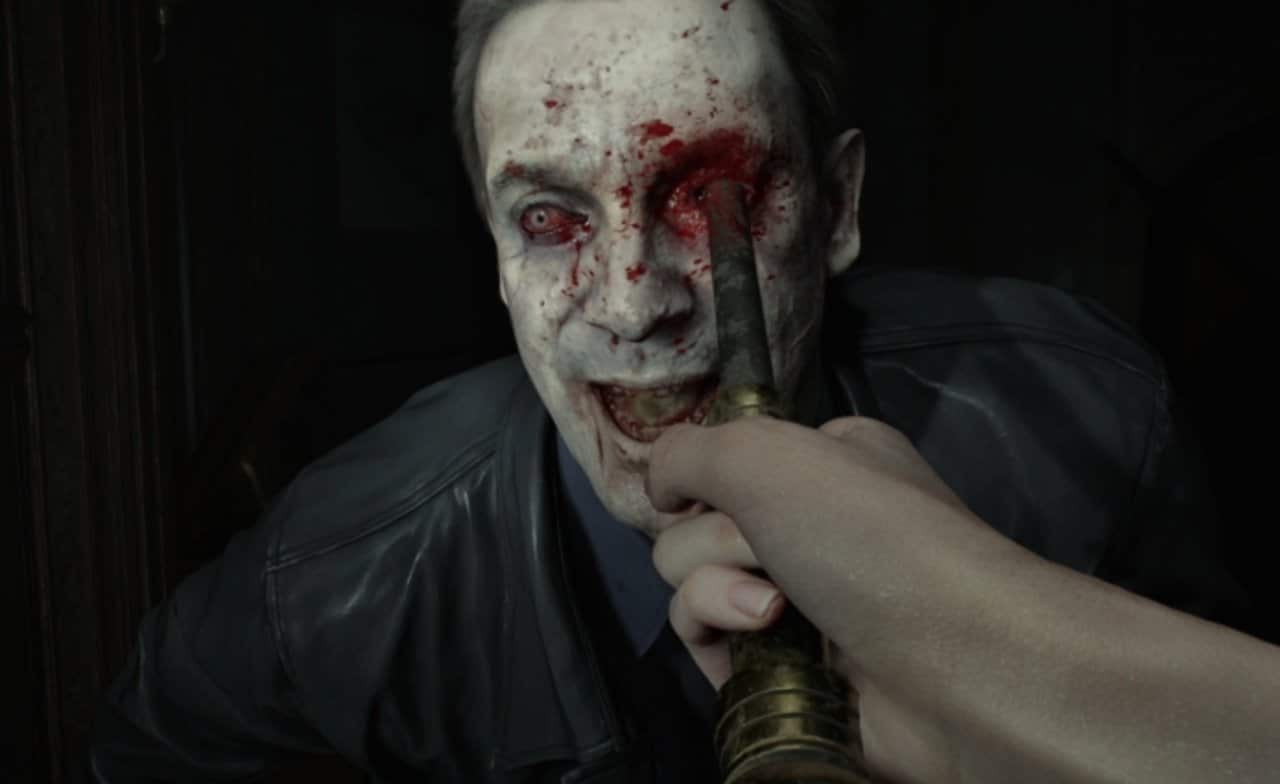
Japanese producer Capcom has outlined an ambitious plan for the future of its main survival horror franchise, setting clear goals for the next ten years. Internal documents indicate that the central strategy involves dominating the global digital entertainment sector, alternating between continuing the main narrative and recreating classics loved by the public. To sustain this pace, which aims to deliver a major release every twelve to eighteen months, the company mobilized hundreds of developers spread across multiple studios. The objective is to preserve the relevance of the brand — which has already surpassed the impressive mark of 150 million copies sold worldwide — while guaranteeing high profit margins with the use of proprietary technology. The directors seek to balance the nostalgia of veteran fans with modern mechanics that attract new generations of players. To support this workload, investments in development infrastructure have been substantially increased. Although the board maintains absolute secrecy about the official calendar, the leaked production script reveals the company’s commercial and creative priorities.
The kickoff of this new phase of expansion will take place with the ninth chapter of the main saga, which should receive an additional content package shortly after its arrival on the market. The creative team intends to prolong community engagement through an extra campaign focused on historical figures from the franchise. The iconic agent Leon S. Kennedy will take the lead in this expansion, whose programming and level design stages are already at an advanced stage.
- The ninth game’s expansion will bring an unprecedented side mission with specific gameplay restrictions.
- The extra mode promises to recreate the enemies’ artificial intelligence, adapting them to completely new scenarios.
- Ongoing software updates will be applied to extend the life of the title on digital storefronts.
Next steps for recreations of horror classics
Looking at the medium-term calendar, the long-awaited reimagining of “Resident Evil Code: Veronica” is scheduled to debut in 2027. Considered a key piece in understanding the plot’s corporate conspiracies and global rivalries, the original game will undergo a complete overhaul, receiving updated control systems, improved physics and a completely redone audio design.
The following year, in 2028, the producers intend to make the new version of “Resident Evil Zero” available. The work, which serves as a direct prelude to the incident at the Arklay mansion, will bring exclusive mechanics adjusted to current industry standards, leaving behind the technical limitations that marked consoles at the time of their original launch.
To ensure quality, these two recreations are being conducted by different teams within the Asian developer’s structure. By dividing responsibilities and managing resources intelligently, the company avoids overloading its artists and programmers, ensuring that the flow of new products on the shelves is not interrupted.
The fast pace and generous budgets of these new productions were driven by the resounding commercial and critical success of previous ventures. The company has consolidated a highly profitable business model, supported by the excellent reception of the modern reinventions of the second, third and fourth chapters of the saga.
The planning behind the highly anticipated Resident Evil 10
In the corridors of the company’s headquarters, the conception of “Resident Evil 10” has already taken its first steps, with an estimated release window of 2029. As this is a significant numerical milestone, creative directors and executive producers are developing rigorous planning. The team in charge of the work seeks to move away from the formula focused on unbridled action, which can cause fatigue among current audiences, focusing on innovations in resource management and pure survival. The project’s long maturation time will allow the implementation of much more sophisticated artificial intelligence, capable of altering the physics of scenarios and the behavior of opponents during confrontations.
Currently, the title is in the pre-production phase, a stage in which the scripts, conceptual arts and general atmosphere take shape. Although financial reports omit details about the plot, the production company’s track record suggests the continuity of the biological disasters seen in the most recent adventures. To make the transition to next-generation hardware flawless, the RE Engine graphics engine will undergo in-depth optimization, ensuring that the tenth game sets a new level of photorealism.
The challenge of modernizing the first chapter of the franchise
The most complex undertaking of this long-term vision is the definitive remake of the very first “Resident Evil”, whose mapping and preliminary preparation work began recently. Industry experts estimate that the work will reach stores between 2030 and 2033, showing a development cycle much longer than the company’s average. The commercial goal is to replace the acclaimed version released in 2002, exchanging the fixed cameras of the Spencer Mansion for the third-person over-the-shoulder perspective, established in recent successes. Level designers face the technical dilemma of expanding the explorable areas without losing the claustrophobic essence that defined the genre in the 1990s. The inclusion of new puzzles, the expansion of the story and the creation of new wings aim to meet the demands of relentless quality control. The robust budget reflects the historical weight of the game that founded the company’s empire. Advanced facial and body motion capture technologies are being employed to deliver flawless cinematic performances. The expectation of top management is that this launch will end the long cycle of revitalizations, cementing the brand’s visual and narrative foundation for the coming decades.
Market strategies to engage the gaming community
The tactic of interspersing new adventures with the recreation of classics demonstrates that Capcom has found an extremely effective formula to guarantee its financial stability. Thanks to this business model, the brand is able to monopolize discussions in the specialized media and maintain a constant presence at the top of the digital sales charts.
Having a well-defined release horizon also simplifies negotiations with console manufacturers and large retail chains for promotional campaigns. The predictability of the production calendar opens doors for brand licensing and the creation of derivative products, such as animated films, consolidating a profitable ecosystem around intellectual property.
Structural advances in proprietary graphics engine
To meet the ambitions of upcoming projects, the company’s exclusive development tool is receiving massive structural improvements. Software engineers work on natively integrating advanced real-time global illumination systems and accurately simulating particle physics.
The improvement in code architecture aims to reduce compilation time for dense scenarios, speeding up the workflow of technical animators and 3D modelers. The versatility of this graphics engine allows it to scale to run seamlessly on a wide range of devices, from ultra-high-performance computers to portable consoles and cutting-edge smartphones.
By standardizing the creative environment across all of its studios, the corporation is able to significantly cut long-term operating expenses. Training new programmers also becomes more agile, supported by detailed internal manuals and unified by the most experienced professionals in the house.
Efforts to unify the complex timeline
With so many titles being produced simultaneously, coordination between art directors and screenwriters needs to be impeccable. The company formed an internal committee dedicated exclusively to monitoring the cohesion of the timeline, ensuring that the events of the original games communicate perfectly with the elements added in the new versions.
Small narrative contradictions that have accumulated over the decades are being subtly corrected through new documents and dialogues inserted into the remakes. This unification of the fictional universe facilitates the expansion of intellectual property to other media, strengthening the creation of animations and the licensing of official products.
Corporate caution and focus on final quality
The developer’s corporate communications department maintains an extremely conservative stance regarding announcements, avoiding promising premature release dates to shareholders. The absolute priority is technical stability and software polish, with the board demonstrating full willingness to postpone projects internally if the strict excellence criteria are not met during the testing phase.