Definitive comparison between Samsung Galaxy S25 Ultra and Xiaomi Poco F8 Ultra in the 2026 market
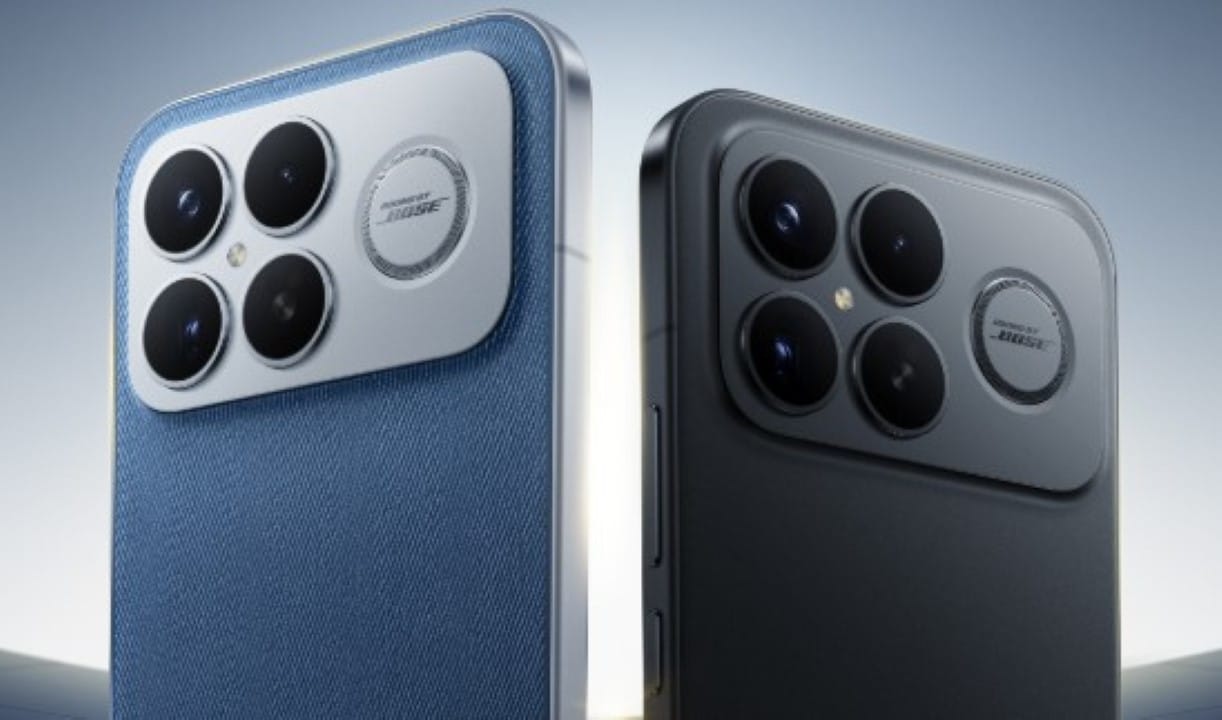
The fight for the top of the mobile device market in 2026 has two major giants as protagonists: the Samsung Galaxy S25 Ultra and the Xiaomi Poco F8 Ultra. These devices deliver the most advanced in terms of processing and visual quality, although they follow very different paths when it comes to final price and energy capacity. This is a real battle in the luxury segment, aimed at consumers who do not give up high performance.
Officialized globally in November 2025, the representative of the Chinese manufacturer is betting on the formula of delivering strong specifications for a friendlier price. In contrast, the South Korean model, which hit shelves in early 2025, focuses on consolidating its ecosystem and promising software longevity. Placing these two machines side by side highlights completely opposite commercial strategies.
Technology sector analysts highlight that the purchasing decision rests purely on each individual’s usage profile, especially in a scenario where premium cell phones already represent more than a third of the mobile industry’s global revenue. Practical factors, such as the time away from the socket and the speed of recharging, weigh in favor of the Chinese device, while the excellence of the lenses and the integration of artificial intelligence tip the scales towards the South Korean brand.
Construction materials and device ergonomics
Visually, the Xiaomi Poco F8 Ultra relies on a resistant structure, offering backs that vary between fiberglass and an unusual silicone with a fabric texture in the Denim Blue variant. The chassis is 8.3 millimeters thick and weighs 220 grams, ensuring a firm grip for everyday use. Safety against liquid and dust accidents is certified by IP68 certification.
Following a more industrial line, the Samsung Galaxy S25 Ultra sports titanium edges, in addition to being shielded by Gorilla Armor 2 glass on the display and Victus 2 on the back. With slightly smaller measurements, measuring 8.2 millimeters thick and 218 grams on the scale, the flat shape and matte touch help avoid fingerprints. The IP68 seal is also present, ensuring protection against rapid submersion.
- Use of aerospace-grade titanium in the South Korean device.
- Differentiated finish that simulates jeans on the Xiaomi model.
- Dimensions and weight are practically identical between the two competitors.
It is evident that the two manufacturers invested heavily to combine physical resistance with a sophisticated aesthetic appeal.
Differences in screen technologies and maximum brightness
The front panel is a spectacle in itself on both cell phones. In the case of the Poco F8 Ultra, the user will find a 6.9-inch AMOLED display, equipped with 1.5K resolution and a refresh rate set at 120 Hz. Brightness reaches an impressive 3500 peak nits, which makes reading under the midday sun a simple task, and also has native support for Dolby Vision and HDR10+ standards.
On the other side of the ring, the Galaxy S25 Ultra sports a Dynamic LTPO AMOLED 2X screen of the same size, but elevates the sharpness with its Quad HD+ resolution. Although the maximum brightness stops at 2600 nits, the application of an anti-reflective film at the factory compensates for this difference, blocking glare in very bright environments. The LTPO system works behind the scenes to reduce the frame rate when the image is static, saving battery.
Either option guarantees an immersive visual experience for consuming media and playing games. However, Xiaomi’s dimming technology has the advantage of less tiring the eyes of people sensitive to light vibrations.
Processing power and thermal management
The heart of the Poco F8 Ultra is powered by the recently launched Snapdragon 8 Elite Gen 5 processor, which works together with options of 12 or 16 GB of RAM and ultra-fast UFS 4.1 storage. This chipset shines in stress tests, largely thanks to an improved vapor chamber that dissipates heat quickly during games at max graphics.
To equip the Galaxy S25 Ultra, Samsung opted for an exclusive and adapted variant of the Snapdragon 8 Elite, accompanied by 12 GB of RAM and internal memory in the UFS 4.0 standard. The great asset here is the refinement of the operating system, which extracts the most from the hardware to deliver smooth transitions and impeccable multitasking on a daily basis.
- Superior cooling system in the Chinese device to prevent overheating.
- Deep integration between hardware and software on Samsung’s cell phone.
- Higher marginal scores for Xiaomi in benchmark apps.
- Plenty of capacity in both to run any current application.
In practice, both smartphones offer such robust performance that it is difficult to notice bottlenecks in everyday use.
Photo settings and video recording
Image capture is often the deciding factor for many buyers. The Poco F8 Ultra has a rear trio made up of three 50 megapixel sensors, with the main lens and the 5x optical zoom lens having physical stabilization. The ultrawide camera covers a 102-degree field of view, delivering nighttime photography with excellent noise control and vibrant colors.
The Galaxy S25 Ultra’s photographic arsenal is led by a monstrous 200-megapixel main sensor, accompanied by a 50 MP periscopic lens, a 10 MP telephoto lens and a 12 MP ultrawide lens with a 120-degree angle. All lenses have optical stabilization, which guarantees shake-free videos and an absurd level of detail in any light condition.
Detailed evaluations indicate that the South Korean wins in terms of fidelity of real tones and textures. The Chinese brand, in turn, wins points for its agility in clicking and dynamic post-processing.
Battery capacity and plug speed
It is in terms of energy that the gulf between devices becomes clearer. The Poco F8 Ultra hides a 6500 mAh tank under the hood, compatible with 100W cable and 50W induction sources. This colossal volume allows the user to stay away from sockets for up to 48 hours in normal use, needing just 40 minutes to go from zero to one hundred percent.
The Galaxy S25 Ultra is more conservative, maintaining the traditional 5000 mAh cell and limiting power input to 45W wired. Despite having a smaller capacity, the system’s artificial intelligence manages consumption so efficiently that the cell phone easily handles an entire day of heavy work.
- Battery with considerably higher amperage on the Xiaomi device.
- Drastically reduced recharging time on the Chinese model.
- Poco’s exclusive high-power wireless charging technology.
In this specific department, the victory of the Asian smartphone is unquestionable.
User interface and system longevity
The browsing experience on the Poco F8 Ultra is dictated by the HyperOS system, which runs on Android 16 and focuses on infinite visual customization options and artificial intelligence tricks. The manufacturer guarantees support for four major version jumps of Google’s operating system.
The Galaxy S25 Ultra operates with the famous One UI interface, which brings the Galaxy AI package deeply rooted in its daily functions, in addition to an unbeatable promise of seven years of security and software updates. Samsung’s virtual environment is recognized for its stability and advanced productivity tools.
Consumers who plan to keep the same device for almost a decade will certainly prefer Samsung’s security. Anyone who likes to modify every icon and animation on the screen will feel right at home with HyperOS.
Included accessories and exclusive features
Peripheral details usually add a lot of value to the purchase. The Poco F8 Ultra surprises by incorporating a stereo speaker system signed by Bose, in 2.1 format with a small internal subwoofer, generating deep bass. Furthermore, the commercial box already comes with a protective cover and factory-applied film.
The historic difference of the Galaxy S25 Ultra continues to be the S-Pen stylus built into the chassis, ideal for quick notes and photo editing. Another killer feature is the DeX mode, which turns the cell phone into a true desktop computer as soon as it is connected to an external monitor.
- Professional-level sound quality on the Xiaomi device.
- Native writing and drawing tool in South Korean model.
- Complete accessory kit in the Poco packaging.
Such secondary characteristics often serve as the final push for consumer choice.
Impact on the pocket and market positioning
The financial factor highlights the target audiences of each brand. The Poco F8 Ultra hits international retailers with a suggested price of around US$729 for the model with less memory, a price considered aggressive for the elite category.
The Galaxy S25 Ultra requires a much heavier investment, easily surpassing the US$1,000 barrier in its initial versions. Obviously, campaigns from operators and discounts from local retailers can change this math over the months.
The discrepancy in the amounts charged makes the Chinese model the logical choice for those looking for maximum power while spending as little as possible. However, the high cost of the Samsung representative is paid for by the impeccable integration with other branded devices and the guarantee that the cell phone will not become obsolete anytime soon.