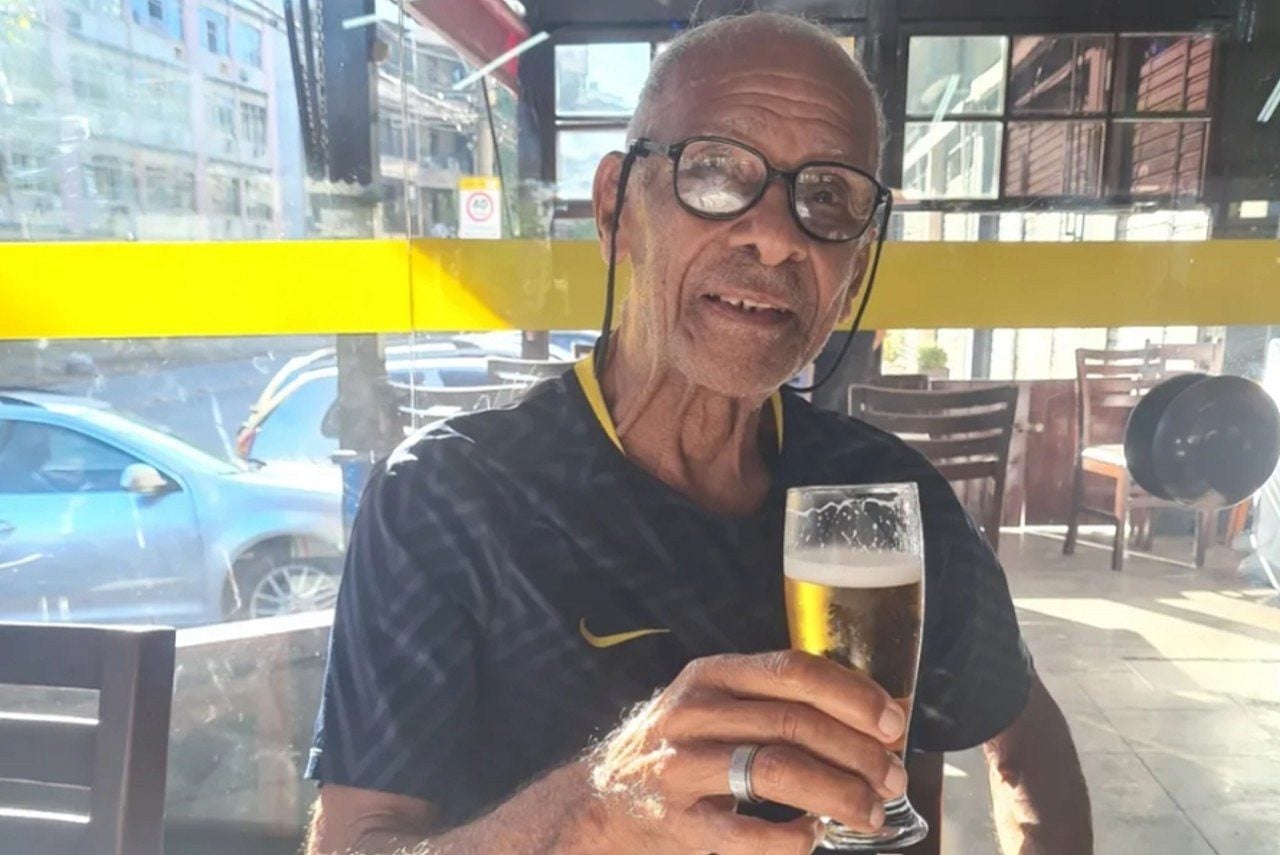
The national sporting scene dawned in profound sadness this Thursday with the confirmation of the death of Hércules Brito Ruas, immortalized on the pitch simply as Brito. At eighty-six years old, the legendary defender succumbed to severe pneumonia, a condition that kept him under intensive medical care in a hospital unit for the last week. The official statement about the irreparable loss was released by the immediate family through the former athlete’s digital platforms, generating immediate commotion. He leaves an immeasurable legacy in the history of the sport, in addition to his two children, Leonídio and Patrícia, and five grandchildren who now carry the memory of one of the greatest names in our football. The idol’s departure occurs in a poetic and painful way exactly on the date that marks the kickoff of the long-awaited 2026 World Cup.
Historical coincidence links the star’s farewell to the legendary Azteca Stadium
Born and raised on Ilha do Governador, a traditional neighborhood located in the North Zone of Rio de Janeiro, the former player built an intimate relationship with the ball from a very early age on the streets of his community. During the unforgettable third world championship campaign in Mexico, he formed an insurmountable defensive system alongside midfielder Piazza, who played improvised in the sector at the request of coach Zagallo. The definitive consecration of that golden generation came after a historic four-one defeat of the strong Italy team, in a gala display. That epic confrontation transformed Brazilian athletes into true myths of global sport, revered to this day by lovers of good football.
A detail that catches the attention of all sports analysts is the deep connection between the place of the defender’s greatest glory and the exact moment of his goodbye. The stage for that memorable final was the monumental Azteca Stadium, located in Mexico City, a sacred temple for Brazilian fans. Interestingly, this same sports arena was chosen by the organization to host the inaugural match of the 2026 World Cup, a clash between the teams of Mexico and South Africa, held on the afternoon of this same Thursday. This temporal synchrony creates an eternal and almost mystical link between the glorious past of the Canarian national team and the present of the main tournament organized by the highest football entity.
Impressive physical strength and successful trajectory with the Canarinho shirt
Among all the stars who showcased their talent on Mexican football fields more than five decades ago, the Rio defender boasted a difference that impressed even the most qualified opponents. Rigorous assessments by the technical committee at the time indicated that he had the best physical condition of the entire squad called up to compete in the international tournament. This extraordinary vitality allowed him to win practically all hand-to-hand ball disputes, combining brute strength with a refined technique when exiting the game from the defense field. His physical imposition became an unmistakable trademark, which intimidated rival attackers even before the referee’s initial whistle.
The story of the athlete’s dedication to the green and yellow shirt, however, began long before his definitive consecration on Mexican soil. He had already been part of the Brazilian delegation that traveled to England for the 1966 World Cup, gaining valuable international experience in a tournament marked by extreme toughness. Over the course of eight years serving the country with honor, the defender’s sheriff accumulated sixty official matches representing the nation in the most varied corners of the planet. In addition to the coveted Jules Rimet cup, his extensive gallery of trophies for the national team includes the important achievement of the traditional Copa Roca, lifted in the 1971 season.
Remarkable passage through the main giants of Brazilian football
Away from commitments with the main team, the idol’s club career was equally rich and full of shirts of absolute weight on the national scene. His undisputed technical quality and leadership profile led him to defend gigantic institutions, building a CV that very few professionals can match in their entire lives. He wore the colors of traditional teams such as Flamengo, Cruzeiro, Internacional and Athletico, always leaving his mark of seriousness, race and tactical commitment. However, it was defending the heavy shirts of Corinthians, Botafogo and Vasco da Gama that he achieved his moments of greatest longevity and idolization among passionate fans.
The Clube de Regatas Vasco da Gama occupies an absolute and unquestionable prominent space in the former defender’s biography, being largely responsible for his projection at national level. It was on the lawns of São Januário that the young talent took his first and decisive steps towards professionalism, establishing a relationship of love and mutual dedication that lasted an entire decade. During this long golden period, he helped the Cruz-Maltina team to consolidate its strength and prestige far beyond Brazilian borders, facing European squads on equal terms. The victorious passage through Historic Hill yielded memorable cups that to this day fill Vasco fans with deep pride.
- Winning the prestigious Rio-São Paulo Tournament, one of the fiercest competitions on the national calendar at the time.
- Victory in the Paris International Tournament, which helped raise the club’s name on the European continent.
- Triumph in the traditional Teresa Herrera Trophy in 1957, played on Spanish territory against great powers.
The legacy of a sheriff who redefined the position of quarterback in the country
The sad news of his departure generated an immediate wave of commotion on social media, newspapers and the main sports programs across the country. Clubs where he played, former teammates who shared dressing rooms and even historical opponents published official notes of condolence, praising his exemplary conduct on and off the pitch. The style of play he practiced, which mixed relentless marking with extreme loyalty to opponents, today serves as mandatory study material for young defenders in the youth categories. He proved to entire generations that it was perfectly possible to be a feared and respected scorer without losing the class and essence of the sport.
As the ball rolls on the modern lawns of North America for another edition of the biggest football tournament on the planet, the physical absence of the three-time champion will be felt in every tribute paid in the stands. The impressive coincidence of dates between his death and the exact beginning of the competition that immortalized him for the world seems like a script carefully written to underline his historical importance. Brazilian football loses, without a doubt, one of its most authentic and respected legends of all time. However, the iconic images of his precise tackles and his infectious vibe as he lifted the golden cup will remain absolutely alive in our nation’s collective memory.