
Nintendo confirms ‘rebirth’ of Zelda Ocarina of Time for Switch 2 in 2026, with potential to redefine remakes

Nintendo has officially announced the development of a “remake” of The Legend of Zelda: Ocarina of Time for the upcoming Switch 2, scheduled for release in 2026. This confirmation, however, carries significant implications that could transform the industry’s perception of future recreations of classic games.
The launch trailer for Ocarina of Time has generated mixed reactions among fans. Lasting just over a minute, the preview did not show gameplay footage, but a thorough analysis revealed important details beyond the initial surface.
There are important, and frankly exciting, changes in relation to the N64 classic, which were disguised in the released material. The grandeur of the production suggests that the lines between a “remake” and an entirely new title become quite blurred.
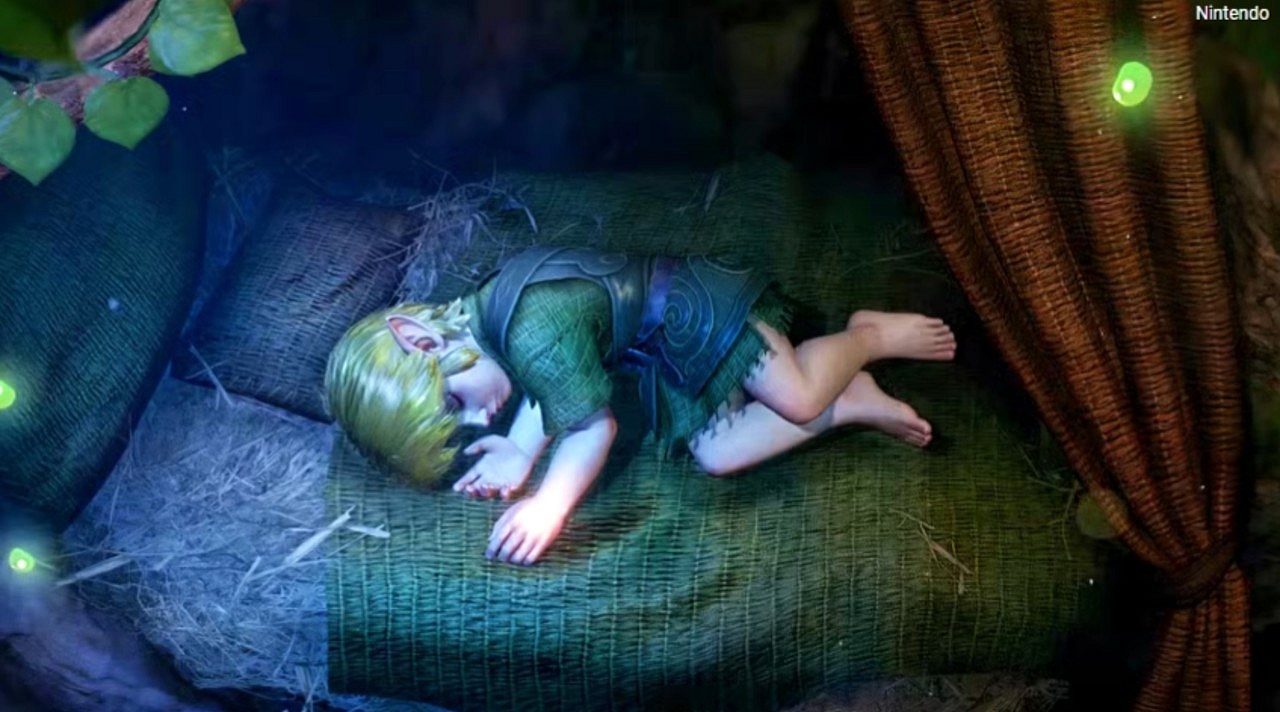
For now, Young Link can enjoy his innocence, unaware that he is about to embark on what may be the most ambitious journey in Zelda history.
Link’s New Visual Reveals the Depth of Ocarina of Time’s Switch 2 Design
From the opening moment of the new Ocarina of Time teaser, the soundtrack, reformulated and improved, already conveys the message. This project presents itself as a dramatic reinvention of Ocarina of Time, going far beyond a simple graphical update.
The live orchestration and grandeur of the soundtrack indicate that Nintendo is investing heavily in this title to recreate the spirit of epic adventure that the original 1998 version possessed, while also meeting the high standards of modern gamers. Although the teaser shows few graphics of the game itself, the brief seconds of video contain incredible details that speak volumes about the ambition.
Just looking at the new design of protagonist Link, it is clear that this is a complete recreation, where even the smallest elements were considered. Link no longer wears a common green tunic in this game, but rather a costume that carefully deepens the universe-building of Kokiri Forest and the Lost Forest.
Players will be able to notice the detailed stitching on Link’s new tunic, which was clearly not the work of an experienced Hylian craftsman from Castle Town. Instead, it appears to have been assembled from foliage found in the Lost Forest, as if created by one of the children from Link’s village.
However, Link doesn’t just wear the tunic. He is also equipped with light leather armor, which in itself suggests new narratives and purposes.
Link resides in Kokiri Forest, located in the heart of the Lost Forest, a region renowned for harboring unknown monsters and threats. In the original game, Link faced attacks from terrifying creatures and, despite not wearing significant armor, emerged practically unharmed.
Adding a light leather outfit to Link is a small detail that demonstrates Nintendo’s intention to integrate a level of realism that was never present in the original work. Additionally, this armor could be a subtle clue to the Hero of Time’s origins outside of Kokiri Forest. Perhaps it is a set of items left by his mother when she gave him to the Great Deku Tree, making it the only reminder of his mysterious previous life.
Ocarina of Time on Switch 2’s ability to convey so much meaning through Link’s costume alone proves the immense care and effort that went into this new version.

Reinterpretation of Zelda: Ocarina of Time goes beyond the concept of a simple remake
The details added to Link’s new look, together with the emphasis on the grand narrative present in the teaser’s introduction, show that The Legend of Zelda: Ocarina of Time for the Switch 2 resembles more a complete reinvention than a simple remake.
In addition to Link’s house and costume, which have been completely redesigned, what stands out most about the teaser is the cinematic quality of its presentation. Nintendo’s recent experience with film adaptations appears to be influencing its biggest intellectual properties, making the new Zelda: Ocarina of Time trailer look more like a movie teaser than a promotion for a video game remake.
If all of the game’s cutscenes maintain this same narrative standard, this title will offer far greater depth than many of the trailer’s most vocal critics are willing to admit. And if this quality is maintained from start to finish, it will create an almost unattainable standard for future video game remakes.
With the arrival of large-scale remakes like Final Fantasy VII, it becomes increasingly difficult to distinguish between a direct recreation and an entirely new game that just follows the same plot. Ocarina of Time isn’t just a low-effort reskin to tap into nostalgia; is a new work of art that aims to completely innovate on its own merits.
The original Ocarina of Time revolutionized gaming in 1998, laying the foundation for every action-adventure game released since then. If the new version of Ocarina of Time uses this solid foundation to achieve something even bigger and more ambitious, this game could have a similar impact on the next generation of consoles.
Ocarina of Time for Switch 2 could redefine paradigms in the gaming industry
Leaks about the Ocarina of Time remake so far have painted a very specific scenario. While technically a reimagining of the 1998 N64 classic, Ocarina of Time on Switch 2 is a big-budget AAA title, impressive in both size and scope.
In a statement via X (formerly Twitter), Nintendo’s official account further references the magnitude of this “remake”: “The Legend of Zelda: Ocarina of Time will be *reborn* on Nintendo Switch 2 in 2026.” The use of the word “reborn” instead of “remake” demonstrates that Nintendo approached this project as something bigger than a simple recreation; is the definitive version of this game, as it was always designed.
As brief as the new teaser is, the details contained within it hint at a grander game than many are recognizing. The fact that the title is exclusive to the Switch 2 is another strong indication of the ambition it aspires to achieve.
If it’s even half as ambitious as the teaser suggests, it wouldn’t make sense to classify Ocarina of Time as a remake, but rather as a retelling of one of gaming’s most iconic stories in a completely new video game.
After this release, the industry may find it impossible to continue producing the same old remakes of classic games every year.
The Legend of Zelda: Ocarina of Time launches exclusively for Switch 2 in 2026.





