
SpaceX expands Starlink with launch of 29 satellites at Cape Canaveral and attracts market attention

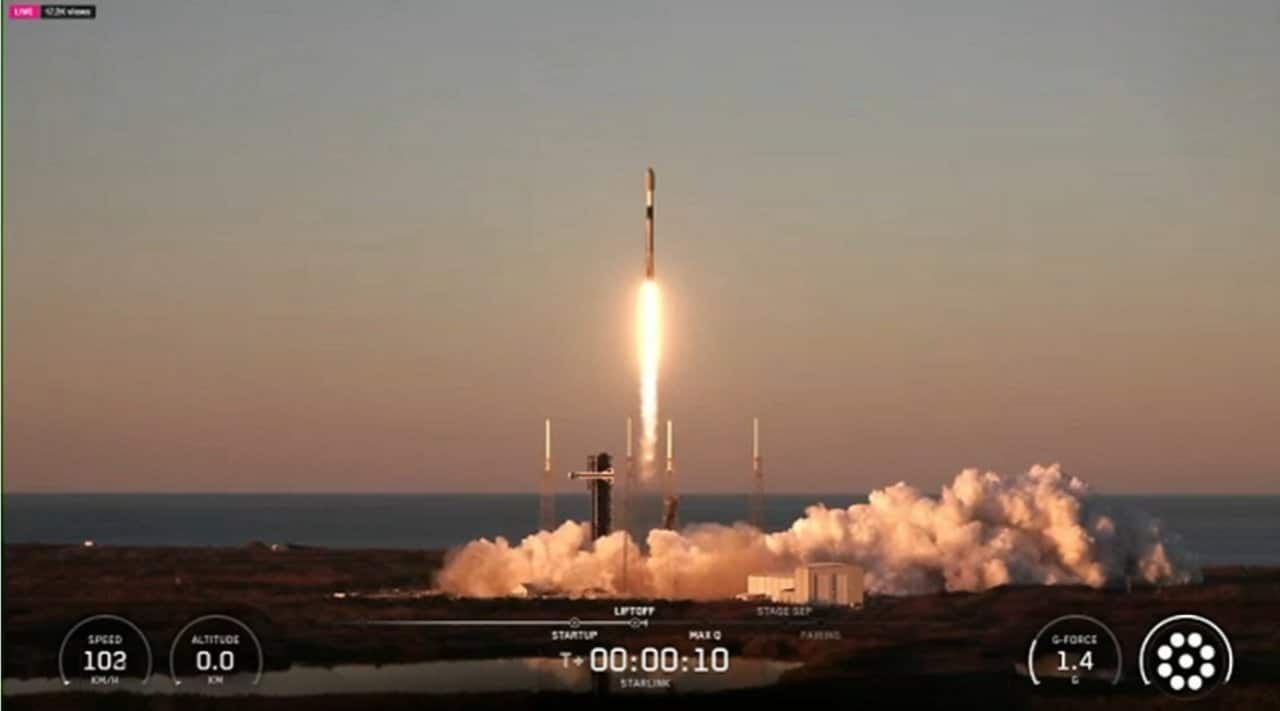
SpaceX launched 29 new Starlink broadband satellites last Friday, June 12. The operation, conducted by a Falcon 9 rocket, departed from Cape Canaveral Space Force Station and marks another step in the expansion of the company’s ambitious global internet constellation.
Starlink 10-54 mission technical details
The mission, identified as Starlink 10-54, saw the powerful Falcon 9 rocket successfully ascend on its northeast trajectory. The main objective was to position 29 Starlink broadband units in low Earth orbit, a crucial process to enhance the coverage and capacity of the satellite network.
Weather conditions monitored before takeoff
SpaceX teams closely monitored weather conditions at Cape Canaveral before the morning liftoff. The Space Force’s 45th Meteorological Squadron indicated an initial probability of 80% of favorable weather. However, this percentage could drop to 70% due to the formation of cumulus clouds in the region. The launch window was scheduled for 8:37 am, seeking to take advantage of the best opportunity before the weather worsens.
The strategic importance of the Starlink constellation
Starlink satellites are intended to build a vast high-speed, low-latency internet network on a global scale. This SpaceX project aims to bring connectivity, especially to rural regions and remote areas that currently lack reliable access. With each launch, the constellation expands, approaching the goal of thousands of satellites that will allow almost universal coverage, democratizing access to information.
Continuous advancement and opportunities in the market
The accelerated pace of Starlink launches reflects SpaceX’s long-term vision not only in space exploration, but also as a major player in the telecommunications sector. Continuous operations not only strengthen the internet infrastructure, but also position the company for future significant moves in the financial market.
Relevant aspects of the Starlink project include:
- Global expansion:Coverage in various regions of the world, including developing countries.
- Tough Competition:It competes with other satellite internet initiatives, such as OneWeb and Amazon’s Project Kuiper.
- Market potential:Billion-dollar valuation and growing interest from investors and market analysts.
- Technological innovation:Continuous development of new generations of satellites with greater capacity and efficiency.



