
Thai princess Bajrakitiyabha dies aged 47 and worsens crisis over the future of the throne

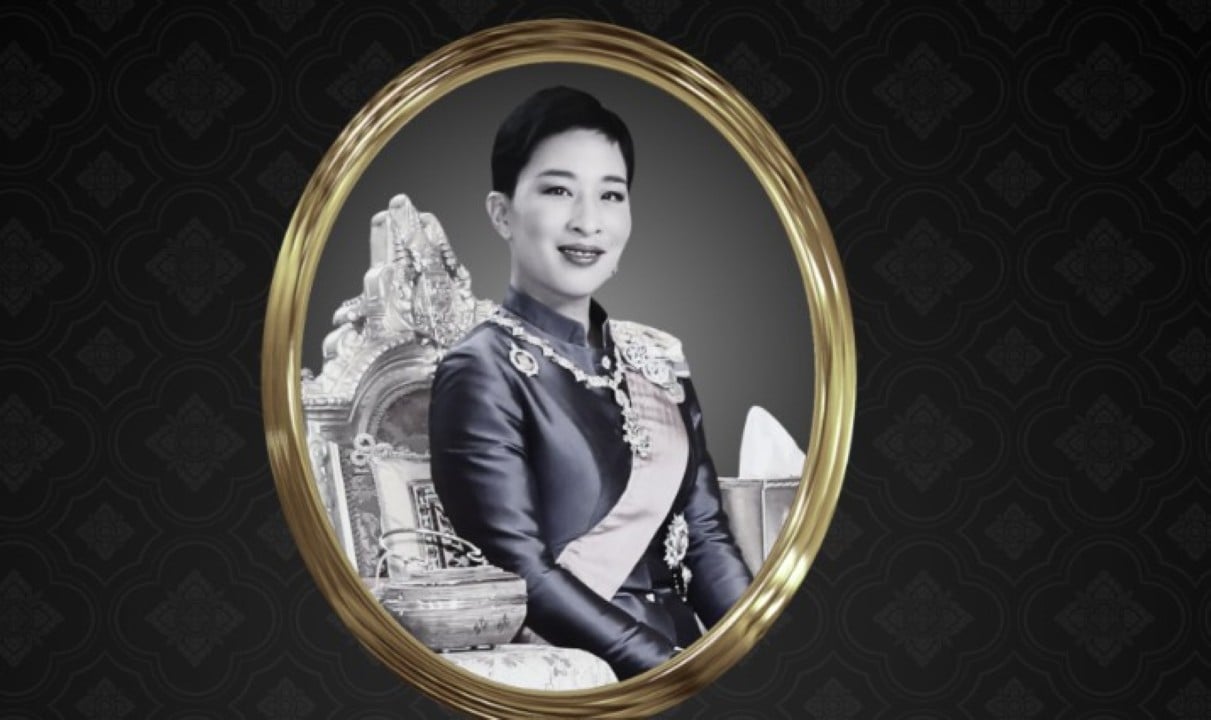
The Thai monarchy confirmed the death of Bajrakitiyabha, who had been unconscious for more than 36 months. At 47 years old, the member of Asian royalty could not resist the health complications that kept her hospitalized under round-the-clock care.
The medical drama began in late 2021 when she suddenly fainted while walking her pet dogs. Exams revealed a serious failure in the heart rhythm caused by a mycoplasma-type bacteria — a pathogen that usually causes mild respiratory infections, but in this rare case severely attacked the heart muscle.
The death represents a heavy blow for the reigning dynasty, which loses one of its most intellectually prepared voices. Political analysts considered the female figure as a fundamental piece in stabilizing the future of the throne, an issue surrounded by tensions behind the scenes of the palace.
The firstborn of the current monarch Vajiralongkorn, she came into the world on December 7, 1978. Her mother, Princess Soamsawali, was the sovereign’s first wife and also had direct blood ties to the family as the ruler’s cousin.
Last moments and the struggle of the medical team in the hospital
An official bulletin issued this Friday morning explained that specialists provided maximum vital support throughout the hospitalization period, but the body stopped responding to treatments. The death was officially registered at 7:48 pm on Thursday, Bangkok time, within the Chulalongkorn Hospital premises.
With a robust academic curriculum, she graduated in Law and sought international specialization by completing two master’s degrees at Cornell University, located in the United States. His public career included stints at the Thai diplomatic representation at the United Nations headquarters in New York, in addition to actively working in his country’s Public Ministry, both in the capital and in interior provinces.
Between 2012 and 2014, the government sent her to head the national embassy in Austria. During this diplomatic mission in Europe, she strengthened institutional ties with the United Nations Office on Drugs and Crime, known by the acronym UNODC.
International action and defense of the rights of imprisoned women
Far from empty formalities, she used her position to spearhead campaigns to restructure the prison system, focusing mainly on the degrading conditions faced by the female population behind bars. This work has gained global relevance, given that Thai territory is home to one of the highest global rates of imprisonment of women.
Upon returning definitively to Asia, she received the title of UNODC Goodwill Ambassador for the Rule of Law in the southeast region of the continent. In his speeches, he demanded the updating of local criminal laws and openly questioned the application of disproportionate sentences for minor crimes, such as possession of small quantities of narcotics.
Internal recognition came in 2021, when her own father promoted her to high military rank. She became chief of staff of the king’s personal guard, receiving the official rank of general of the armed forces.
Outside of offices and state ceremonies, the royal maintained a rigorous physical exercise routine. It was common to see her participating in marathons and sports endurance events.
The power vacuum and uncertainty about the next ruler
The combination of intellectual preparation and the patriarch’s obvious preference placed her at the center of all political bets on who would assume the crown in the future.
At 73 years old, Vajiralongkorn remains completely silent about who will inherit command of the nation. Although historical tradition requires a male successor, a change in constitutional laws approved in the 1970s opened a legal loophole for a woman to sit on the throne.
The family scenario is complex, as the monarch has five sons. Four of them, the result of a second marriage, were banished from the court in 1996 and live in exile on American soil. The only recognized male heir is Dipangkorn, born from his third marriage, but there are strong questions behind the scenes about his cognitive and psychological fitness to lead an institution with so much political weight.
Given this situation, the conservative elite saw the firstborn as the safest solution for the continuity of the regime. Unofficial plans called for her to rule as sovereign queen or act as regent plenipotentiary to protect her younger half-brother.
The definitive loss of this leadership throws the Asian country into a sea of doubts about the transition of power. The matter, however, remains shielded by severe lese majeste legislation — Article 112 of the Thai Penal Code, which provides for sentences of up to 15 years in prison —, making any public debate about the future of the crown a crime punishable by immediate jail time.



