
US agency confirms arrival of El Niño and warns of risk of extreme weather in the world

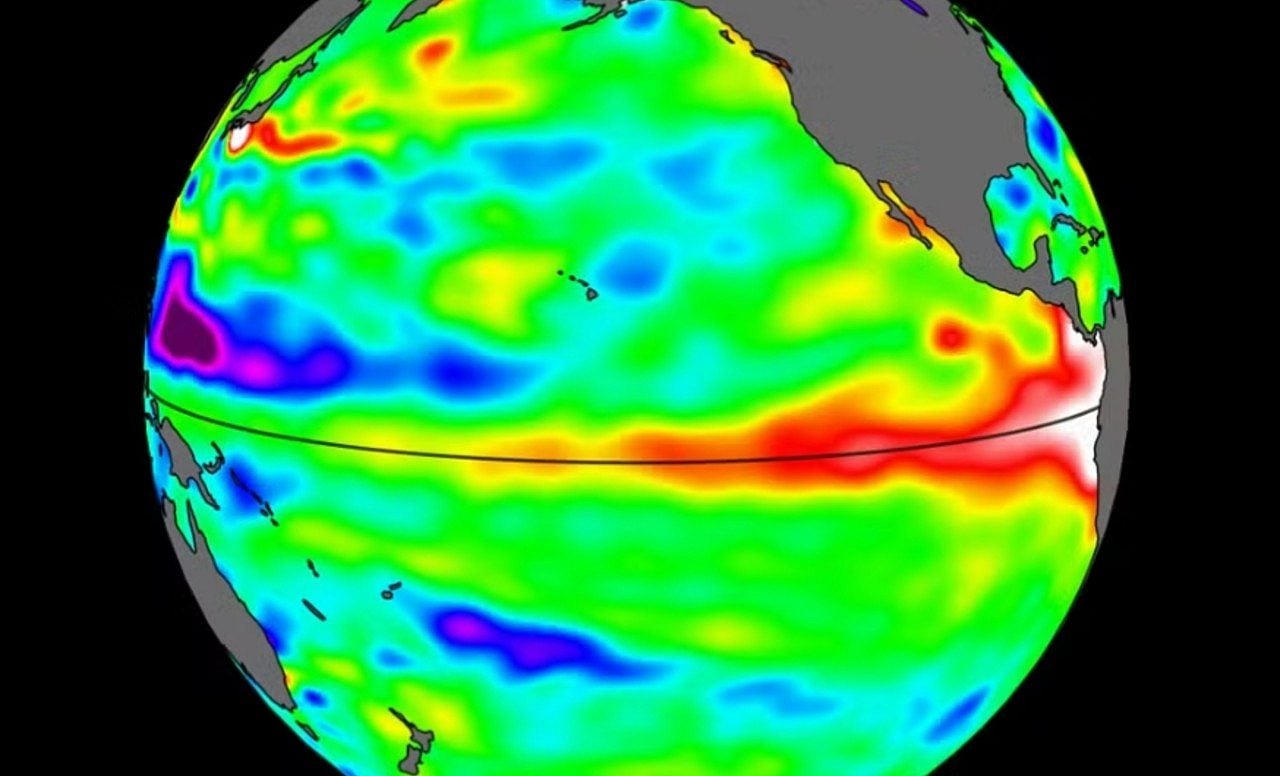
The United States National Oceanic and Atmospheric Administration (NOAA) formally confirmed this Thursday (11) the installation of El Niño, a natural climate pattern driven by the atypical warming of surface waters in the Equatorial Pacific Ocean.
The American agency highlighted in its bulletin that the characteristics of the phenomenon are already active and should gain even more strength during the winter of 2026 to 2027 in the Northern Hemisphere.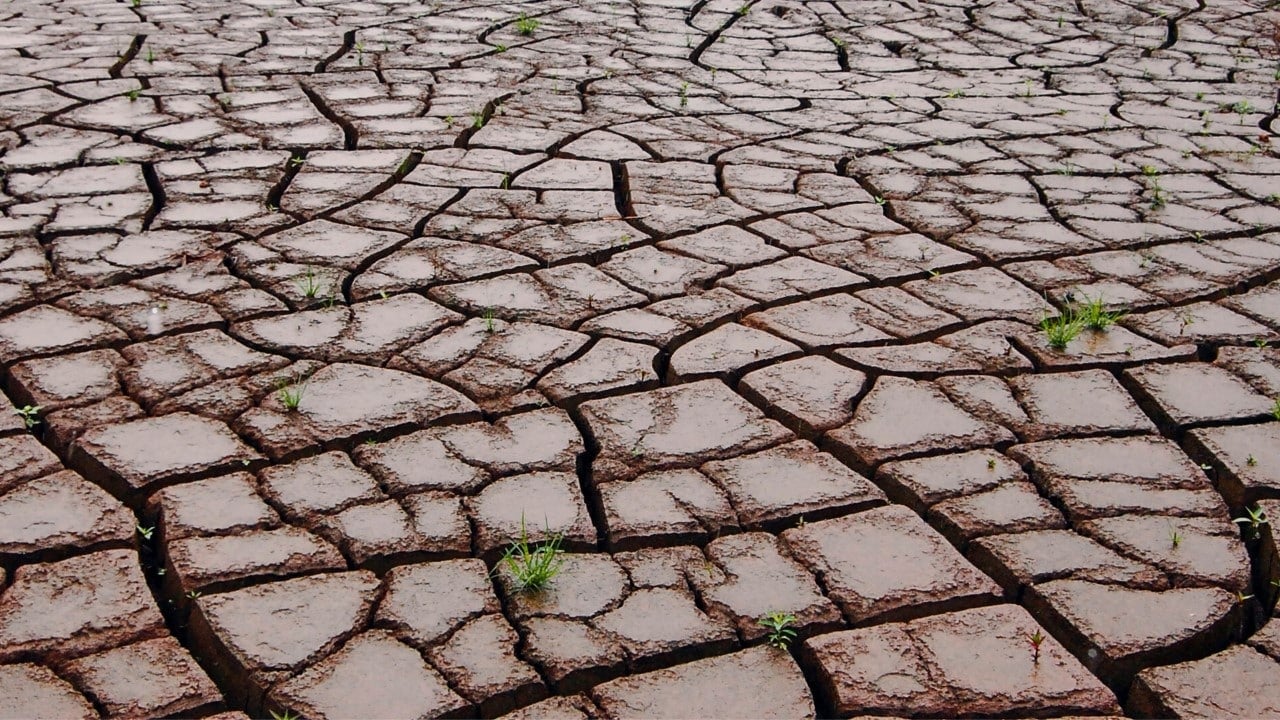
Meteorology experts were already awaiting this official announcement, motivated by months of continuous rise in ocean temperatures and by mathematical models that pointed to a high chance of consolidation of the climate event in the first half of 2026.
During the month of May, the institution had calculated an 82% probability for the pattern to form in subsequent months. Now, with the June update, the scenario is technically decreed, shifting the focus of analysis to the degree of severity that this anomaly could reach.
Fundamental differences between oceanic phenomena and their cycles
Both climate patterns configure the two main stages of a system known as the El Niño-Southern Oscillation (ENSO). The warming of the waters of the equatorial Pacific by at least 0.5°C above the historical average is what defines the establishment of the warm phase.
This anomaly usually appears at intervals ranging from two to seven years, remaining active for around twelve months and directly contributing to the rise in temperatures on a global scale. On the other hand, the opposite phase, called La Niña, occurs when there is a cooling of the same oceanic portion, generating inverse climatic consequences.
Within Brazil, the repercussions occur quite divided by region. Historical records show that the hot phase intensifies rainfall volumes in the South region, a scenario that considerably increases the risk of severe storms and flooding in local river basins.
In the states of the North region and a large part of the Northeast, the behavior of the atmosphere changes drastically, causing a sharp reduction in precipitation and worsening periods of prolonged drought.
For the Southeast and Midwest, forecasts tend to be more difficult to draw, often resulting in days of extreme heat, rain poorly distributed over the months and blockages that prevent the advance of cold fronts.
Concerns of the scientific community about global warming
The confirmation of this oceanic pattern raises a high alert among researchers, since the Earth has already been facing successive heat records driven by ongoing climate change.
Although this natural oscillation is not the cause of global warming, its combination with an already superheated atmosphere has the power to turbocharge extreme events, resulting in deadly heat waves, devastating droughts and destructive storms.
Faced with this scenario of vulnerability, climatologists around the world are monitoring the rise in temperatures in the ocean with extreme caution, assessing the strong probability of the current event reaching a level of high severity.
NOAA calculates a 63% chance for the formation of a very strong episode between the months of November and January, which would place this occurrence among the most intense recorded since 1950. This data gains even more weight when we remember that the strong event from 2023 to 2024 helped the world record, in an unprecedented way, a day with a global average 2°C above pre-industrial levels, proving how the anomaly amplifies extremes on a feverish planet.
Ocean warming of this magnitude has the capacity to destabilize global agricultural production, directly affecting vital crops such as soybeans and corn in Brazil, in addition to compromising the levels of hydroelectric reservoirs, favoring large forest fires and increasing the final price of food in supermarkets.
Despite the alarming signs, experts still cannot say whether the current situation will evolve into the so-called “Super El Niño”, a popular and non-academic expression used to classify anomalies of exceptional strength, such as the devastating episodes that occurred in 1982-83, 1997-98 and 2015-16.
The final strength of this anomaly will depend on the continued warming in the Equatorial Pacific over the next few months and, mainly, on the way the atmosphere will react to this thermal change. For the system to gain real strength, it is mandatory that the ocean and atmosphere act synchronously, as hot water alone does not support the pattern.
Analyzing recent history, since 2006, a succession of warm phases in the Pacific have progressively modified the behavior of the Earth’s climate, which today is at a thermal level much higher than in the past.
In this context of climate crisis, even events classified as weak or moderate end up multiplying the dangers of environmental disasters, such as flash floods and severe droughts. Observe the history of the latest manifestations of the phenomenon:
- 2006 to 2007: Episode with intensity varying from weak to moderate.
- 2009 to 2010: Occurrence classified as moderate in strength.
- 2014 to 2016: Extremely high-intensity event, directly associated with breaking heat records and multiplication of natural disasters.
- 2018 to 2019: Weak to moderate manifestation, characterized by a shorter cycle and more restricted damage.
- 2023 to 2024: One of the strongest cycles ever documented by science, responsible for establishing new global temperature peaks.
The role of thermal anomaly in regulating Earth’s climate
The essence of this meteorological pattern lies in the abnormal rise in temperatures in the surface waters of the Pacific Ocean, specifically in the area bordering the Equator.
It integrates a natural oscillation mechanism that transitions between periods of warming, cooling and neutrality, generating cascading impacts that are felt on practically all continents.
By altering the dynamics of winds and the circulation of the atmosphere, this gigantic mass of hot water can redraw the path of storms and heat maps around the globe.
In Brazilian territory, this redistribution of humidity creates a scenario of profound contrasts, where the southern states suffer from excessive precipitation, while the populations of the North and Northeast face water scarcity.
The influence on the planet’s average temperatures is also direct and measurable. During the years in which the anomaly is more robust, the Earth usually registers heat well above historical standards, adding forces to the greenhouse effect caused by human action.
The severity of the damage caused changes with each new cycle. However, with the continued accumulation of greenhouse gases in the atmosphere, episodes that would previously have been considered mild now have the potential to trigger much more serious climate crises than in previous decades.
Main expected consequences for Brazilian territory
Based on monitoring history, the installation of the Pacific warm phase profoundly changes the meteorological routine in Brazil, causing the following scenarios:
- Significant increase in rainfall volumes in the South region, accompanied by an imminent risk of hydrological disasters.
- Drastic drop in rainfall in the Amazon basin and the semi-arid northeast.
- Unstable and unpredictable behavior of precipitation in the Southeast and Central-West states.
- Significant increase in the occurrence and duration of extreme heat waves.
Climatology professionals warn that the most guaranteed consequence for Brazilians will be the intensification of days of suffocating heat, a problem that should become even more evident during the spring and summer seasons.
Despite the natural dance between the warm, cold and neutral phases of the ocean, scientists are categorical in stating that the emission of polluting gases and the consequent global warming continue to be the true drivers behind the current destabilization of the Earth’s climate.





