
Complete lunar calendar reveals the phases of the moon for June 2026 and the current situation on the 13th

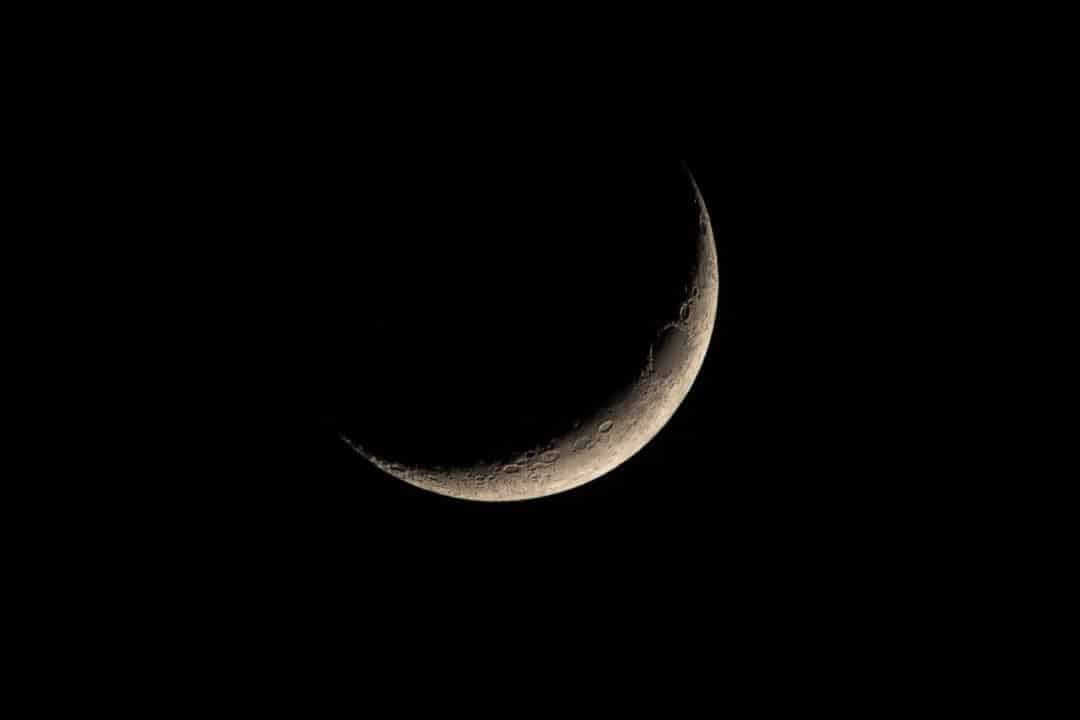
This Friday, June 13, 2026, the Moon ends its period in the Waning phase, with only 2% of its surface visible and constantly decreasing. Night watchers will notice the proximity of the New Moon, which is approaching in just one day. Details about the June lunar calendar are awaited.
Data relating to the Moon’s transformations throughout the month of June were released by the National Institute of Meteorology (Inmet).
See the next transformations of the lunar cycle
The cycle of lunar phases for June 2026 began on June 8, marking the arrival of the Waning Moon at 7:03 am, following official Brasília time. The transition to the New Moon will take place on Sunday, the 14th, at 11:56 pm. Subsequently, the Crescent Moon will appear on the 21st, at 6:55 pm. The month of June will also include the Full Moon, with its peak scheduled for the 29th, at 8:58 pm.
Detailed lunar phase schedule for June 2026
- The Waning Moon appeared on June 8, at 7:03 am.
- The New Moon will begin on June 14, at 11:56 pm.
- The Crescent Moon will appear on June 21st at 6:55 pm.
- The Full Moon can be observed on June 29, at 8:58 pm.
Understanding the full cycle of the Moon
The interval between two consecutive New Moons, known as lunation or lunar cycle, has a duration that varies slightly, but remains at an average of 29.5 days. Throughout this period, the natural satellite goes through its four primary phases – New, Crescent, Full and Waning – with each stage lasting about seven days. This ancient understanding of lunar phases has been a fundamental guide for various human activities, from agriculture to maritime navigation.
In addition to the main phases, there are also the “interphases”, which include the crescent and the gibbous crescent, located between the new and full phases. Similarly, the gibbous gibbous and the waning quarter occur in the period between the full moon and the waning moon.
Details on the characteristics of each lunar phase
During the New Moon, the natural satellite aligns itself between our planet and the Sun. This configuration causes the lunar face illuminated by the Sun to face it, leaving its dark side facing Earth. Consequently, the Moon becomes imperceptible in the night firmament. This stage symbolizes the beginning of a new astronomical cycle and is often associated with new beginnings and new perspectives.
After the New Moon period, the Crescent phase emerges. Gradually, a subtle illuminated patch begins to appear in the sky, expanding each night. Initially, a delicate arc of light can be seen; however, as the days progress, the illuminated area expands until half of the Moon is visible, a point known as the First Quarter. This phase represents growth, evolution and the building of new journeys.
When the Full Moon occurs, planet Earth is positioned between the Sun and the Moon. This alignment ensures that the lunar face directed towards Earth receives all the sunlight, giving it full visibility and intense brightness in the sky. This is the moment of maximum luminosity, when the night star appears on the horizon simultaneously with the sun’s sunset. The Full Moon is often linked to completeness, the culmination of events and the maximum manifestation of energy.
Following the Full Moon, lunar luminosity experiences a progressive reduction. Every nightfall, a smaller portion of its surface is illuminated. When visibility is restricted to half of the disk, the Waning Quarter occurs, which is opposed to the Waxing Quarter. The loss of brightness continues until the return to the New Moon, when the cycle begins again. The Waning phase evokes introspection, completion and preparation for new beginnings.
Currently, the Moon remains in its Waning phase.



