
American space agency mobilizes telescopes to decipher secrets of comet 3I/Atlas

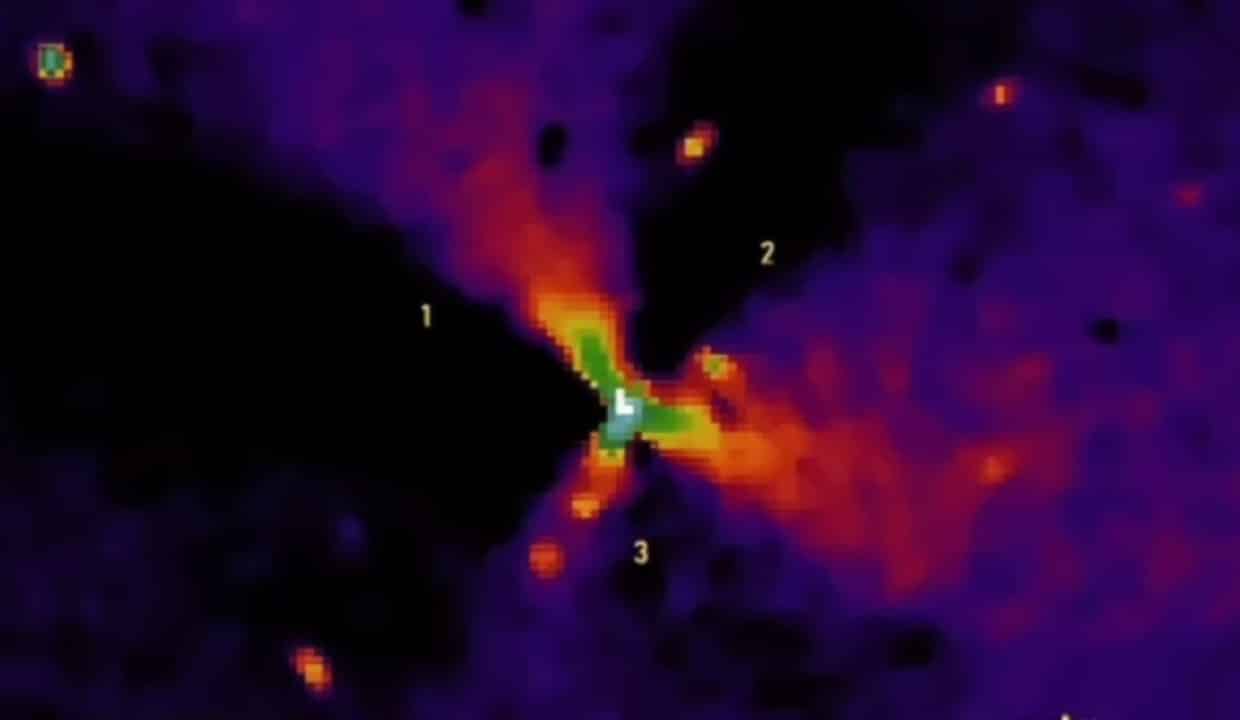
The year 2026 brought an unprecedented milestone for global astronomy with the passage of 3I/Atlas, a wandering celestial body that travels through the depths of space. The presence of this illustrious visitor in our cosmic neighborhood gives researchers a valuable opportunity to analyze materials forged light-years away, helping to piece together the puzzle of how other planetary systems are born and evolve.
The American space agency, NASA, has made this asteroid a top priority, directing its most advanced equipment to capture every possible detail. The open shape of its orbit definitively proves that the rock does not belong to our gravitational backyard, bringing within it chemical elements that reflect the conditions of a completely unknown star.
Scientists around the world are eagerly awaiting the reports that will be generated over the next few months, betting that this information will change science textbooks. Any never-before-seen photograph or spectrum reading captured from this galactic traveler works like a time machine, revealing fundamental clues about the dynamics of the Milky Way and the origin of the matter that makes up the universe.
Path traced by the visitor defies the gravity of our Sun
The route drawn by this celestial object works like a true physics lesson on a monumental scale. Unlike the icy stars that inhabit the confines of our own system, such as the Oort Cloud, this traveler crosses space at extremely high speeds, initially driven by the strength of its original sun and shaped by gravitational encounters during its millennia-long journey through the galaxy.
Thanks to its hyperbola-shaped displacement curve, experts can calculate exactly when it will leave our neighborhood and never return. Mapping this escape route not only serves to attest to his alien origin, but also provides approximate coordinates of the galactic sector from which he was ejected, even though pinpointing the exact address of his birth is still an almost impossible task using current technology.
Cutting-edge technology allowed rapid identification of the celestial body
The first warning about the rock’s approach came from automated monitoring complexes, designed specifically to scan the night sky in search of threats or news. The teams’ agility in confirming that it was a body from outside the solar system highlights the technological leap of recent decades, guaranteeing complex orbital calculations in a matter of days.
The alphanumeric code that names the comet reveals that it is the third of its category to cross our path, following the famous ‘Oumuamua and 2I/Borisov. This string of recent findings shatters old astronomy paradigms, proving that the space between the stars is full of traveling matter and that our radars are finally sensitive enough to notice them before they disappear.
Finding a star with this profile is such an unusual event that it justifies the global mobilization of scientists. Until recently, indirectly touching dust from other stars seemed like a fictional script, but now these silent travelers deliver physical and chemical samples from regions of the Milky Way that humanity would never be able to reach with space probes.
Space task force unites the world’s most powerful telescopes
In order not to miss the window of opportunity, NASA placed its main observation satellites on the visitor’s heels. Legendary equipment such as Hubble and the very modern James Webb work together to capture the object’s brightness, using infrared and visible light sensors to tease out exactly which gases and minerals make up the luminous trail left by the comet in the vacuum.
The effort in space is reinforced by giants installed on solid ground, such as the gigantic lenses of the Keck Observatory and the VLT. This integrated network ensures that the star is monitored uninterruptedly, crossing information from different light spectrums to create an extremely accurate three-dimensional and chemical model of the celestial body.
Measurements carried out by research centers have already begun to detail the star’s behavior under solar heat. The main objective of astronomers is to find structural anomalies that completely differ from the pattern seen in local comets, focusing especially on the following aspects:
- The speed at which the ice on its surface melts and turns into gas.
- The exact density and shape of its luminous dust cloud.
- The presence of organic compounds that demonstrate different planetary recipes throughout the galaxy.
Tracking a dark rock traveling at thousands of kilometers per second requires an impeccable level of synchronization between tracking software and human operators. As the star will soon disappear into the deep darkness of space, every second of the lens pointed at it is worth its weight in gold, with no room for calibration failures or signal loss.
Chemical analysis searches for fingerprints of other solar systems
The visitor’s chemical x-ray revealed familiar traces of water, cyanide and carbon monoxide, substances abundant in the universe. The real treasure, however, lies in the proportion of isotopes — which function as a unique digital signature of each stellar nursery — allowing researchers to discover whether the building blocks of life, such as prebiotic molecules, also form easily in other corners of the cosmos.
By placing this traveler’s data side by side with the native rocks in our neighborhood, science will finally be able to answer whether world-building follows a universal rule. If the results point to a chemical structure radically opposite to ours, it will be proven that the nebulae spread throughout the universe have their own exclusive recipes for forging new planets and stars.





