
Manuel Neuer becomes the oldest player in the history of the German national team at 40

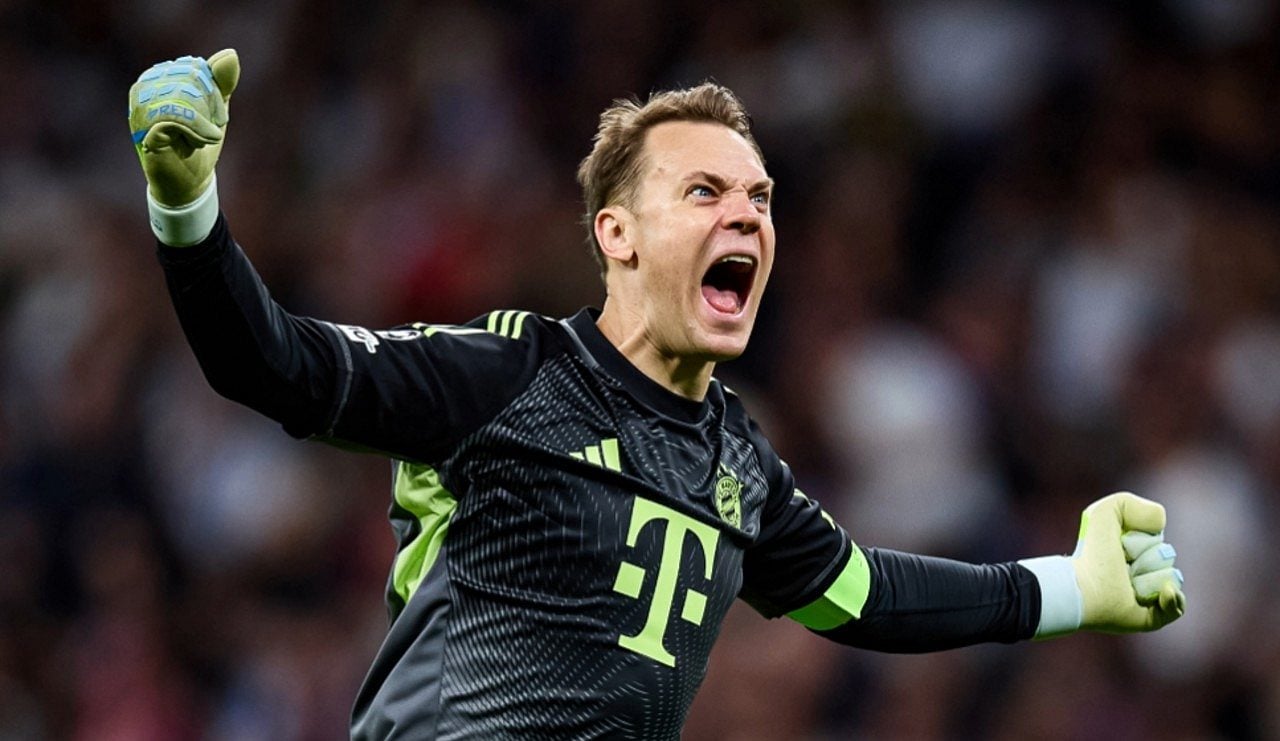
Experienced goalkeeper Manuel Neuer took to the field this Friday, June 13, 2026, and became the oldest player to defend Germany’s senior team. At 40 years and 79 days old, he broke the record that had been held by Lothar Matthäus since Euro 2000.
Neuer started Germany’s opening game at the 2026 World Cup, against Curacao, in Houston. The match marked his return to the national team after more than 700 days, his 125th game with the national team’s shirt. He not only surpassed Matthäus’ record (39 years and 91 days), but also became the oldest German to compete in a World Cup, surpassing Fritz Walter (37 years and 236 days, in 1958).
Longevity that defies time in football
Born on March 27, 1986, Neuer has a career full of age-related milestones. He is the only remaining member of the 2014 World Cup winning team in the current squad and is competing in his fifth World Cup, tying Matthäus’ record for appearances. Even after announcing his retirement from the national team after Euro 2024, the Bayern Munich goalkeeper accepted coach Julian Nagelsmann’s call and recovered from a calf injury to resume his starting position.
His presence on the field goes beyond numbers. Neuer is considered one of the greatest goalkeepers in history, a pioneer of the “sweeper-keeper” style, who actively participates in the construction of plays. At 40 years old, he continues to be a technical and emotional reference for a young squad that is looking to bounce back after early eliminations in recent World Cups.
Kimmich calls for “positive patriotism” in times of challenges
Team captain, Joshua Kimmich took advantage of the premiere atmosphere to talk about the role of football in the country. In an interview, the Bayern player expressed the desire for the team to help foster “positive patriotism” and greater social unity in Germany, in a period of political and social dissatisfaction.
“I would like positive patriotism and social cohesion to become possible in Germany again, without excluding anyone,” said Kimmich. He sees the World Cup as an opportunity to generate pride and positive energy within the country, similar to what happened in the 2006 World Cup.
What does this mean for Germany in the World Cup
Neuer’s mark is not just symbolic. It reinforces trust in an idol who still delivers at a high level and serves as a bridge between generations. For the team, which faces pressure for results after recent stumbles, the goalkeeper’s experience could be decisive in the search for the title.



