
President Trump warns Israel and Iran of risk to regional ceasefire pact amid attacks

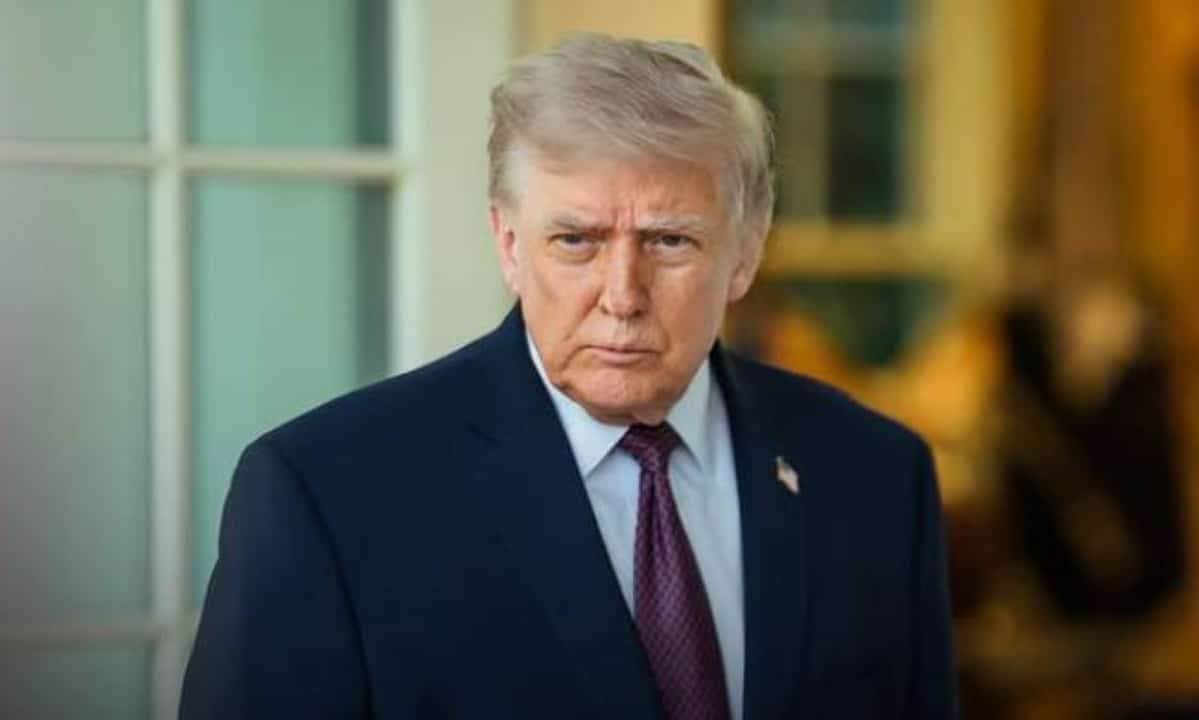
Former US President Donald Trump made an urgent appeal on Sunday for all parties to avoid further hostilities, after Israeli military forces reported raids on Hezbollah positions in Beirut. Israeli actions could create significant obstacles to the conclusion of an agreement aimed at ending the conflict between Washington and Tehran. In Lebanon’s capital, columns of smoke could be seen, and the local Ministry of Health confirmed the deaths of three individuals, in addition to 16 injuries.
The Iranian government, in turn, promised military retaliation. In response, Trump used his online platforms to assert: “We are on the verge of an understanding that will guarantee peace in the area, including Lebanon”, adding the warning “We must not ruin this!”
Expert analysis on the possible peace agreement between the US and Iran
In a subsequent statement to Fox News, the former American president expressed the hope that a pact with Iran could be sealed within a few hours, and revealed his intention to ask Tehran not to react to the attacks carried out by Israel.
However, the current configuration of the treaty is viewed with great frustration by the Israeli government, which has been excluded from negotiations led by Pakistan and other nations. Israel’s recent offensive in neighborhoods of Beirut, which took place seven days ago, marked the most intense escalation in clashes between Iran and Israel since the unstable April 7 truce.
The Republican politician urged Israeli Prime Minister Benjamin Netanyahu to cease intense attacks against Lebanon, considering the proximity of an agreement. However, Israel’s leader chose to ignore the pressure.
In a conversation with Fox News, Trump reported having questioned Netanyahu about his actions in a forceful manner, even using a profanity to express his dissatisfaction with the Israeli stance.
The Secretary-General of the United Nations, António Guterres, intervened asking for “maximum caution in this critical period”.
President Trump highlights the importance of keeping the negotiation process uninterrupted
Netanyahu’s office declared that the attacks were a response to Hezbollah’s attacks in the northern region of Israel. The Israeli armed forces reported that Hezbollah fired three projectiles. There were no immediate demonstrations by Hezbollah, an Iranian-backed militia.
Subsequently, Israel’s military command announced that it was in readiness for a possible enemy offensive that could occur in the following hours.
Trump characterized the offensive in northern Israel as “extremely modest and irrelevant; no one was hit, injured or killed, and this should not stop this vital procedure.”
Understand the details and implications of the possible peace agreement between the US and Iran
An Associated Press photographer in Beirut confirmed that a five-story residential building with commercial establishments at street level suffered damage. Residents of the southern suburbs, many of whom had recently returned to their homes after a period of relative tranquility, were observed to be on the run again.
Later, Israeli military authorities reported the detection of a projectile from Lebanese territory.
Hezbollah fired missiles at Israel on March 2, just two days after the United States and Israel carried out attacks on Iran, starting the conflict in the Middle East region. Since that episode, Israeli forces have registered an unprecedented territorial advance in more than 25 years.
Iran seeks a ceasefire pact that also covers clashes in Lebanon. It has not yet been clarified whether this condition would imply the withdrawal of Israeli troops and within what period this would happen. Most of Hezbollah’s offensive actions in recent weeks have been directed at Israeli military personnel located inside Lebanon.
Mediators step up efforts for pact as Iran reiterates threat of strong reaction
“A vigorous retaliation is underway,” said Ebrahim Azizi, who chairs the Iranian parliament’s national security committee and is close to senior leaders.
Mohammad Bagher Qalibaf, president of the Iranian parliament and key figure in the Tehran negotiations, used the X platform to warn the US after Israel’s offensives, stating that “if there is no will and capacity to honor its commitments, discussing the continuation of the process becomes unfeasible.”
Qatari representatives traveled to Tehran on Sunday with the aim of concluding the agreement, according to information from two regional officials who spoke before the Israeli incursions into Beirut.
Debates about the pros and cons of a possible agreement between the United States and Iran
These officials, who chose to remain anonymous due to their lack of authorization to speak to the media, expressed measured optimism that the US and Iran were finally close to a pact. Such an agreement could put an end to hostilities that have already claimed thousands of lives and enable the reopening of the Strait of Hormuz, whose interruption caused instability in global markets.
Shehbaz Sharif, Prime Minister of Pakistan, declared on Saturday that the agreement would be ratified on Sunday. At the same time, Esmail Baghaei, spokesman for the Iranian Foreign Ministry, mentioned that the signing could take place in the coming days. Trump, in turn, guaranteed that the strait would be accessible immediately.
The expectation is that the document will be formalized electronically, eliminating the need for a physical ceremony.
Iranian authorities issued a warning, indicating that any internal disunity regarding the agreement would weaken their negotiating capacity.
In communications carried by the state press, Masoud Pezeshkian, Iranian president, called for national cohesion and described as “shameful” the attitude of those who, before parliament, label any individual involved in the negotiations as a traitor.
Iran’s citizens must understand that no conflict lasts forever, spokeswoman Fatemeh Mohajerani told state news agency IRNA.
Sensitive topics, such as the nuclear program, will be discussed in later stages
The pact under discussion does not directly address the points of greatest friction between the United States and Iran, such as Iran’s nuclear program or the release of billions of dollars in frozen assets. However, it stipulates a period of 60 days for holding technical debates on these issues, as disclosed by Pakistani and regional authorities with knowledge of the ongoing negotiations. These informants spoke on condition of anonymity as they were not authorized to issue public statements.
Apparently, the treaty being negotiated suggests that both the US and Israel have failed to realize their initial ambitions to dismantle Iran’s nuclear and missile programs, nor to end Iranian support for allied militias in the region.
Trump retreats from threats and signals imminence of agreement with Iran
Iran’s atomic program and its stockpile of highly enriched uranium have, for a considerable time, represented the epicenter of tensions with the United States and Israel, as well as a source of global unrest. Trump posted on his social media on Saturday that, “once tranquility is established”, the US would enter the country to “undo nuclear enrichment and destroy” the enriched uranium, whether on Iranian or American soil.
Iran currently holds 440.9 kilograms (the equivalent of 972 pounds) of uranium enriched to a level of 60% purity, which is technically a level very close to the 90% required for the manufacture of military devices, according to data from the International Atomic Energy Agency.
Tehran has consistently maintained that its nuclear project is for exclusively peaceful purposes and has not publicly committed to giving up enriched uranium. This material is believed to be stored at three underground nuclear sites, which suffered severe damage as a result of US attacks last year.
Members of the Republican wing, who criticize Trump and are grappling with an unpopular conflict on the eve of the midterm elections, expressed objections to the agreement being formulated. Some of these critics argued that the new pact does not offer progress in relation to the conditions of the 2015 nuclear agreement with Iran, from which Trump withdrew the United States in his previous administration and which he still considers “pessimistic”.
The preparation of this report included contributions from a team of journalists based in Jerusalem, Cairo, Beirut, Washington, Islamabad and Tel Aviv, Israel.



