
Arrival of the Iranian team in the USA for the World Cup is marked by political tension and protests despite peace agreement


Football player Mehdi Taremi, striker for the Iranian national team, declared that the controversies and interference related to Iran’s presence in the World Cup compromise the ideal of conciliation promoted by FIFA. He admitted to having noticed the atmosphere of tension even before landing in Los Angeles, just hours before the announcement of a peace agreement between the countries. It is the first time in the history of the tournament that a host nation has hosted a team from a country with which it has a conflict.
The Iranian team made the journey from Tijuana, Mexico, to Los Angeles on Sunday, being relocated due to impasses with entry visas. However, there is an expectation that the team will face resistance and protests from the local Iranian community, who often consider that the team does not represent the nation’s interests. Iran’s preparation for the championship was marked by several difficulties, including the refusal of visas for several members of the coaching staff when they tried to enter the United States.
“This instability undermines the euphoria and the essence of FIFA’s and our people’s message, which is based on football and the search for harmony”, expressed Taremi, a striker who plays for Olympiakos. “I believe that this World Cup would have the capacity to offer a more conducive environment, and I hope that, in the future, it will be more advantageous for all sports enthusiasts, regardless of which team they support.”
“It was not just us, in Iran, who suffered the impacts; other nations were also affected, including members of the arbitration, such as the Somali referee Omar Artan, who was refused entry”, he detailed. “The perception of tension was present from the moment we arrived for this World Cup. It is clear that we did not experience that fantastic experience that we always describe — of tranquility and contentment. I am aware that several nations faced setbacks with entry permits and changes to their training bases. The atmosphere of apprehension is real; it already existed even before the start of the tournament. The expectation, the emotion that usually fills people when waiting for a World Cup, I feel was not the same on this occasion.”
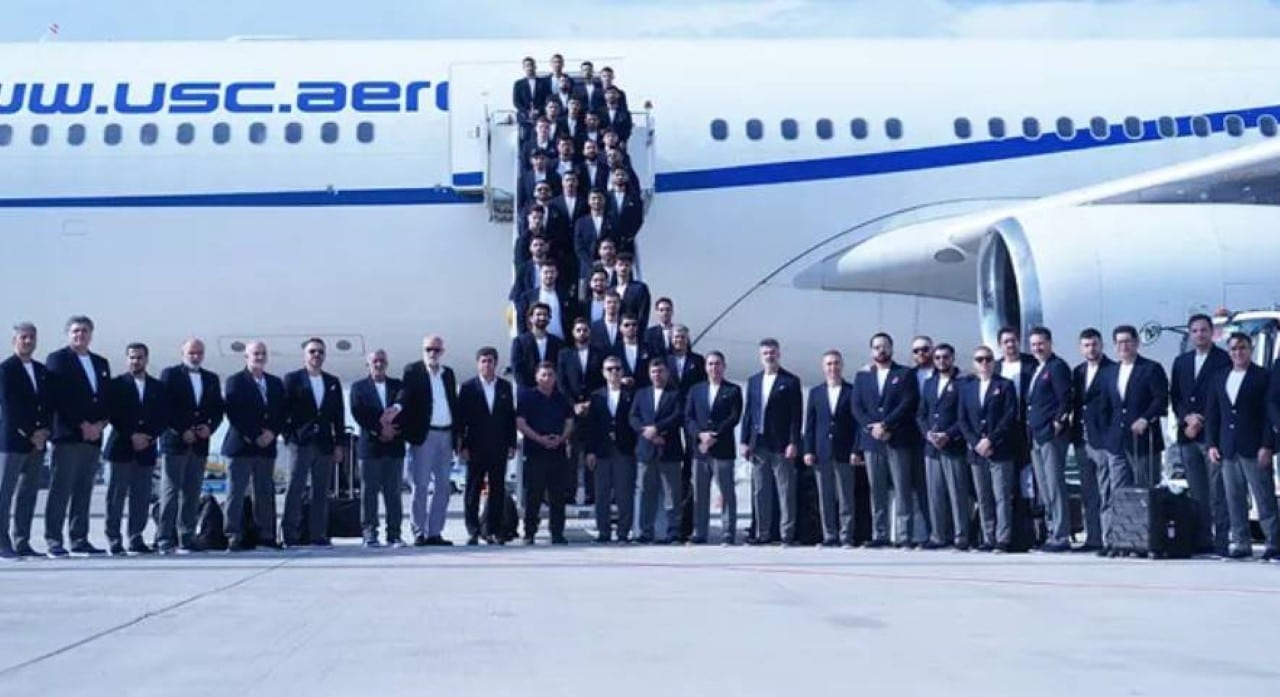
The aircraft carrying Taremi and the rest of the cast landed in Los Angeles after a second attempt. When they arrived at the team’s housing in Manhattan Beach, they were confronted by a group of Iranian protesters. The majority of these individuals are part of the significant Iranian community in California, estimated at 375,000 people, the largest outside of Iran. The situation was accompanied by an intense security and policing presence, with the use of drones, mobile monitoring and sniffer dogs. A location west of Los Angeles, in the Westwood region, is affectionately known as “Tehrangeles” due to the significant Iranian diaspora. “Iran will act as if they were in Los Angeles, overcoming all obstacles,” said Amir Ghalenoi, the team’s coach.
An expectation of approximately 35 thousand Iranian fans is expected for the opening match in Group G against New Zealand. Many of them plan demonstrations against the team before the clash. “Our presence here is to play football and to represent the Iranian people, covering both those who reside in Iran and those who are part of the diaspora,” declared Ghalenoi. “Our sole focus is our nation. We are not political figures, and FIFA’s fundamental principle is clear: football transcends political issues. We respect all Iranian citizens.”
Ghalenoi acknowledged that the complexity of the displacement directly impacted the team’s preparation. “It was imperative that we had started training earlier, but, as you can see, our arrival was late and we did not have adequate time to acclimatize; obviously, this will have its effects”, commented the coach. “I am convinced that my athletes are determined to deliver their best. My expectation is that the World Cup will go on in a positive manner, even in the face of obstacles on our trip… I hope that such difficulties do not compromise performance on the field.”
Reports indicate that the Iranian delegation passed through customs inspection without incident, but arrived approximately 20 minutes late for the pre-match press conference, held at the So-Fi Stadium. “It was not our responsibility,” Taremi clarified. “The athletes who wear the national team’s jersey represent all Iranians… There is a diversity of opinions, but our mission, as football players, is to promote unity among people and seek to bring satisfaction to all Iranians, wherever they reside. Each individual has the right to express their own perspective. Our presence is not aimed at involvement in political issues; we are here to play football.”
Coach Ghalenoi was also questioned about the absence of player Sardar Azmoun, amid news of an alleged act of infidelity to the regime. Azmoun, who plays for clubs in the United Arab Emirates, reportedly angered the Iranian government by releasing a photograph of himself alongside Mohammed bin Rashid al-Maktoum, ruler of the United Arab Emirates. During the period of conflict, facilities located in the United Arab Emirates were the target of attacks by Iran. “Sardar Azmoun is an exceptional footballer and contributed greatly to the national team, however, he is not with us, and we wish he were; but that is the reality of football, unfortunately”, declared Ghalenoi.
A current concern for FIFA lies in the potential presence of fans carrying the historic Iranian flag, which displays a lion and a sun, a symbol prior to the Islamic Revolution. This banner is expressly prohibited in World Cup venues. During the press conference, a representative of football’s highest governing body intervened to end a question about the flag, arguing that the issue had no direct relevance to the game.





