BBC reveals OnlyFans managers who control and threaten content creators while retaining half of the earnings
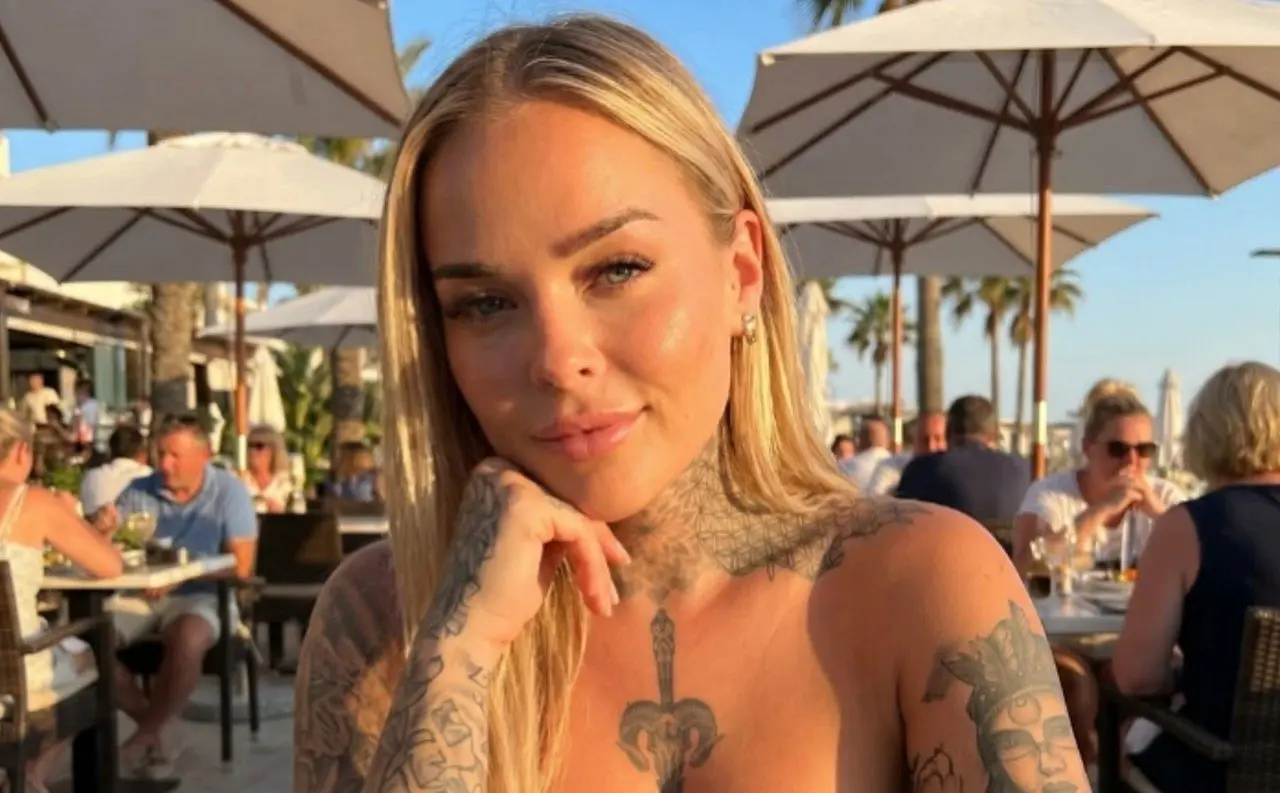
Rebecca, a content creator on the OnlyFans platform, says she joined an agency after they promised to help her increase her earnings on the social network focused on adult content.
Instead, according to her, she was the victim of abuse, received threats against her daughter and had masked men sent to her home to attack her.
“They were adorable at first.”
The 29-year-old from south Wales says her new managers claimed she was beautiful and that they had “never seen a girl” like her.
But within a few weeks, they became “quite controlling”, insulting her appearance and forbidding her from going out with friends, she says in the BBC Three documentary OnlyFans: Inside the Machine.
According to Rebecca, the abusive behavior intensified after she changed her account access details, worried that the agency, which had access to her profile, would block her.
“I will destroy you and your daughter,” said one of the messages sent to her and seen by the BBC.
A brick was thrown at the window of his house and, a few weeks later, two masked men appeared at the scene.
One of them entered the residence and, according to Rebecca, strangled her and threw her “up and down the stairs.” She showed the BBC report photographs of bruises on her legs and neck.
His report is part of a pattern of accusations against agents who present themselves on social media as OnlyFans account managers, known by the acronym OFM (OnlyFans Managers).
They promise to help content creators expand their businesses on the platform, but information obtained by the BBC shows that, in some cases, they act in an exploitative way and make threats.
We listened to 60 OnlyFans content creators in the UK and infiltrated one of the largest private agent groups on Telegram called OFM Empire, which has 24,000 members.
There, we find guidance on how to recruit creators, take control of their accounts and profit from it, often resorting to the threat of violence. One of the users called this strategy the “pimp method”.
The OnlyFans platform has been aware of concerns regarding overly exploitative account managers for at least four years, when allegations involving agencies began to appear in the international press.
But for the first time, our investigation focuses on the UK, where the OnlyFans platform is based.
According to human rights experts and lawyers who had access to the BBC’s findings, the platform is not doing enough to protect content creators from exploitation.
“What Rebecca experienced brings together widely recognized signs of exploitation: control, coercion, financial pressure and the inability to leave freely,” Eleanor Lyons, the UK’s independent commissioner against modern slavery, told the BBC.
“It’s something the government needs to look at more closely. We could be looking at a platform that facilitates exploitation and abuse.”
An OnlyFans spokesperson stated that “the accusation that the company ‘turns a blind eye’ [to these problems] is unfounded.”
According to this spokesperson, the company takes user safety “extremely seriously” and invests “heavily” in measures to protect its community. He further added that the platform complies with all obligations under the UK Online Safety Act.
“OnlyFans’ relationship is with its content creators and fans. We are not affiliated with or endorse any third party, including management agencies.”
“Unfortunately, we cannot review or influence contractual relationships that creators choose to establish outside of the platform because we are not a party to those agreements.”
More than 4.6 million content creators around the world post videos and photos for paying subscribers on OnlyFans. The platform keeps 20% of the revenue.
One of the most successful cases of social networks in the United Kingdom, the company that operates OnlyFans, Fenix International, recorded pre-tax profits of US$684 million (around R$3.8 billion) in its most recent balance sheet.
At the same time, a global ecosystem of account managers known as OFMs has grown around the platform. They promise to attract more subscribers and increase creators’ earnings. In return, they keep a portion of the revenue, usually 50%.
‘Servant relationship’
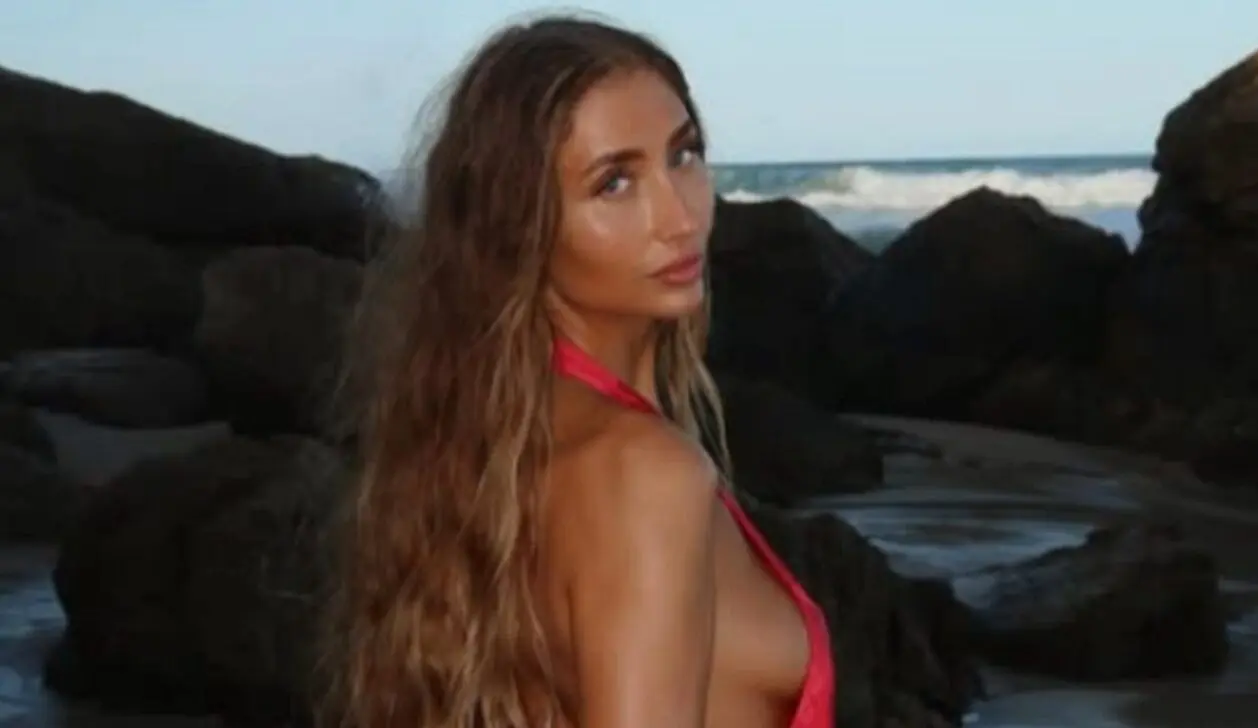
Gia Clarke, a British content creator who has been posting on OnlyFans since the platform launched ten years ago, says she receives more messages from people posing as agents than from fans.
“The idea [of OFMs] is very good. The problem is that there are too many unqualified people working in this area. As there is no regulation, the models don’t know who to trust,” he says. She describes some of these managers as “predatory.”
Contracts between content creators and these agents or managers obtained by the BBC show managers keeping up to 70% of the earnings. Many require full access to accounts and impose fines on anyone who tries to end contracts early.
“They [OFMs] are taking advantage of the situation, which almost puts these creators in a bonded relationship with agents and agencies, trapped in unfair contracts,” says Matt Jury, from human rights firm McCue Jury & Partners.
Sophie Kemp, head of public law at Kingsley Napley, agrees. “This does not appear to be a fair contractual relationship at all. These contracts appear to be the first step toward exploiting content creators.”
Several of the 60 content creators interviewed by the BBC stated that their managers accessed their accounts and lied about their earnings to keep a larger share of the money.
One of them said that the manager changed his password to prevent him from accessing the account.
Another stated that his manager changed his registered bank details, causing payments to be deposited directly into his account.
Similar tactics are openly discussed on the OFM Empire Telegram channel.
Leia Também
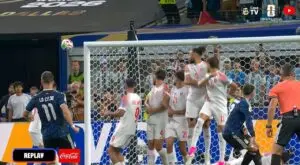
VAR decides to cancel Colombia’s goal against Portugal after a thorough analysis of the tip of the boot, impacting the classification in Group K of the 2026 World Cup
Lautaro Martínez simply scores a great penalty in Jordan x Argentina at the 2026 World Cup

Rota officer and family member of Eloá Pimentel is ambushed by gunfire at a traffic light in ABC Paulista
“Create an email and password for her OnlyFans. This way she can’t log in,” wrote one user. “I have access to the payments platform in her name using the email I created. I have the password. I have full control of everything.”
According to an OnlyFans spokesperson, the platform adopts “rigorous processes for verifying new users, payment controls and continuous monitoring of accounts.”
He stated that when concerns arise about an account, OnlyFans immediately restricts access, opens an investigation and takes action to ensure the content creator is in control of the profile.
But when a BBC reporter created an account using a verified photograph, she was able to sign up a colleague’s bank details to receive test payments.
OnlyFans told the BBC that “in the UK, when a creator requests a withdrawal, third-party payment providers carry out checks to confirm the bank account holder. When this check is not completed successfully, the payment is rejected.”
Rebecca claims that she decided to change her OnlyFans account password after a friend, represented by the same manager, had her access details changed without consent and was prevented from accessing her own account.
She says she then started receiving abusive calls and messages.
“He was sending me my own address and saying he was going to drag me and my daughter by the hair,” Rebecca reports.
“See you later, you bitch,” read another message she showed to the BBC.
A few days later, according to her, a brick was thrown at the window of her house. Rebecca claims she called the police but was too scared to mention the agency linked to OnlyFans.
She also reports being attacked three weeks later, when two masked men appeared at her residence.
“One [of them] was on top of me, strangling me, while I was trying to reach the phone to call someone because I thought that was the end. After they showed what they wanted to show, they stopped and left.”
Rebecca is convinced that the manager is behind both episodes. “I don’t have any problems with anyone else,” he says.
Rebecca is not the only content creator who claims to have been threatened.
Another woman, who asked not to be identified, says that she initially agreed to pass on between 35% and 40% of her earnings to the account manager, but later concluded that the percentage was too high.
“He told me that if I wanted to reduce [the] percentage, I would have to pay 10 thousand pounds (about R$74 thousand), for all the time and effort he invested in me.”
When she refused, she said the manager responded that she would “get what she deserved.”
“Will he show up at my house? Will he delete my account? He used to tell stories about what he had done to other girls, how he managed to take down their accounts or sent lawyers to their homes,” he says.
“Every week I received a strange message: ‘You’re going to get what you deserve. Wait and see, it’s coming,'” he says. She has since broken up with that manager.
Leanne, 33 years old, signed a contract that gave the manager access to her account, authorization to change the email address linked to the profile and the right to 50% of her earnings, minus the part charged by the platform.
The contract, obtained by the BBC, also stated that it must respond to subscribers’ content requests within 24 hours.
Leanne claims she made it clear when signing the agreement that she would not produce sexually explicit videos. Still, according to her, the manager constantly pressured her to do them.
Finally, he agreed to record a video of this type “to make them shut up”, as long as it was not sold to his followers for less than US$250 (around R$1,400).
She says she felt “physically nauseated” after the recording and claims she didn’t even watch the video.
Later, Leanne discovered that the video had sold for less than US$40 (about R$220).
“It made me feel so disgusting and so humiliated,” she says. She no longer posts content on OnlyFans.
OnlyFans was already aware of concerns regarding overly exploitative OFMs through press coverage. But the BBC also identified at least one content creator who tried to alert the company directly.
Riley informed the platform about discussions in the OFM Empire group that suggested agents were buying and selling content creators’ contracts without their knowledge.
“The tactics of these groups become increasingly exploitative,” she wrote in an email sent to the OnlyFans support team in 2024, seen by the BBC.
The platform asked her to present evidence. Riley then sent links to OFM Empire and screenshots of messages posted on the forum.
She was later told there was not enough evidence for OnlyFans to take any action.
OnlyFans told the BBC that “any bad actors who are exploiting female content creators” should be reported to the platform and, where necessary, the police, so that “they can be held accountable and appropriate action can be taken to protect our community of creators.”