
Botany and biology research comes to an end on the ISS in the week Dragon prepares to return to Earth

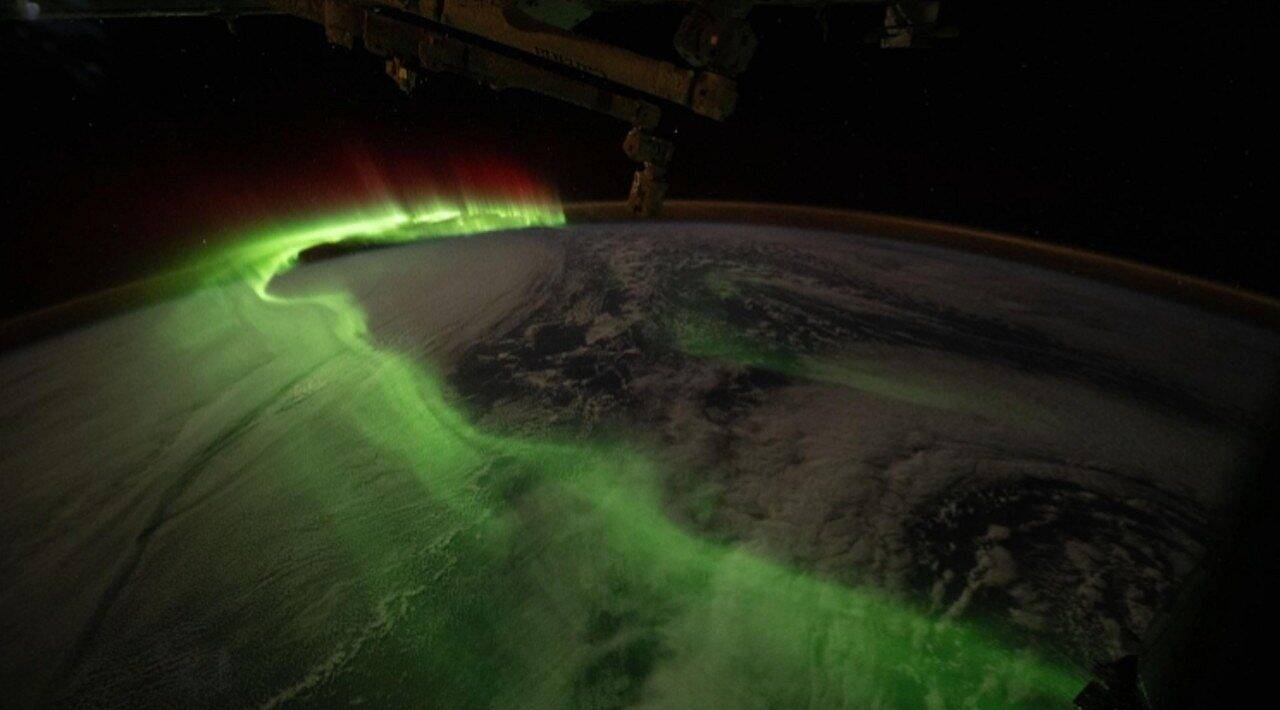
Botany and biology research activities aboard the International Space Station (ISS) concluded this week, marking the final preparations for the return of the Dragon cargo capsule to Earth. The featured image captured from orbit shows the aurora australis in an active solar event, illustrating the dynamic environment in which astronauts operate.
During the week, the Expedition 74 crew focused on space farming operations, stem cell studies, and cargo handling. Additionally, flight engineers performed blood tests and installed a new food processor as the American cargo spacecraft nears the end of its current mission.
Plant development in space is essential to sustain crews on long-duration missions to the Moon, Mars and beyond, as shipping food in large quantities from Earth is economically unviable. In this context, NASA flight engineer Chris Williams dedicated himself to continued research into space agriculture, setting up a microscope to observe the division of plant cells in microgravity. The discoveries obtained are vital for improving food cultivation methods both in space and on lunar and planetary surfaces, ensuring self-sufficiency for future explorers.
Low Earth orbit also emerges as a new horizon for biomedical manufacturing, helping doctors overcome the limitations imposed by gravity on Earth. NASA flight engineer Jessica Meir has been collecting blood stem cells grown in the Kibo laboratory module inside the Life Science Glovebox (LSG) since the arrival of the SpaceX Dragon cargo ship on May 17. Next, she assessed the density and viability of live cells using the KERMIT fluorescent microscope. Researchers are investigating cell therapies developed in space to treat serious medical conditions such as blood cancers and immune diseases, leveraging the unique conditions of microgravity for innovative advances.
The Dragon capsule is scheduled to undock from the International Space Station at 12:05 pm EDT on Tuesday, June 16. The ship will bring back the stem cell samples, along with tons of completed scientific experiments and laboratory equipment, for detailed analysis on Earth. Live coverage of Dragon’s undocking and departure will begin at 11:45 am on the NASA+ channel.
Engineers Williams and Meir worked closely with NASA’s Jack Hathaway and ESA’s (European Space Agency) Sophie Adenot on packaging Dragon’s return payload throughout Friday. The quartet will step up cargo transfers early next week, when they will begin loading Dragon with sensitive research samples, packed in portable scientific freezers for preservation, retrieval and analysis on Earth.
At the beginning of Friday’s shift, Williams and Meir collected blood samples for centrifugation and subsequent storage in a scientific freezer for future analysis. Hathaway removed a research freezer from inside Kibo’s Life Science Glovebox, which had been used the day before to preserve bacterial samples for genetic and chemical analysis. Adenot also assisted Meir during stem cell operations and tested a new food processor in the Columbus laboratory module, preparing a Mediterranean dish.
The station’s three cosmonauts, commander Sergey Kud-Sverchkov and flight engineers Sergei Mikaev and Andrey Fedyaev, enjoyed a day off on Friday.





