
Japanese government considers sending Self-Defense Forces to the Strait of Hormuz after peace agreement between the United States and Iran

The security of maritime routes in the Middle East entered a new phase after the announcement of the preliminary ceasefire agreement between the United States and Iran, mediated by Pakistan. Faced with this new panorama, the Japanese government began a detailed analysis of the possibility of mobilizing its Self-Defense Forces to operate in the Strait of Hormuz. The main objective of the measure is to ensure the free movement of commercial ships through what is considered one of the most vital arteries for the global economy.
Previously, North American President Donald Trump had insistently requested that Japan and European nations assume direct responsibilities in the region, such as escorting oil tankers and demining missions — operations that were also evaluated by Great Britain and France. With diplomatic progress consolidated by the two powers, Tokyo will use the terms of the agreement to guide its defense and international cooperation strategy. Expectations now revolve around the position that Prime Minister Sanae Takaichi will take to the G7 leaders’ summit, scheduled to take place in the city of Évian, France.
Tokyo reacts with optimism and seeks stability in supply
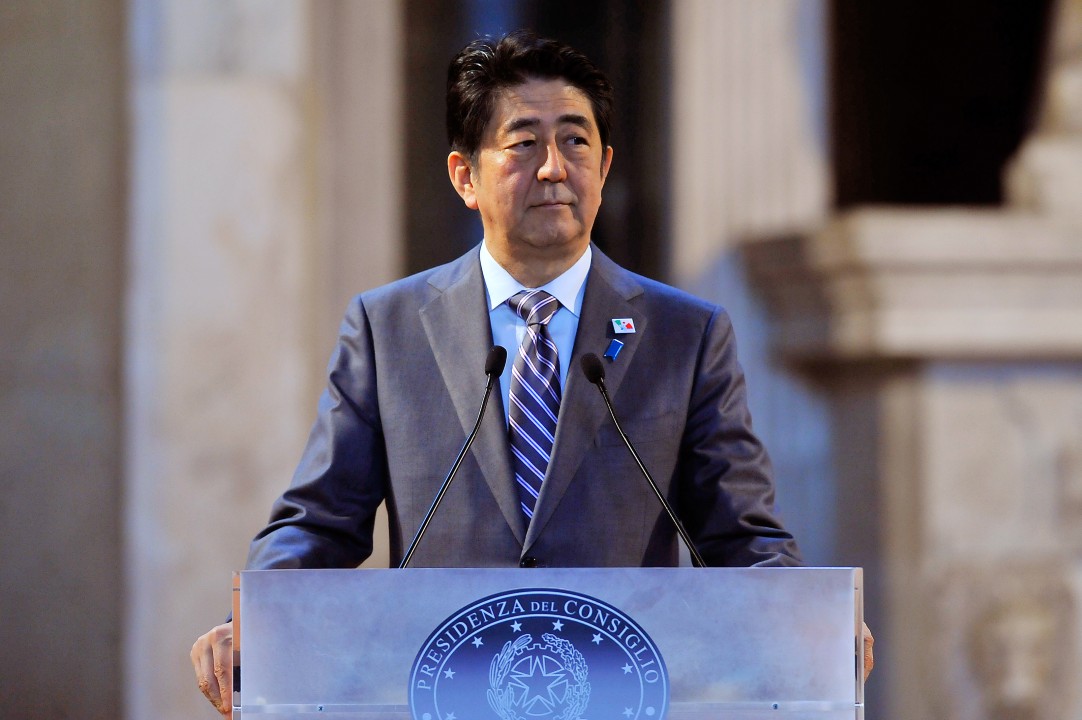
On an official agenda in Italy, the Japanese government used official channels and social media to express strong support for the end of hostilities in the Persian Gulf region. The understanding was classified by Tokyo authorities as a decisive step towards easing the international geopolitical crisis. In the same sense, Japan’s Foreign Minister, Toshimitsu Motegi, reinforced in an official note the country’s commitment to maintaining continuous diplomatic efforts that help to establish long-term peace throughout the Middle East.
The end of the fighting brings direct relief to the archipelago’s energy security. Since the beginning of armed clashes, Japan has faced serious logistical challenges in supplying its domestic market. The country, which historically depends on the Middle East to obtain more than 90% of its crude oil, was forced to fragment its purchasing operations. The emergency search for new suppliers spread across the Americas (North, Central and South) and Central Asia generated instability both in the predictability of volumes delivered and in the quality standards of oil and naphtha. This scenario of vulnerability motivated the Japanese government to demand speed in negotiations between Washington and Tehran.
Japanese strategy and alignment with the G7
Defining the exact format of Japan’s military or logistical participation became Prime Minister Sanae Takaichi’s immediate priority. The design of this contribution will serve as the head of government’s main calling card during the debates at the G7 summit. Tokyo is trying to balance the historic pressure exerted by the White House for greater military protagonism combined with Japan’s internal constitutional restrictions on the use of its Self-Defense Forces abroad.
The reopening of the Strait of Hormuz without charging tolls and the lifting of the US naval blockade of Iranian ports are seen as fundamental conditions for Japan to increase the size of its presence on the route. The technical details of this logistical and defensive patrol collaboration will be consolidated as the definitive treaty between the United States and Iran moves toward final signing.





