
JWST redefines story of Nereid, Neptune’s moon, from captured body to survivor of lost world


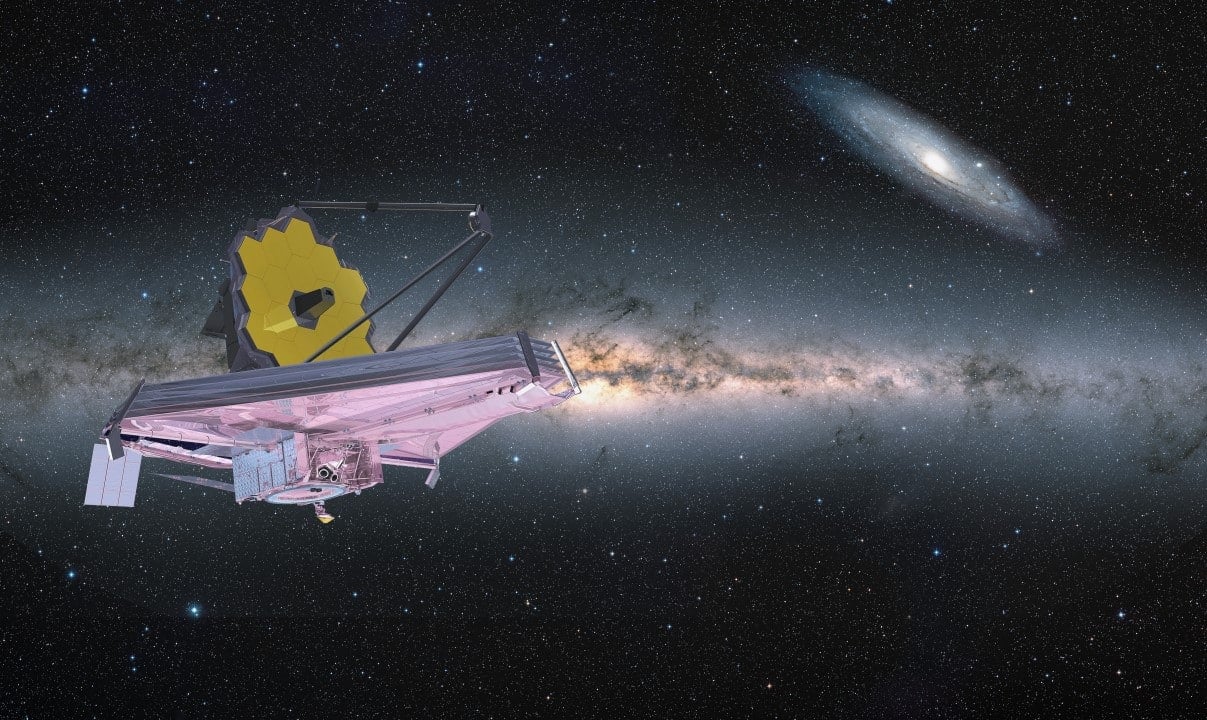
The James Webb Space Telescope (JWST) has brought a new perspective to understanding Nereid, one of Neptune’s moons. Once thought to be a captured celestial body, new evidence suggests it may actually be a remnant of a primordial world that orbited the giant planet.
For many years, the astronomical community defended the thesis that Nereid, Neptune’s satellite, was a celestial body originating in the Kuiper Belt that had been captured by the gas giant’s gravity. However, a recent investigation reorients this narrative, indicating that Nereid was possibly part of the set of moons formed with Neptune itself.
This renewed theory is the result of unprecedented analyzes provided by JWST, together with computational modeling that simulates the first stages of Neptune’s planetary formation. Research indicates that Nereida’s unique orbital trajectory would be the result of a violent gravitational disturbance that occurred in its past, and not an external acquisition.
Such a finding has the potential to redefine scientific understanding of one of the most enigmatic satellites in our Solar System. The moon Nereid has always presented characteristics that defy conventional classifications, and the most recent data propose an explanation that links its atypical orbit to moments of intense turbulence in Neptune’s history.
The James Webb Telescope illuminates the mysteries of Nereid
Identified in 1949 by astronomer Gerard Kuiper, Nereid remained Neptune’s second recognized moon, after Triton, until the arrival of the Voyager 2 probe in 1989. Its most distinctive feature was its remarkably eccentric orbit, which took approximately 360 days to complete. For decades, this unique trajectory around Neptune led the scientific community to consider that Nereid was a captured Kuiper Belt Object (KBO), a hypothesis considered robust, especially since it was believed that Triton also had this same origin.
Since its original identification in 1949, Nereid was considered the most recent of Neptune’s moons until the Voyager 2 mission reached the planet, expanding the catalog of known satellites.
Using JWST’s advanced infrared equipment, scientists were able to reevaluate this preexisting theory. The study in question revealed that the surface composition of Nereid differs significantly from that of other Kuiper Belt Objects (KBOs) already cataloged as captured. A comparative analysis, which included Saturn’s satellite Phoebe and widely accepted as a captured KBO, demonstrated that water-rich formations on Nereid’s surface exhibited unique infrared signatures distinct from those observed on Phoebe. As detailed in the article published by Science Advances:
The scientific journal’s verbatim citation states: “Nereid’s unique spectral pattern, compared to other bodies in the outer Solar System, does not align with a context where the moon would have been captured during the Solar System’s period of primordial dynamic instability.” In this way, the new conclusions minimize the validity of the old and widespread hypothesis that Nereid was a captured body.
Triton’s influence on the formation of the Neptunian system
Following the investigations, attention turns to Triton, the ice giant’s largest natural satellite. Its peculiarity lies in its retrograde orbit, which contradicts the planet’s rotation, a strong indication that it did not originate in conjunction with Neptune. Experts postulate that this anomalous moon was, in the remote past, a component of a binary system in the Kuiper Belt, before being irreversibly attracted by Neptune’s gravitational field, an event that, it is assumed, did not occur smoothly.
With the aim of understanding the subsequent developments, the research team used the REBOUND simulation software, recreating a Neptune in its initial stages, surrounded by a set of moons with regular orbits. Subsequently, Triton’s body was inserted into this computational representation.
The spectral data captured by JWST indicate that Nereid has a surface rich in aqueous compounds, characteristics that distinguish it from objects typically captured from the Kuiper Belt.
Scientists found that Triton’s unique orbit triggered a period of great instability among Neptune’s original moons, resulting in collisions and the ejection of many of these satellites from the planetary system. The authors of the study hypothesize that the fragments resulting from these events accumulated in Neptune’s rings, and may have fostered the emergence of smaller moons linked to them, such as Proteus.
Nereid: A possible remnant of Neptune’s missing moons
A recurring pattern emerged from the simulation results. In around 20% of the scenarios analyzed, the gravitational impact exerted by Triton propelled one of Neptune’s primordial moons into a stable orbital trajectory, characterized by being extremely elongated and with a high inclination. This orbit, it is worth mentioning, had notable similarities with that of Nereid.
The team of researchers argues that this plot offers a coherent justification for the moon’s current orbital configuration, dispensing with the premise that it would be a captured body. Instead, Nereid could have begun its existence as a conventional satellite of Neptune, then been ejected into its peculiar orbit during the intense period of instability caused by Triton’s integration into the system.
Analysis of the spectral data obtained reveals details about the unique composition of Nereida’s surface.
Scholars consider that Nereid represents a unique remnant of a series of Neptune’s moons that were lost over time. Given the fact that most of the system’s original satellites were eliminated by collisions and ejections, Nereid would have been able to withstand these cataclysmic events.





