
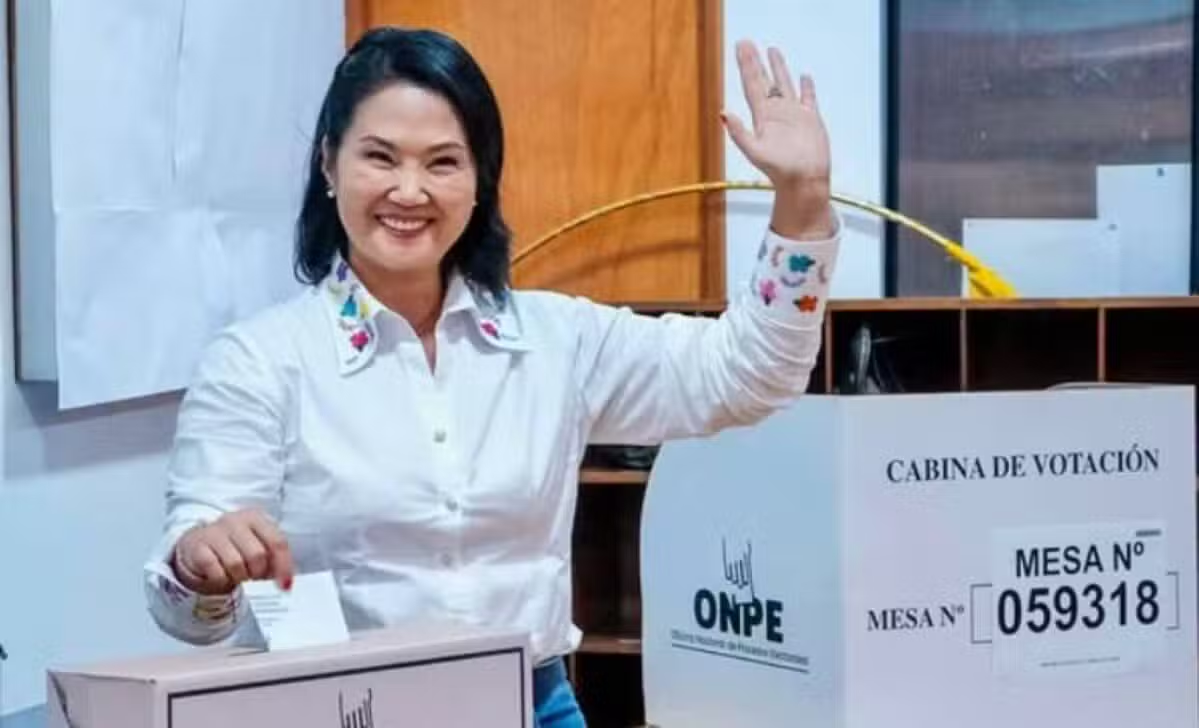
In a scenario of extreme polarization, right-wing candidate Keiko Fujimori expanded her minimal lead over left-wing opponent Roberto Sánchez in the intense race for the presidency of Peru, while the counting of thousands of votes continues at a slow pace. The electoral dispute remains tight, keeping the country in suspense.
Fujimori’s lead was recovered in the middle of the previous week, significantly boosted by votes from abroad. Last Monday (11), the candidate reached 50.051% of valid votes, maintaining a margin of just over 18,300 votes ahead of Sánchez, who registered 49.949%. The contribution of Peruvian voters outside the country proved decisive in reversing the partial result.
According to data released by the National Office of Electoral Processes of Peru (Onpe), 98.59% of the votes have been counted so far.
Last Thursday, the Peruvian electoral body began the process of reviewing ballots that were contested during the second round, which took place on June 7. Authorities indicate that the final official results may still take days or even weeks to be announced, in one of the most disputed and prolonged elections in the recent history of the Andean country.
Over the weekend, Sánchez visited Cusco, an Andean region considered one of his main electoral strongholds, where he met with supporters and expressed “suspicions” about transparency and the conduct of the vote recount.
The previous week, the left-wing candidate had requested the invalidation of approximately 400,000 votes from abroad, alleging alleged irregularities in the transport of ballots. However, the request was promptly rejected by electoral authorities.
In the days leading up to it, demonstrations in support of Sánchez were held in Lima, the Peruvian capital. Following the candidate’s calls to “defend the popular vote”, hundreds of participants gathered in marches that passed peacefully, without major incidents.
After the second round, electoral observation missions sent by the Organization of American States (OAS) and the European Union (EU) confirmed, in separate statements to the press, that the voting process took place within democratic normality. Given the proximity of the results, both entities urged Peru to wait for the official conclusion of the investigation with serenity.
Sánchez’s rise, which has already generated concern among private investors, has the support of former left-wing president Pedro Castillo. Castillo was sentenced to 11 years in prison after an unsuccessful attempt to dissolve Congress and assume expanded powers at the end of 2022, an event that profoundly marked Peruvian politics.
Peru’s financial markets reacted positively last week, showing signs of recovery with the advancement of Keiko Fujimori. Before the election, there was a strong sell-off of assets, driven by fears that the policies proposed by Sánchez could compromise the country’s economic stability, as traders in the stock and foreign exchange markets reported.