
Samsung advances with AI in Samsung Health and prepares Galaxy Watch 9 and Ultra 2


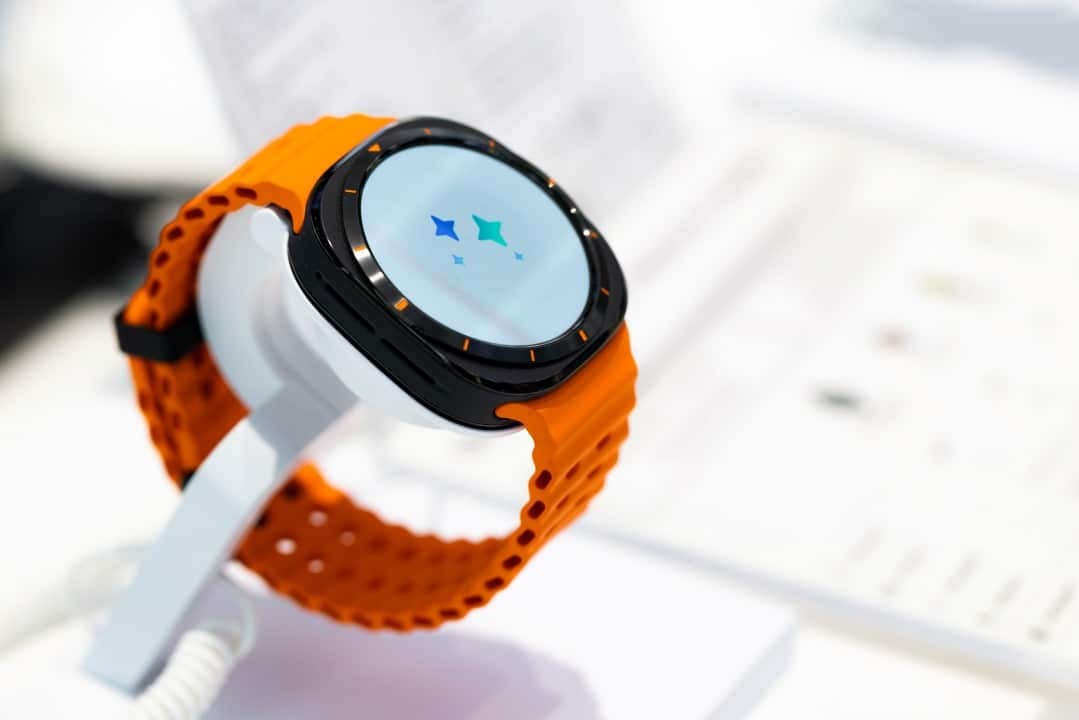
Samsung’s next releases, the highly anticipated Galaxy Watch 9, promise to be more than ordinary smartwatches, positioning themselves as “health companions powered by artificial intelligence.” The South Korean company itself confirmed this vision, although it has not yet officially revealed its new wearable devices.
Far from being mere speculation, the information comes directly from Samsung, which chose to release a substantial preview of what to expect from its new generation of wearables. The company gave a significant glimpse of the features that will be present.
A robust update to the Samsung Health app is key to improving understanding of the human body. In its announcement about this tool, the company highlighted how this change “will transform the next Galaxy Watch into a proactive and intelligent health partner.”
The brand isn’t keeping its plans secret; It is a fact that new Samsung smartwatches are on the way and will bring important innovations.
Rumors about the Galaxy Watch 9 already indicated the existence of three versions: the standard Watch 9, a Watch 9 Classic and a premium model, the Watch Ultra 2, which may even have 5G connectivity. However, this is the most explicit mention made by Samsung itself regarding its new devices.
Samsung has yet to offer details on the hardware or design of its new smartwatches, leaving it open-ended as to how they will look or feel on the wrist. However, the changes to Samsung Health already allow us to infer how it will work.
Thanks to these new capabilities, it is possible to preview some of the main tools that will be present in the new Galaxy Watch, obtaining an initial overview of its innovations.
Artificial intelligence as a pillar of experience
Samsung has stood out as one of the companies most engaged in developing artificial intelligence, and it’s no surprise that Samsung Health is being promoted as a “truly AI-powered healthcare platform.” The company, however, did not specify whether the Bixby assistant will be responsible for this AI.
Looking between the lines, artificial intelligence gains prominence with the new Energy Resource, which Samsung Health will calculate from the combination of its “five fundamental pillars: sleep, activity, nutrition, mindfulness and vitals.”
Essentially, it is a “body battery” indicator, a concept already used by other brands such as Garmin for years.
Within Samsung Health, this score will provide personalized health suggestions based on the five aforementioned metrics, with the aim of encouraging the user to try harder or maintain a healthy lifestyle.
Although it may seem like a practical function for a health overview on your smartphone, this tool can become revolutionary when applied directly to your wrist.
A Galaxy Watch, after all, would be the device responsible for collecting these metrics and offering easy access to them.
The Galaxy Watch 9 is expected to integrate the Power Feature centrally into its user interface, making it a core element of the experience.
There’s precedent for this approach: Apple Watch’s Activity Rings are a crucial part of the interface for Apple’s wearables, something that was also seen in Fitbits before their decline in the market.
Simplified health data appeals to some users, who are looking for quick insights into their well-being. However, for fitness enthusiasts, a summary numerical score may not be as useful. Therefore, it would not be surprising if the Watch Ultra 2 offered this function in a secondary way or omitted it.

Substantial improvements to the Running Trainer
Current Galaxy Watch models, like many other wearable health devices, already offer running guidance, helping users determine the ideal distance.
However, most of these tools, including Samsung Running Coach, have limitations in the factors they consider when making decisions.
The Running Coach can create a training plan to help achieve long-term goals, but cannot adjust or modify exercises to adapt to temporary factors.
Imagine that, on a given day, your training plan includes a 10 km run.
If the user wakes up a little tired, is exhausted from previous runs, or, on the contrary, had a big dinner the night before and has a lot of energy, the current Running Trainer does not have the ability to increase or decrease the load based on these elements.
A new Samsung Health feature, however, changes this dynamic. The Daily Cardio Load feature also considers “accumulated cardiovascular effort” and other fitness details to offer more personalized suggestions. Additionally, it can indicate rest periods, so the user knows when to avoid exercise.
Another announced tool, the Physical Fitness Index, aims to guide exercise routines by compiling some user data (and, interestingly, comparing it with other people’s) to identify strengths and weaknesses.
Over the years, several smartwatches have featured wrist running trainers to help users run preset distances or push themselves in different ways. For many countries, this has become an essential feature of fitness trackers.
However, we have yet to see an implementation that truly considers the broader context of a user’s health data. Apparently, Samsung is looking to resolve this issue with the Daily Cardio Load functionality.
It follows that this could be a crucial feature in the Galaxy Watch 9. A more context-aware Running Coach would solve many of the tool’s current issues and make excellent use of the metrics collected by the smartwatch.
Improvements to sleep monitoring
As mentioned previously, sleep data represents one of the five core pillars addressed by Samsung.
While the Samsung Health updates don’t indicate a complete overhaul to the way Galaxy Watches track sleep, they do suggest that the analysis will be more in-depth.
In the section dedicated to Vital Signs, Samsung confirmed that its Health app will collect “five essential nighttime biological signals”: heart rate, heart rate variation during sleep, breathing rate, skin temperature and blood oxygen level.
In the morning, the application will analyze this data and alert the user if it is outside their usual patterns.
The implication is clear: an app alone cannot monitor skin temperature. This is a feature exclusive to the Galaxy Watch, as only a wrist-worn wearable device can collect these metrics.
Current Galaxy Watch models will be compatible with these changes, which justifies the redesign of Samsung Health before the launch of the new watches.
However, the new series of devices are likely to be redesigned to collect these types of data more efficiently, with more sensors and a battery life that supports all-night monitoring.
In short, sleep tracking improvements should be a key component of Galaxy Watch 9 devices.
Although this is not new for the brand, after some failures, such as problems with variation in the Galaxy Watch’s sleep score, the company still needs to improve sleep tracking on its devices to ensure its real effectiveness.





