
Immigration consolidates France as a world football powerhouse before World Cup debut

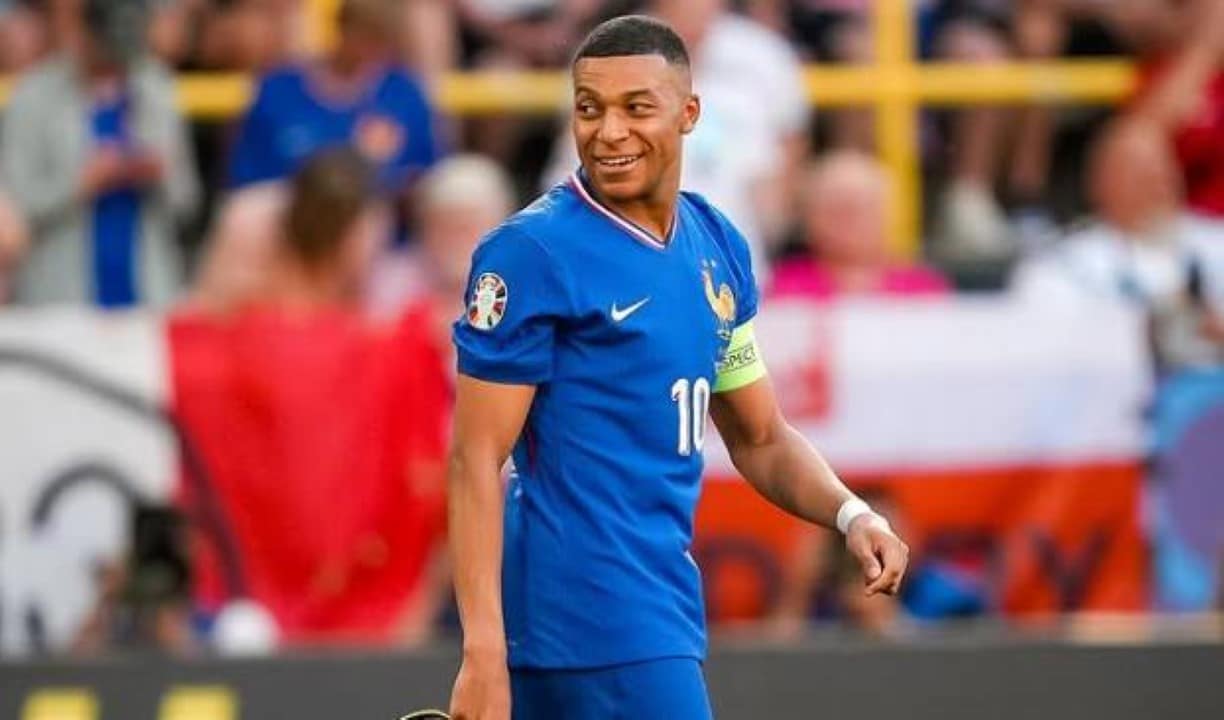
When France debuts in the World Cup this Tuesday (16), against Senegal, in New Jersey, it will take to the field much more than one of the most talented teams on the planet. It will also bear the result of a process that began decades ago, built between waves of migration, floodplain fields and housing estates on the outskirts of Paris.
Today, Didier Deschamps’ team brings together some of the most valued players in international football. Kylian Mbappé has a Cameroonian father and an Algerian mother. Michael Olise was born in England to a Nigerian father and a French-Algerian mother. Aurélien Tchouaméni is of Cameroonian descent. Dayot Upamecano has roots in Gunei-Bissau. Bradley Barcola, Désiré Doué, Rayan Cherki, Ousmane Dembélé and Marcus Thuram also have family stories linked to immigration.

The phenomenon is usually associated with the victory of the 1998 World Cup, when the team nicknamed by the press “Black-Blanc-Beur” (Black, White and Arab), became a symbol of a multicultural France. That team included players of Algerian, Senegalese, Ghanaian, Armenian and Caribbean origin. Zinedine Zidane, son of Algerian immigrants, became the face of that generation.
The story, however, began much earlier. Still in 1938, in the World Cup held in French territory, Raoul Diagne entered the field and became the first black player to represent the country’s team in a World Cup. Born in French Guiana and of Senegalese descent, he blazed a path that would be expanded over the following decades.
In the 1950s and 1960s, players from the former French colonies in North Africa began to occupy an increasing space in national football. Later came names like defender Marius Trésor, born in Guadeloupe, and midfielder Jean Tigana, who was born in Bamako, Mali, before building a career in France. The two were highlights of the fourth-placed team in the 1982 World Cup. And Tigana formed the midfield with star Michel Platini and little Alain Giresse in the 1984 Euro Cup winning team.
The great transformation, however, occurred a little earlier, in the early 1970s. After a period of poor results, the French Federation profoundly reformulated its athlete development system. The country started to invest in the early identification of talent, created a national observation network and strengthened training centers that worked in partnership with clubs. It was at this moment that the suburbs began to gain strategic importance.
In the suburbs of Paris, the search for talent
The Île-de-France region, where Paris and its extensive metropolitan area are located, has become the main home of French football. The area has more than 12 million inhabitants, concentrates around a fifth of the country’s population and is home to approximately 40% of immigrants living in France.
The number of opportunities also helps to explain the phenomenon. The Paris region alone has around 1,100 clubs affiliated to local federations. It is from these training clubs, many amateurs, that the coaches of the French Federation seek talent to be honed in their centers of excellence.
The main center is the INF Clairefontaine, the National Football Institute, built in 1988 and funded by the Federation, which attracts young people between 13 and 15 years old from the Île-de-France region. It occupies an area of 56 hectares, with 14 football fields, a gym and a state-of-the-art structure for performance analysis and medical recovery. In addition to residences with 220 rooms, it offers enrollment in primary and secondary schools in Rambouillet, for children to continue their studies. They stay there from Monday to Friday and return on weekends to spend time with their families and play games at their home clubs. All paid for by the Federation. It is the same place as the main team’s CT, which has at its disposal a 17th century castle that serves as accommodation.
The result appears repeatedly on the squad lists. Thierry Henry, champion striker in 1998 and Brazil’s executioner in 2006, grew up in Les Ulis, on the outskirts of Paris, and graduated there. Nicolas Anelka came from the same region and is also a member of CT Clairefontaine, as is Mbappé, who was born in Bondy, one of the municipalities on the outskirts of Paris, and was discovered at the age of 13 in a local amateur club by Federation scouts. Paul Pogba, Patrice Evra, Louis Saha and many others have followed similar paths. William Saliba was also trained in the region.
The Federation maintains another 15 centers of excellence spread across the country. From Liévin’s center came full-back Pavard and defender Varane. Castelmaurou’s CT revealed midfielder Rabiot.
The influence of French suburbs went beyond the country’s borders. The 2022 World Cup and the 2023 African Cup of Nations showed this clearly. Several players trained on the outskirts of Paris ended up choosing to represent their families’ national teams. Ivory Coast, African champions in 2023, had six starters in the final who grew up or were trained in the Paris region.
The search for reconnection with African roots also motivated one of Zinedine Zidane’s sons, the hero of France’s first world title win in 1998, to defend another country’s team. Luca Zidane, the second of the star’s four heirs, will play for Algeria in this World Cup. A goalkeeper trained at Real Madrid, he plays for Granada, in Spain, and decided to play for the Algerian national team to honor his paternal grandparents.
Other young people trained in the French Federation’s 16 centers of excellence made a similar choice, favoring their African origins. This movement even generated tensions within French football itself. In 2011, the federation faced a crisis after internal discussions were revealed about the possibility of limiting the presence of athletes with dual nationality in training centers. The concern was simple: investing years in developing players who could later play for teams from other countries.
Multicultural and winning model
The episode generated strong repercussions and ended up abandoned. In practice, France continued to rely on the same model. The results help explain the choice. The team was world champion in 1998 and 2018, runner-up in 2006 and 2022, won the 2000 Euro Cup and regularly reached the decisive stages of major tournaments over the last three decades. Always counting on descendants of immigrants.
Not even the greatest French idols escape this story. Of the five Frenchmen who won the Ballon d’Or, four had immigrant origins. Raymond Kopa was the son of Polish parents. Michel Platini was descended from Italians. Zidane and Karim Benzema are children of Algerian families.
The team that arrives in the United States to compete in the 2026 World Cup is another chapter in this trajectory.
Of the 23 called up, only three were born outside France: striker Michael Olise, born in London; center forward Marcus Thuram, who is from Parma, Italy; and reserve goalkeeper Brice Samba, from Linzolo, Congo. Most of those chosen by coach Didier Deschamps were born in French territory, but have roots spread across countries such as Algeria, Cameroon, Congo, Angola, Morocco, Mali, Guinea-Bissau and Senegal.
It is a French team in all official documents. It is also a portrait of a country shaped by successive waves of migration. Over almost a century, France transformed this diversity into one of its football’s greatest assets.





